

SGMF LCA finds up to 29% tank-to-wake GHG cut with LNG
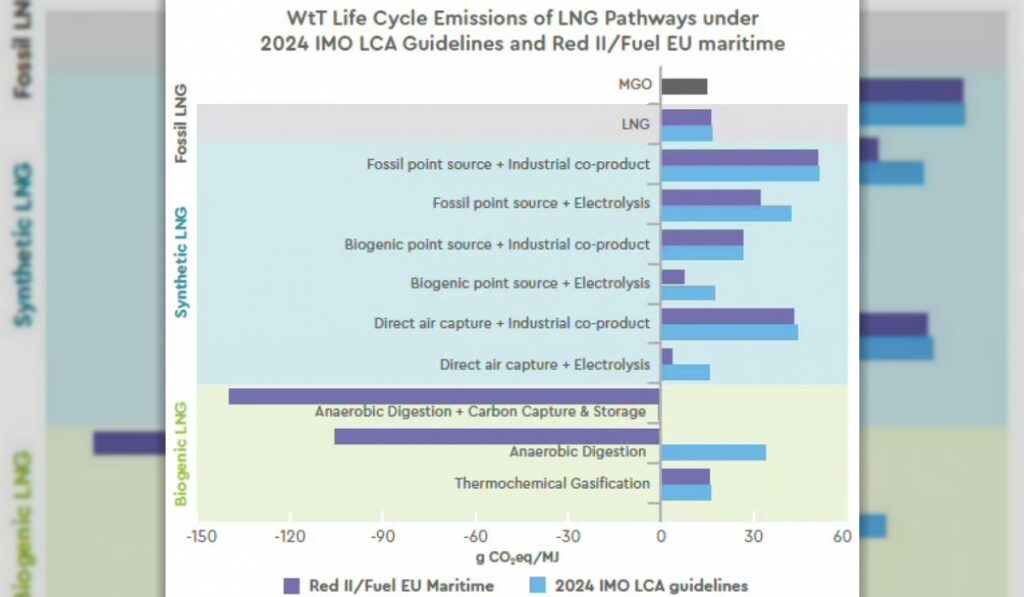
SGMF has published its latest Life Cycle Assessment (LCA) on LNG, adding fresh evidence that greenhouse gas (GHG) emissions can be reduced compared with traditional marine fuels. A principal finding highlights up to 29% tank-to-wake GHG emissions reductions when LNG is used in place of MGO 0.1%. According to SGMF, the analysis further demonstrates lower direct exhaust emissions relative to a conventional reference fuel at the point of combustion on board. By presenting a quantified benchmark against MGO 0.1%, the publication underscores LNG’s potential to mitigate operational emissions within the boundaries examined.
An LCA evaluates environmental impacts across a product’s life cycle; in this context, the focal metric referenced is tank-to-wake, which addresses emissions released during fuel use aboard the vessel. This boundary centers on what exits the stack during ship operations, distinct from upstream stages such as extraction or processing. The reported reduction pertains to that operational phase and provides a specific view of comparative performance between LNG and the MGO 0.1% baseline cited by SGMF.
Scope and significance of the SGMF findings
The comparison against MGO 0.1% is material because it anchors the finding in a widely used point of reference for marine operations. By expressing the outcome as a percentage change, SGMF communicates relative performance that can be interpreted across a range of vessels and trades, while remaining tied to the specific boundary conditions of tank-to-wake. The framing also allows stakeholders to assess how LNG’s combustion characteristics translate into measured GHG differences at the engine exhaust when set against a reference fuel marker.
Natural Gas
The phrase “up to” is central to the interpretation. It indicates a maximum reduction within the results presented, rather than a uniform figure applicable in every operational context. Variability in performance is an inherent feature of comparative assessments, and percentage findings typically reflect the conditions, assumptions, and parameters defined by the study. As such, the figure communicates a headline potential while inviting closer reading of the underlying LCA to understand the extent of the observed outcomes.
Framed as “further demonstrating” reductions relative to traditional marine fuels, the new LCA positions LNG within an evidence base that SGMF has developed over time. That continuity matters for decision-makers who weigh incremental findings as they consider fleet strategies, fuel procurement, and compliance planning. Each successive analysis can refine confidence in comparative trends, even as stakeholders continue to scrutinize methodologies, data sources, and the precision of boundary definitions that shape reported results.
From a policy and market standpoint, a clear tank-to-wake reduction figure offers a reference point for emissions reporting and target setting onboard. It also helps separate operational emissions from upstream considerations, which are often treated under different accounting frameworks. While broader life-cycle perspectives are essential for system-wide evaluations, isolating tank-to-wake performance clarifies how fuel choice can affect what is measured directly during voyages and port calls.
Ultimately, the headline message is straightforward: in SGMF’s latest LCA, LNG shows a measurable advantage over MGO 0.1% on a tank-to-wake basis, reaching as much as a 29% reduction in GHG emissions under the conditions reported. That conclusion will inform ongoing conversations across the maritime value chain about near-term options for reducing direct exhaust emissions. By placing a quantified comparison in the public domain, the publication contributes to a more transparent discussion of how fuel selection influences onboard GHG outcomes.


Sign up free to ask CAMAL AI for a summary, the key points or anything else about this story.
Related stories
CAMAL AI
 Financial Ports Newsletter
The maritime economy, every morning
Ports, shipping and freight markets in one short email. Free.
Financial Ports Newsletter
The maritime economy, every morning
Ports, shipping and freight markets in one short email. Free.



