

Iñaki Echeverría: “Spain has a real opportunity to strengthen its role as a logistics hub in Southern Europe”
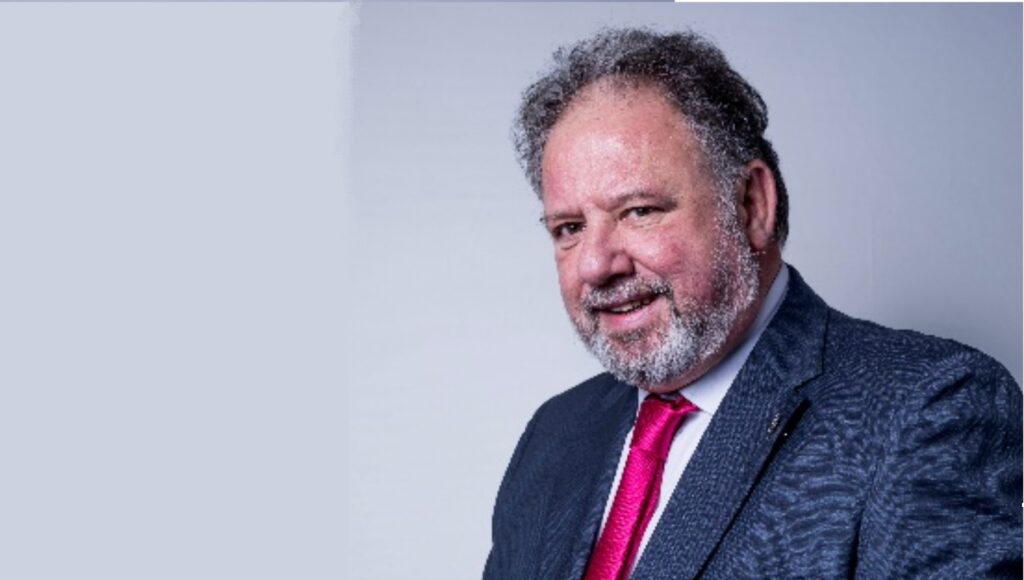
 With a career spanning more than three decades in the maritime and logistics sector, Iñaki Echeverría, CEO of Höegh Autoliners in Spain, advocates for a vision of global logistics rooted in efficiency, sustainability, and resilience. According to Echeverría, Spain has a unique opportunity to position itself as a strategic hub in Southern Europe—if it can capitalize on its geographic location and infrastructure by investing in decarbonization, digitalization, and public-private collaboration.
Iñaki Echeverría Olivares began his maritime career at the renowned shipping company Naviera García-Miñaur, starting in the Traffic Department, where he quickly found his place.
In 1986, he joined E. Erhardt y Cía., where he moved into the commercial department for Liner Services, representing Hapag-Lloyd and OPDR.
A.P. Møller-Maersk
In May 1988, he took a leap to MAERSK as Import Sales Manager for Madrid and the central region of Spain, later assuming responsibility for MAGIC and participating in the early stages of the company’s expansion into complementary logistics services.
In early 1994, he accepted an offer from Swiss freight forwarder DANZAS (now DHL), where he became assistant to the Maritime Director and later Route Manager for AMLA (Latin America) for Iberia.
After several years traveling across Latin America, he joined the Davila Group in 1997 as Director of the Madrid office. He soon took on broader responsibilities within the group, including founding the freight forwarder Altius and overseeing the acquisition of Hamburg-Süd Spain.
One of his roles at the Davila Group was acting as the focal point for several of the shipping lines the group represented, including Höegh Autoliners (formerly HUAL).
In 2007, Höegh Autoliners opened its own office in Spain with Iñaki appointed as CEO. Operations officially began on January 1, 2008. He currently serves as Head of Country Spain, overseeing and supporting agents throughout the Mediterranean and North Africa, with a particular focus on Portugal, Spain, Italy, Greece, Turkey, and Morocco.
Echeverría is also a member of the Propeller Madrid, having served on its board and as treasurer until the June 2025 elections, where members voted him in as the Club’s President.
How do you assess international trade in the current context?
International trade is undergoing a structural transition. After the imbalances caused by the pandemic—which strained global supply chains and drove freight rates up—a series of disruptions has fundamentally reshaped international maritime transport dynamics, directly impacting Spain as a port power.
One of the most impactful developments at the European level has been the implementation of the Emissions Trading System (ETS) in January 2024, which taxes CO₂ emissions from maritime transport. Initial forecasts anticipated a major loss in European, including Spanish, port traffic due to the potential rerouting to non-EU ports such as Tanger Med, Port Said, or even Gibraltar to avoid environmental surcharges.
“Spain, a resilient hub: port traffic grows despite ETS threats and the Red Sea crisis lifeline, but all eyes on Trump”
However, this scenario has been partially reversed—or at least postponed—by another major disruption: the escalation of the Red Sea conflict and Houthi militia attacks on merchant vessels, which forced many shipping lines to reroute around the Cape of Good Hope. This detour increased transit times by over 10 days, raised operating costs, and elevated the strategic importance of Spanish ports as bunkering, transshipment, and connectivity hubs—particularly for eastern Mediterranean ports.
As a result, ports such as Algeciras, Valencia, and Barcelona have seen a surprising surge in container traffic, contributing to a national growth of 10.6% in 2024, compared to a 2.3% drop in 2023—helping to offset the negative impact expected from the ETS.
Spain’s port system has proven to be resilient and adaptable. Competitive infrastructure, multimodal connectivity, digitalization policies, and a privileged geostrategic position place it as a key player in redesigning global logistics routes. However, this temporary advantage must be consolidated through long-term strategic decisions: investment in decarbonization, improved rail access, regulatory flexibility, and public-private cooperation.
In short, we’re witnessing an international trade landscape that is more fragmented, volatile, and shaped by geopolitical, environmental, and technological factors. Efficiency is no longer the sole priority—resilience and sustainability are equally important. In this new paradigm, Spain has a real opportunity to strengthen its role as Southern Europe’s logistics hub—if it can turn uncertainty into competitive advantage.
Of course, all this is subject to “Mr. Trump.” We cannot forget that tariffs and the U.S. President’s desire to “balance market access conditions” could significantly alter the circumstances that might propel Spain to become an international maritime transport hub. In fact, although total national container traffic through May 2025 remains practically the same as in the same period in 2024, a decline of around 4% in container transshipment volume is already being observed.
From the specific perspective of your company’s business, how can you contribute to improving the efficiency of the current automotive supply chain?
At Höegh Autoliners, our mission is to act as a strategic partner to the automotive sector, delivering efficiency, sustainability, and resilience to the global maritime supply chain.
We focus on several key pillars: 1. Fleet renewal and energy efficiency. We are continuously upgrading our current vessels: optimized propellers, improved hull designs, and LED lighting on decks, all aimed at reducing fuel consumption and emissions.
In addition, we’ve introduced an engine optimization system that provides approximately 5% fuel savings.
2. New “Aurora” class vessels – zero-carbon ready. The Aurora series (12 vessels of ~9,100 CEU each), six of which have already been delivered, are equipped with multi-fuel engines capable of operating on VLSFO, LNG, and—after minor modifications—ammonia and methanol, allowing up to a 58% reduction in emissions per vehicle transported.
These vessels have also been certified by DNV as ready to operate with green ammonia, paving the way for truly sustainable maritime logistics.
3. Alternative fuels and operational decarbonization. In 2023, we used over 10,380 MT of ISCC-certified (B100) biofuel—more than double the 2022 amount—and successfully completed carbon-neutral voyages using advanced biofuels. In 2024 and 2025, we’ve continued this trajectory, offering our clients the option to participate in these efforts and receive carbon-neutral transport certificates.
In Australia, we’ve developed EcoTow projects with Svitzer, achieving near-zero-emission towing by using biofuel to offset emissions.
4. Digitalization and digital twins. Our entire fleet is now digitalized through Kongsberg Digital, using real-time dashboards and digital twin technology. This enhances operational efficiency and enables proactive decision-making in response to congestion, adverse conditions, or logistical emergencies.
Advanced visibility improves our ability to serve just-in-time and just-in-sequence fleets, aligning with the automotive industry’s logistics needs.
5. Value chain collaboration and industry leadership. We are active members of the First Movers Coalition and are working with Sumitomo to develop clean ammonia supply chains—from bunkering to onboard use in Aurora-class vessels—targeting sustainable fuel deployment by 2027, when the last vessels in the class are expected to enter service running directly on clean ammonia from the shipyard.
We also participate in forums such as COP29, advocating for unified standards and regulation that accelerate the adoption of green ammonia in maritime transport.
The key benefits for the automotive supply chain are evident: Operational efficiency, with more predictable routes and dynamic adjustments that reduce transit and storage times; Emission reduction, with a lower CO₂ footprint per vehicle transported (up to 58%) and carbon-neutral operations through advanced biofuels; More competitive costs, with reduced consumption and more stable rates, even on extended routes or rerouting; and Reputation and compliance, aligning with ESG demands and regulations (ETS, CII, IMO…), strengthening the supply chain as both sustainable and reliable.
In summary, Höegh Autoliners is advancing toward efficient, sustainable, and future-ready automotive maritime logistics. By combining cutting-edge technology (digitalization), next-generation fleet, alternative fuels, and a collaborative network, we offer a comprehensive solution that adds real value to the automotive sector and helps manufacturers reduce their Scope 3 emissions.
What services and activities do you have planned to foster interaction with your global customers?
At Höegh Autoliners, we believe that ongoing interaction with our clients—both OEMs and regular line customers—is key to maintaining long-term relationships, anticipating needs, and creating added value beyond transport.
Highlights include:
- Customized digital platforms
We are developing tailored visibility and traceability tools that allow customers to monitor their shipments in real-time, receive automatic alerts, and manage documentation from a single platform. -
Shared sustainability programs
We offer clients the option to ship goods under carbon-neutral conditions and issue certificates they can include in their own sustainability reporting.Additionally, we have launched co-development initiatives in the energy transition, inviting OEMs to participate in alternative fuel pilot projects.
-
Customer Advisory Boards
We’ve established permanent dialogue forums with OEMs and major clients to align strategies, share demand forecasts, and adapt our operational capacity to their logistics cycles and product launches. -
Personalized service and local teams
Our commercial and operations teams are present in key markets, enabling fast and close response to each client’s specific needs.
We also organize onboard technical visits, logistics workshops, and joint KPI review meetings. -
Collaborative innovation
We promote technological pilot projects with our customers (e.g., blockchain, smart bills of lading, AI-based ETA prediction), integrating their input into the development of our solutions.
Ultimately, at Höegh Autoliners we aim to be more than just a transport provider—we strive to be a strategic partner, involved from logistics planning to performance evaluation, always with a clear commitment to innovation and sustainability.

What are your business prospects for the next five years?
Vehicle maritime transport is entering a new adjustment cycle after the post-pandemic boom.
Höegh Autoliners’ outlook for the next five years is one of sustained growth, but also of active vigilance in the face of market challenges. The COVID-19 pandemic marked a turning point in the vehicle shipping industry. During 2020–2021, uncertainty and a decline in global trade caused a near-total freeze in new fleet investments, which led to a clear capacity shortage in 2022 and 2023—just as automotive manufacturers were ramping up production again.
In response to this shortage, many OEMs shifted part of their logistics to containers, resulting in significant operational and cost-related consequences.
At the same time, the sector experienced an overreaction: over 150 new PCTC vessels were ordered from 2022 onwards—not only by traditional operators like Höegh, NYK, or Wallenius, but also by new players, including automakers and financial stakeholders.
This wave of new orders could lead to overcapacity between 2026 and 2028, particularly if global demand slows or if geopolitical or regulatory tensions (ETS, CII, new fuel standards) persist.
However, a large part of these new orders is driven by ESG requirements and the urgent need to decarbonize. This could accelerate the phase-out of older vessels that will struggle to comply with new decarbonization rules, enabling a healthier supply-demand balance in the medium term.
At Höegh, we have committed to disciplined, sustainable growth. Our Aurora class, with its 12 “zero carbon ready” vessels, will increase our capacity by 50%, while meeting the industry’s most demanding environmental standards.
We maintain stable, long-term relationships with major global OEMs, giving us mid-term visibility and allowing us to plan operational capacity more precisely.
On the financial front, following our IPO in Oslo, we have a solid foundation to continue investing in innovation, sustainability, and selective expansion on key routes.
The next five years will be a period of adjustment and consolidation in vehicle maritime transport. Those who have invested with long-term vision, diversified routes, and focused on sustainability—such as Höegh Autoliners—will be better positioned to lead this new cycle with efficiency, environmental responsibility, and commercial resilience.
As a prominent partner of the Propeller Club Madrid, what activities does the organization promote to foster connectivity within the sector?
Propeller Madrid is a think tank open to the entire logistics chain. I’m deeply honored to have been elected president of the Propeller Club of Madrid in the June 2025 elections. I take on this responsibility with enthusiasm and a strong sense of commitment, at a time when collaboration among professionals is more necessary than ever to address the challenges facing the logistics and transport sectors as a whole.
Unlike other Propeller Clubs that focus more strictly on port-related environments, Propeller Madrid has established itself as a pluralistic and cross-sector space, bringing together executives and professionals from all transport modes (maritime, rail, air, road), as well as from logistics, technology, government, and academia.
Our approach moves away from traditional corporate lobbying: Propeller Madrid operates as a true think tank—transparent, independent, and focused on rigorous analysis, idea generation, and the exchange of experience among supply chain professionals.
We foster connectivity through regular engagements with industry leaders, particularly via our monthly luncheon-dialogues with senior business executives, public officials, and sector experts. These events, held privately for members, promote direct dialogue, high-level networking, and strategic knowledge exchange.

Also through PROMart, our flagship annual event for the logistics and transport sector, open to the general public, which has become a key meeting point for professionals, institutions, startups, and academics. PROMart reflects our commitment to opening the logistics debate to society, promoting a pluralistic space to share trends, challenges, and innovations.
Another of our major initiatives is Propeller Junior Madrid, a key platform for the inclusion and development of young talent in logistics and transport. This initiative enables young professionals and students to access activities, mentoring, and high-value professional connections, ensuring generational renewal in the sector.
Propeller Madrid is part of the national and international Propeller Club network, which expands opportunities for cooperation, benchmarking, and visibility for our members and their organizations.
Madrid maintains close collaboration with professional associations such as AET, CEL, MADCargo, and ACE, among others, strengthening the role of sectoral organizations in developing a more integrated and modern logistics ecosystem. We also enjoy the support and active participation of top-level institutional partners such as the Presidency of Puertos del Estado, the Directorate General of Customs and Excise, the Directorate General of the Merchant Navy, and the City Council of Coslada. In the academic field, we highlight our collaboration with the Spanish Maritime Institute (IME), serving as a bridge to specialized training and regulatory analysis.
Propeller Madrid creates a neutral space where professionals can exchange ideas free from corporate filters. This fosters a climate of trust among members of different organizations—even competitors—who share the common goal of improving logistics in Spain.
In short, Propeller Madrid is much more than a club: it is a think tank, a cross-sector collaboration network, and an intergenerational, multimodal meeting point. As president, my commitment is to continue driving this connectivity, promoting the exchange of ideas, attracting young talent, and opening the sector to society.


Sign up free to ask CAMAL AI for a summary, the key points or anything else about this story.
Related stories
CAMAL AI
 Financial Ports Newsletter
The maritime economy, every morning
Ports, shipping and freight markets in one short email. Free.
Financial Ports Newsletter
The maritime economy, every morning
Ports, shipping and freight markets in one short email. Free.