

Höegh Orders First Ammonia Engines for PCTC Fleet
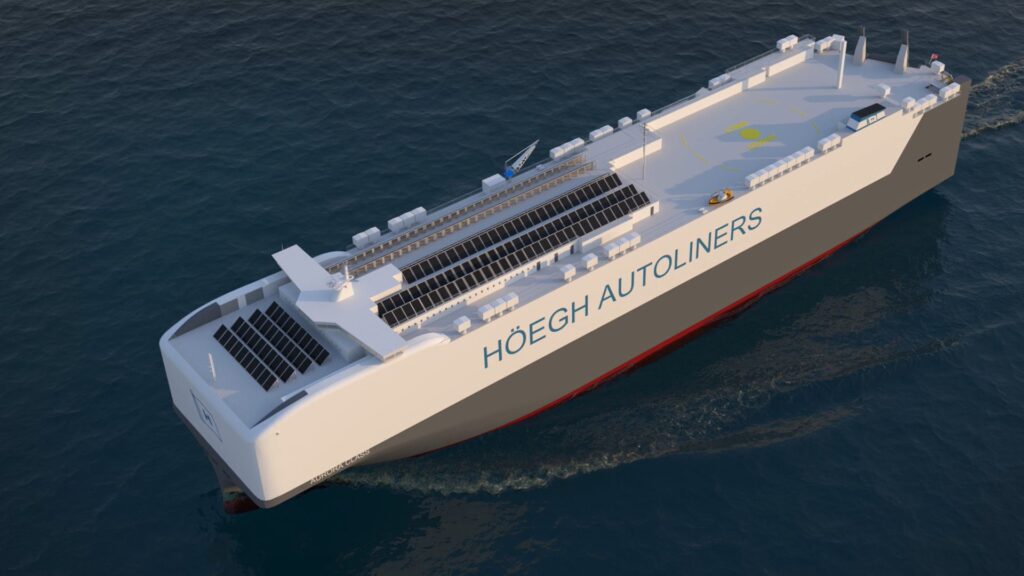
Höegh Autoliners has placed a landmark order for ammonia-burning engines to power its newest vessels, describing what it calls the world’s first ammonia-powered PCTC engines. The company has commissioned four 7S60ME-LGIA units, positioning the move as a clear step forward for maritime decarbonization. The decision signals growing confidence in ammonia as a zero-carbon fuel candidate and underscores the pace at which deep-sea shipping is exploring alternatives to conventional marine fuels.
The order centers on ammonia-burning technology intended to be integrated into the company’s future newbuilds. While detailed technical specifications were not disclosed in the announcement, the selection of the engines indicates a propulsion concept designed to operate on ammonia, a fuel that does not emit carbon dioxide at the point of combustion. The commitment to these engines suggests a readiness to align vessel design, onboard systems and operational practices with the distinct requirements of ammonia propulsion.
Ammonia Propulsion Signals a Strategic Shift
The decision to adopt ammonia-capable main engines for car carriers points to a strategic attempt to future-proof core assets amid tightening environmental expectations across the industry. The focus on newer vessels reflects how alternative-fuel readiness is increasingly being embedded at the design stage rather than deferred to later retrofits. By targeting the PCTC segment, the company is also testing how alternative fuels can be deployed in high-earning cargo trades where reliability, predictable schedules and deck space are at a premium.
Höegh Autoliners
Ammonia’s appeal rests in its potential to eliminate carbon emissions at the point of use, but it brings distinctive operational and safety considerations. Effective implementation will depend on rigorous onboard procedures, crew training and fuel handling protocols tailored to ammonia’s properties. The announcement underscores momentum around next-generation marine fuels while acknowledging, implicitly, that successful integration requires careful management of safety, system compatibility and performance across a range of operating conditions.
The procurement also raises practical questions that typically accompany disruptive marine technologies, including the maturation of supply chains, standardized bunkering processes and port readiness. As ammonia pathways develop, availability, storage and transfer systems will need to be built out to support routine operations. Progress on infrastructure will be a critical determinant of scale, influencing routing options, cost structures and the comparative competitiveness of ammonia against other emerging marine fuels.
Commercially, ordering engines configured for ammonia sends a signal to partners and stakeholders across the value chain that demand for alternative fuels is materializing. It may also catalyze collaboration among equipment suppliers, fuel producers and ports to close remaining gaps between propulsion capability and fuel accessibility. For cargo owners, the move offers a tangible indicator of how vehicle and heavy equipment logistics could decarbonize over time, aligning transport with evolving environmental expectations.
Technically, the selection of 7S60ME-LGIA units suggests a pathway that leverages large, slow-speed engine architecture adapted for ammonia operation. Integration will hinge on a suite of vessel systems—from fuel containment and delivery to monitoring and control—engineered to meet the specific demands of the fuel. Stakeholders will be watching how these engines perform under real-world conditions, including start-up procedures, load response, maintenance cycles and compatibility with existing auxiliary systems.
Strategically, the order constitutes a high-profile data point in the broader shift toward low- and zero-carbon propulsion across ocean shipping. It illustrates how major carriers are moving beyond feasibility assessments to concrete equipment commitments. The pace and scope of future orders will likely reflect lessons learned during commissioning and early operation, including the effectiveness of new procedures and the reliability of supply chains that support regular bunkering.
By advancing ammonia propulsion in the PCTC segment, Höegh Autoliners is testing the operational and commercial viability of a fuel pathway that has drawn sustained industry interest. The company’s step establishes a reference case for peers evaluating options and could accelerate knowledge-sharing around design, safety and fuel logistics. As these engines progress from procurement to service, the outcomes will help clarify how quickly alternative-fuel adoption can scale within complex, globally connected vehicle transport networks.


Sign up free to ask CAMAL AI for a summary, the key points or anything else about this story.
Related stories
CAMAL AI
 Financial Ports Newsletter
The maritime economy, every morning
Ports, shipping and freight markets in one short email. Free.
Financial Ports Newsletter
The maritime economy, every morning
Ports, shipping and freight markets in one short email. Free.



