

Government Launches Plan Paraná to Secure Trunk Waterway
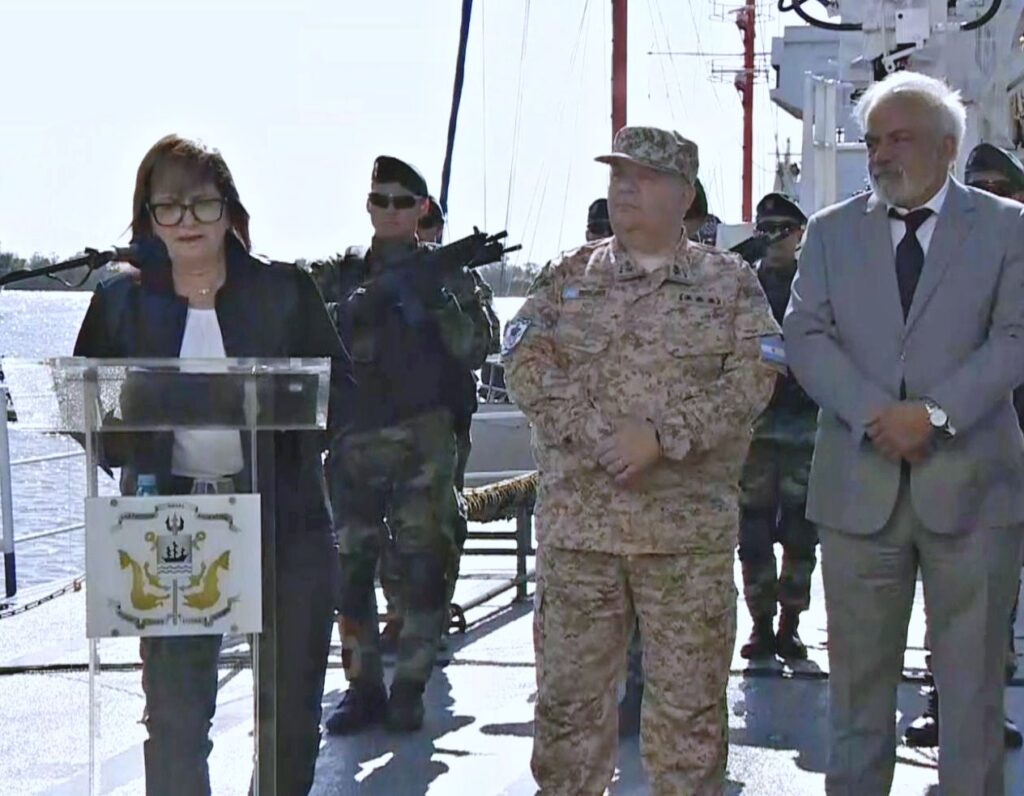
The national government has announced a new security initiative for the Paraná–Paraguay corridor, with Security Minister Patricia Bullrich presenting Plan Paraná to reinforce protection along the Vía Navegable Troncal. The plan is framed around boosting surveillance and operational readiness on a waterway that carries significant commercial traffic. As part of the announcement, the minister confirmed the addition of cameras and drones to strengthen monitoring and response capabilities. She also referred to a merchant vessel that was recently boarded by criminals in an episode she characterized as “piracy,” underscoring the need to deter and respond to similar incidents affecting crews, vessels and cargo.
According to the presentation, Plan Paraná is designed to increase security on the country’s main inland navigation route—locally known as the Vía Navegable Troncal and commonly referred to as the Paraná–Paraguay waterway—by enhancing oversight and supporting enforcement actions. The initiative points to a policy focus on prevention and rapid intervention when suspicious or violent acts threaten maritime and riverine operations. The reference to a recent boarding incident, described as “piracy,” illustrates the risks faced by merchant shipping and the impetus behind the measures now being rolled out.
Plan Paraná focuses on surveillance and deterrence
The authorities emphasized that the inclusion of cameras and drones is intended to expand situational awareness over navigable stretches and sensitive approaches, providing timely information to security teams. Cameras can offer continuous visual coverage, while drones can extend reach, support patrols, and document incidents from multiple vantage points. In the material made public, officials did not disclose granular operational details such as deployment timelines, coverage maps, or specific rules of engagement. Nonetheless, the stated objective is clear: to harden the waterway against criminal activity by pairing visibility with quicker responses.
The minister’s acknowledgment of a recent episode involving a merchant ship—described as an act of “piracy”—places crew safety and cargo integrity at the center of the agenda. While no further particulars were provided in the announcement, such incidents can disrupt voyages, raise insurance concerns, and prompt heightened alert levels among operators. By addressing the event directly, the government signaled that bolstering surveillance and patrol capacity is meant to dissuade opportunistic attacks and to aid post-incident investigations where deterrence fails.
The plan’s focus on the trunk waterway reflects the corridor’s importance to river transport and the continuous flow of vessels that rely on predictable, safe transits. Cameras positioned at chokepoints and port approaches, complemented by drones capable of rapid deployment, are intended to make it harder for criminal actors to operate undetected. The government’s messaging highlights vigilance and presence as key ingredients in reducing the operating space for illicit boarding attempts and other offenses that threaten navigation and commerce.
Beyond equipment, the announcement underscores a posture of proactive oversight. Continuous monitoring can help identify patterns, flag anomalies, and trigger swift checks when required. Even in the absence of disclosed technical specifics, the decision to expand surveillance assets conveys an operational shift aimed at earlier detection and more credible deterrence. That emphasis aligns with common security practices on busy waterways, where layered visibility and timely intervention are crucial to maintaining orderly traffic and safeguarding crews.
The unveiling of Plan Paraná marks a notable step by authorities to respond to immediate concerns while signaling sustained attention to navigational security. Additional details on implementation were not included in the announcement material cited, and stakeholders will watch for further updates from the ministry as assets are deployed and procedures refined. For now, the government’s message is unambiguous: reinforce oversight, strengthen responses, and reduce the opportunity for criminal acts along a corridor central to ongoing riverine operations.


Sign up free to ask CAMAL AI for a summary, the key points or anything else about this story.
Related stories
CAMAL AI
 Financial Ports Newsletter
The maritime economy, every morning
Ports, shipping and freight markets in one short email. Free.
Financial Ports Newsletter
The maritime economy, every morning
Ports, shipping and freight markets in one short email. Free.



