

DP World Opens 300,000m² Sokhna Logistics Park in Egypt
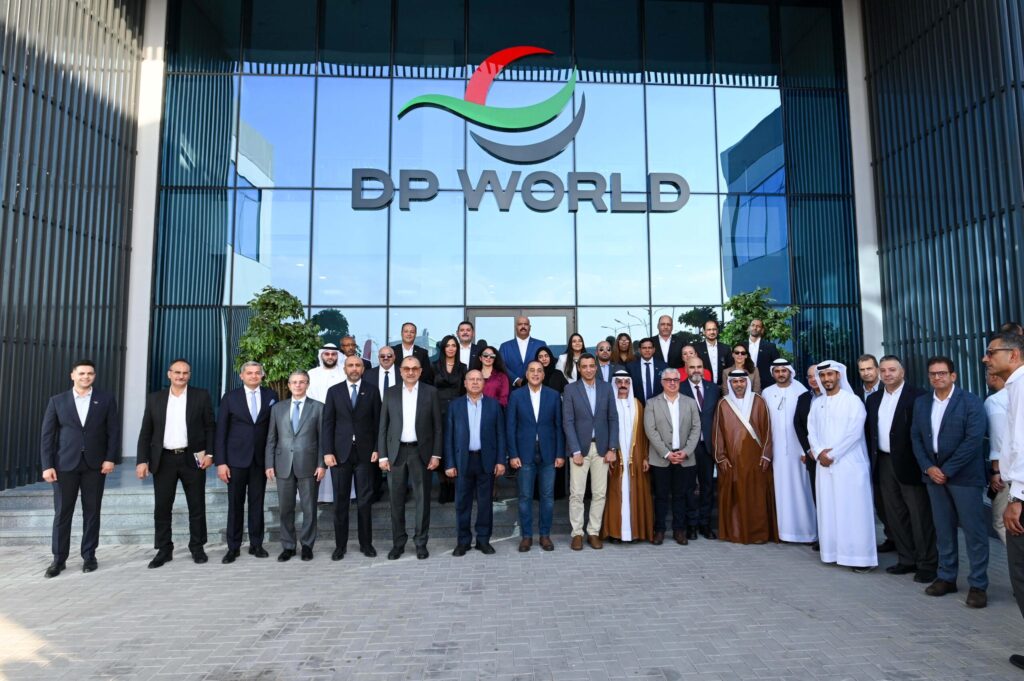
DP World has opened the Sokhna Logistics Park, a 300,000m² development in Egypt that integrates world-class logistics and smart trade solutions. The launch is framed as strengthening the country’s role as a global trade gateway, uniting physical infrastructure with digital capabilities to support streamlined, reliable cargo flows. With a single, sizable footprint and coordinated management, the project is presented as an additional lever to reduce friction across supply chains and help businesses secure more predictable handling, processing, and delivery of goods.
The opening introduces a large, integrated platform intended to align technology-enabled processes with on-the-ground operations. By concentrating services and systems under one program, the facility aims to minimize complexity for users that need consolidated timelines and standard operating procedures. The emphasis on digital tools alongside coordinated site operations is designed to improve traceability, accelerate decision-making, and make exceptions easier to manage, supporting customers that require both scale and repeatability in day-to-day trade activities.
Strategic context and expected impact
Integrated facilities and smart trade solutions can translate into better visibility, fewer manual touchpoints, and faster resolution of bottlenecks. When workflows are synchronized through shared data and clear escalation paths, operators can focus on throughput, accuracy, and service reliability. In practice, this approach often reduces avoidable delays and strengthens coordination among transport providers, cargo owners, and service partners, enhancing responsiveness to shifts in demand and enabling more efficient planning cycles across procurement, production, and distribution.
Scale is central to the park’s proposition. A 300,000m² footprint allows activities to be clustered within a single controlled environment, potentially shortening internal transfers and improving resource allocation. Centralization can also support standardized performance benchmarks across different functions. For customers, this can mean improved schedule adherence and clearer service commitments. For operators, it can yield more consistent quality management and the ability to deploy specialized equipment and workforce models in ways that match evolving volumes and product mixes.
Positioning the country as a global trade gateway hinges on reliability, speed, and cost discipline. Large, integrated parks can serve as anchors that attract complementary services and encourage network effects as utilization grows. Over time, the combination of concentrated capacity and harmonized procedures can encourage businesses to coordinate more trade through a single node, provided that service levels remain predictable and that capacity planning keeps pace with demand spikes and seasonality.
Execution will determine outcomes. Ramp-up schedules, customer onboarding, and day-to-day discipline will shape results, as will safety practices and continuous improvement routines. Stakeholders typically monitor indicators such as average dwell time, appointment compliance, inventory accuracy, and consistency of cutoffs to gauge whether operations are stabilizing. Transparent communication and predictable processes remain essential to sustaining trust, especially when volumes fluctuate and priorities must be rebalanced across multiple customers and product categories.
“Smart trade solutions” generally point to the digital layer that sits atop physical operations—document exchange, status updates, and process orchestration across partners and systems. Effective integration is critical: interoperability, data quality, and user adoption determine whether technology delivers measurable gains. Robust governance, secure data handling, and clear roles can help ensure that automation complements human decision-making, while training and practical KPIs keep teams focused on error reduction, cycle-time compression, and measurable efficiency improvements.
For customers, a single, integrated park can simplify engagement by concentrating accountability and clarifying service terms. For the broader economy, expanded capacity and enhanced reliability can support competitiveness and resilience across supply chains. As operations mature, market participants will look for evidence that the facility’s scale and digital alignment improve predictability and throughput. The combination of world-class logistics capabilities and smart trade tools will be assessed on how effectively it supports smoother flows, better transparency, and consistent service outcomes over time.


Sign up free to ask CAMAL AI for a summary, the key points or anything else about this story.
Related stories
CAMAL AI
 Financial Ports Newsletter
The maritime economy, every morning
Ports, shipping and freight markets in one short email. Free.
Financial Ports Newsletter
The maritime economy, every morning
Ports, shipping and freight markets in one short email. Free.



