

Chinese container ship reaches UK via Arctic in record time
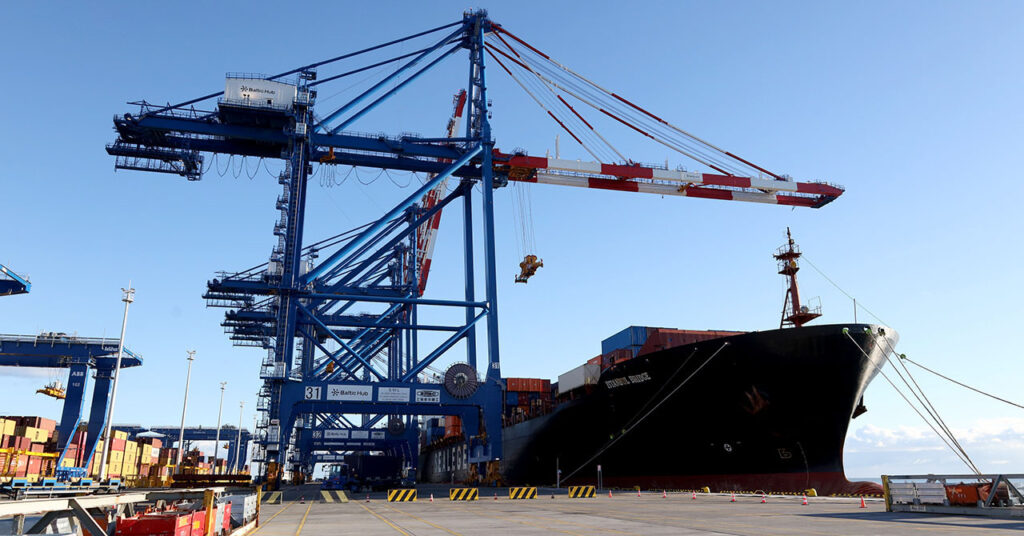
The container ship Istanbul Bridge has completed a China–United Kingdom voyage via the Northern Sea Route (NSR) in just 20 days, setting a new mark for commercial sailings between Asia and Europe. The vessel arrived on 13 October in Felixstowe from the Chinese port of Ningbo‑Zhoushan, covering roughly 7,500 miles compared with about 11,000 miles and the 40–50 days typically required on the Suez Canal route. By trimming distance and time, the transit compresses door‑to‑door lead times for Asia–Europe flows.
Operated by Sealegend, the ship is part of the new ‘China‑Europe Arctic Express’ service, designed to provide faster links between Asian and European ports. The company last year acquired an Ice‑1 ice‑class container ship, a rating for navigation in ice that enabled the launch of a regular service skirting Russia’s northern coastline along the NSR. The service aims to standardize voyages on this high‑latitude corridor during navigable periods.
Surge in Arctic transits and policy support
With a capacity of 4,843 TEU, the Istanbul Bridge traversed the Arctic segment in five days, sailing independently at an average speed of 17 knots and without an icebreaker escort. Following its Felixstowe call, the rotation continues to Rotterdam (Netherlands), Hamburg (Germany) and Gdansk (Poland), reinforcing a multi‑port European schedule that connects major gateways in the North Sea and Baltic corridors.
According to Sealegend’s chief operating officer, Li Xiaobin, the new connection “accelerates supply chains, reduces inventory needs by 40% and cuts companies’ capital costs.” The operator positions the route as a time‑saving option for shippers balancing cycle times and working‑capital exposure, leveraging shorter transits to tighten replenishment intervals.
Environmental organizations, however, warn about the risks associated with increased maritime traffic in Arctic waters and the potential use of heavy fuel oil, a source of carbon emissions. These groups urge vigilance over fuel choices and operating practices as activity grows, highlighting the sensitivity of polar ecosystems and the need for stringent safeguards.
The Istanbul Bridge’s passage coincides with a notable upswing in NSR activity. During the summer of 2025, more than 20 container‑ship transits were recorded, a seasonal record for the lane. Other Chinese carriers, including NewNew Shipping, have reinforced their presence, deploying as many as five vessels in the region. Together, these moves underscore a widening commitment by Chinese operators to polar routes linking Asia and Europe.
Policy developments are tracking the operational momentum. Last week, Beijing and Moscow formalized an agreement to jointly develop and market maritime transport along the NSR in Russia’s Arctic. The accord was signed in the Chinese city of Harbin by Rosatom director Alexey Likhachev and China’s transport minister, Liu Wei. Rosatom is the Russian state enterprise responsible for the country’s nuclear icebreaker fleet and for Arctic maritime operations, placing it at the center of corridor management and promotion.
Even with these advances, Arctic traffic remains marginal in global terms—around 100 transits in 2024 versus roughly 13,000 through the Suez Canal. The growing Chinese interest nonetheless signals consolidation of its presence on polar routes, a space from which many European shipowners have withdrawn since 2018 for environmental and geopolitical reasons. The Istanbul Bridge’s rapid voyage adds to the record seasonal activity and aligns with the new bilateral framework, while debates continue over the environmental implications of scaling up traffic in the high north.


Sign up free to ask CAMAL AI for a summary, the key points or anything else about this story.
Related stories
CAMAL AI
 Financial Ports Newsletter
The maritime economy, every morning
Ports, shipping and freight markets in one short email. Free.
Financial Ports Newsletter
The maritime economy, every morning
Ports, shipping and freight markets in one short email. Free.