

China’s $10.3bn Pinglu Canal Nears Launch
Beijing’s first nationally planned river-to-sea canal since 1949 slashes Yangtze congestion and transport costs by.
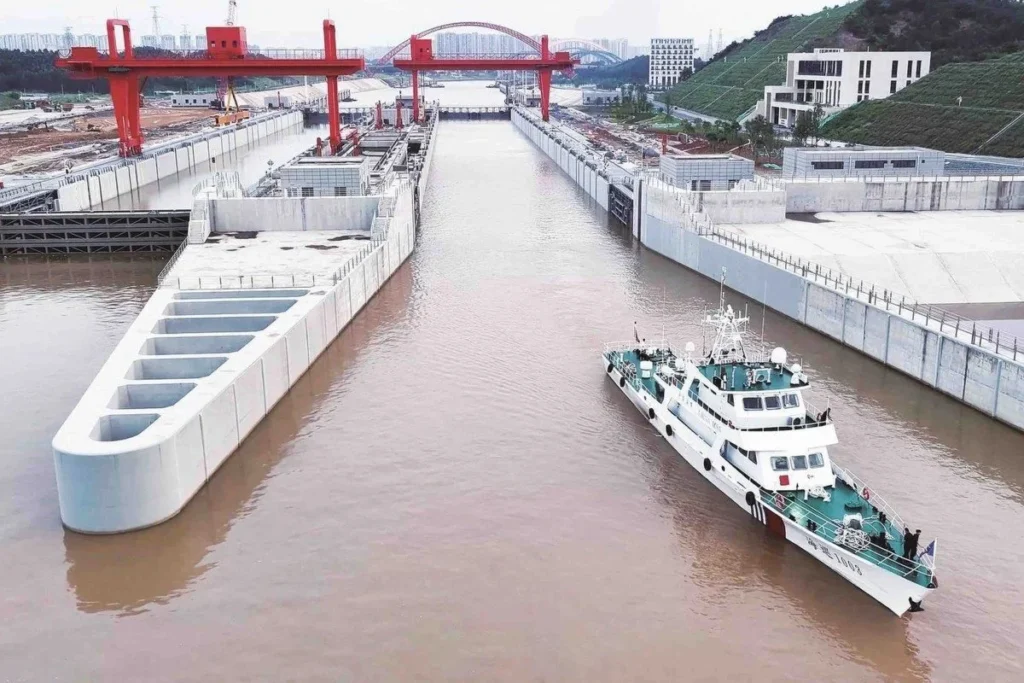
China is weeks away from opening its first national-level inland canal in 77 years, a $10.3 billion waterway designed to pry open faster trade routes to Southeast Asia while sidestepping the choked arteries of the Yangtze River. The 83.4-mile Pinglu Canal, set for a September debut, just completed its first full trial navigation, with the 10,000-ton patrol vessel Haixun 1003 transiting the route on August 7.
Beijing’s Canal Play: A $10.3bn Bet Against the Yangtze: China’s
The project, four years in the making, is no modest ditch. Engineers carved through 315 million cubic meters of earth to bridge a 65-meter elevation drop between the Ping River estuary and the Beibu Gulf, installing three massive locking hubs along the way. The centerpiece: the Madao lock, billed as the ‘world’s largest inland water-saving ship lock,’ with chambers stretching 984 feet long, enough to swallow a football pitch with room to spare.
Officials aren’t shy about the canal’s geopolitical math. With US-China trade tensions simmering, Beijing is doubling down on Southeast Asia as a buffer market. The Pinglu Canal slashes the inland route to ASEAN ports by 560 kilometers, avoiding the Pearl River Delta detour that previously funneled goods through Guangzhou. The payoff? An estimated $735 million in annual transport savings, according to state planners, plus a handy diversion from the Yangtze’s notorious congestion.
Why Now? The US Trade Hedging Strategy
Critics, however, question whether the canal’s $10.3 billion price tag will pencil out. The project’s breakneck construction, completed in half the time of China’s last major waterway, the 1950s-era Jinghang Canal, suggests political urgency over economic pragmatism. And while the Haixun 1003’s trial run went smoothly, the canal’s long-term viability hinges on whether manufacturers in landlocked provinces will abandon road and rail for barge traffic.
The canal’s marquee feature isn’t its length but its three-tiered locking system, designed to haul vessels up and down the 65-meter drop from Hengzhou to the Beibu Gulf. The Madao hub’s chambers, 112 feet wide and 26 feet deep, can handle vessels far larger than the patrol boat that christened the route. Yet the real test will come when commercial operators weigh the canal’s tolls against the Yangtze’s delays. If the numbers don’t add up, Beijing’s shiny new waterway could end up as a $10.3 billion white elephant, or worse, a subsidized lifeline for state-backed shippers.
The canal’s biggest losers may be the ports it bypasses. Guangzhou, long the default gateway for southwestern China’s exports, now faces competition from the Beibu Gulf’s lesser-known terminals. For Southeast Asian importers, the promise of faster, cheaper inland routes is enticing, but only if the canal’s operators can keep tolls competitive. Early adopters will watch closely when the first commercial barges set sail next month.
One thing is certain: China isn’t building this for the scenery. The Pinglu Canal is a Belt and Road project in all but name, bankrolled by Beijing to bind its industrial heartland tighter to ASEAN’s booming markets. Whether it becomes a trade catalyst or a costly detour depends on one question: Can a man-made river outcompete the Yangtze’s centuries of entrenchment?


Sign up free to ask CAMAL AI for a summary, the key points or anything else about this story.
Related stories
CAMAL AI
 Financial Ports Newsletter
The maritime economy, every morning
Ports, shipping and freight markets in one short email. Free.
Financial Ports Newsletter
The maritime economy, every morning
Ports, shipping and freight markets in one short email. Free.