

Baku Caspian Port handled 70,000 TEUs Jan–Aug 2025
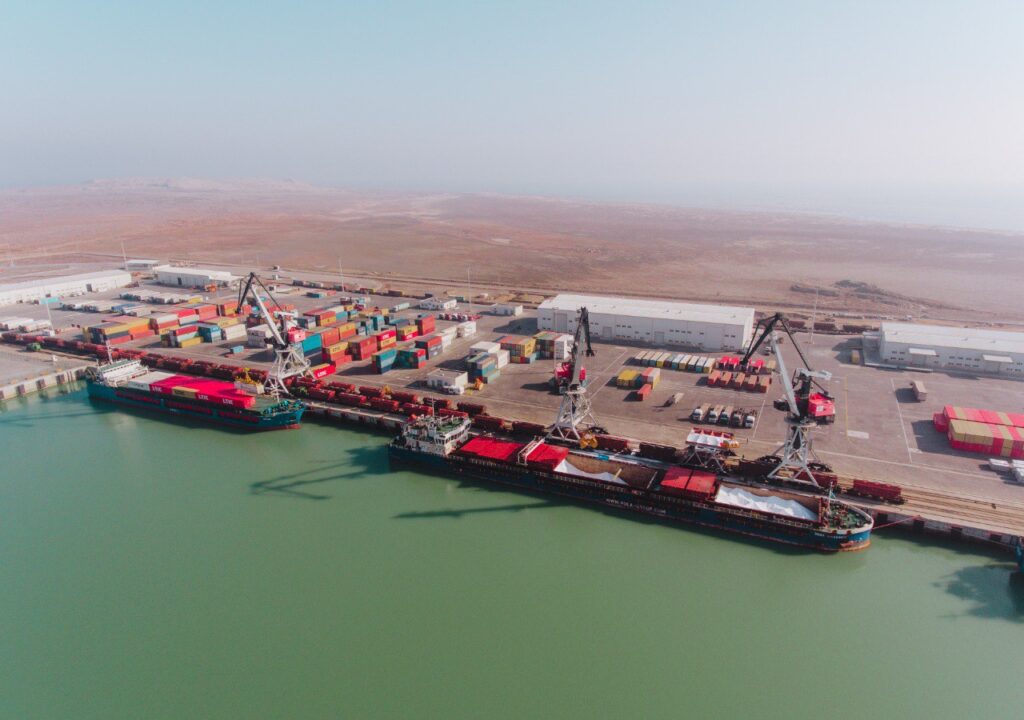
Caspian Baku port handled 70,000 TEUs in January–August 2025, according to a brief notice published by Ports Europe. While concise, the figure provides a clear reference point for assessing recent activity at the Caspian gateway. In the container sector, TEU—twenty-foot equivalent unit—is the standard measure used to quantify volume, allowing observers to situate a port’s performance within broader operational and market contexts. The number, covering an eight-month period, offers a snapshot rather than a full-year profile, yet it is sufficiently substantive to inform short-term planning discussions among carriers, shippers, and terminal operators monitoring throughput in and around the Caspian basin.
Context and implications of reported throughput
For port managers and users, a discrete throughput figure is a starting point for evaluating yard utilization, vessel calls, and berth productivity. Although a single statistic does not describe service frequency or dwell times, it frames expectations for operational planning in the near term. Container volumes at any maritime gateway are influenced by seasonal cycles, trade patterns, and logistics constraints across rail, road, and sea interfaces. The reported result therefore invites attention to vessel scheduling, equipment allocation, and storage strategies, all of which hinge on consistent demand signals. Even without a detailed breakdown, stakeholders can align preliminary assumptions about capacity needs with observed flows.
From a market standpoint, throughput markers inform carriers and logistics providers as they calibrate rotations and frequencies. A figure of this magnitude suggests a level of demand that warrants continued attention to schedule reliability, cargo readiness, and inland connectivity. For freight forwarders and beneficial cargo owners, predictable port performance is integral to inventory management and cost control, especially when supply lines traverse multiple jurisdictions and modal handoffs. The indicator reported for the Caspian Baku port can thus serve as a practical reference when assessing risks and buffers in regional supply chains, even in the absence of granular operational data.
The broader geography matters. Activity around the Caspian Sea reflects maritime and intermodal dynamics that can shift with policy, infrastructure works, and carrier deployment decisions. Containerized flows typically depend on alignment between terminal capacity, hinterland access, and shipping network design. Measured against these fundamentals, a published throughput level helps observers test assumptions about network resilience and commercial appetite. It also offers a basis for dialogue among authorities, operators, and cargo interests regarding potential bottlenecks or efficiencies that may be emerging during the current cycle.
Interpreting any headline statistic benefits from context. Analysts commonly examine directional balances, commodity mixes, and transshipment shares to determine whether flows are driven by local demand, regional redistribution, or longer-haul relay. They also watch for month-to-month variability that could reflect shifts in booking behavior, vessel deployments, or operational slowdowns. While such details are not embedded in a single cumulative figure, the 70,000-TEU marker is a meaningful benchmark for comparing operational tempo across adjacent periods once additional disclosures become available from public sources or official reports.
For decision-makers, the practical takeaway is that the published number is actionable in planning horizons where precision can be refined later. Terminal operators may stress-test resource plans; carriers can review port calls within rotations; and cargo owners may adjust lead times and inventory buffers. As always, consistency in measurement and disclosure enhances comparability: alignment on definitions of container throughput, coverage periods, and counting methodologies (e.g., full versus empty units) reduces ambiguity for logistics stakeholders. In the meantime, the Caspian Baku port’s reported activity provides a concise indicator around which operational and commercial expectations can be configured.


Sign up free to ask CAMAL AI for a summary, the key points or anything else about this story.
Related stories
CAMAL AI
 Financial Ports Newsletter
The maritime economy, every morning
Ports, shipping and freight markets in one short email. Free.
Financial Ports Newsletter
The maritime economy, every morning
Ports, shipping and freight markets in one short email. Free.