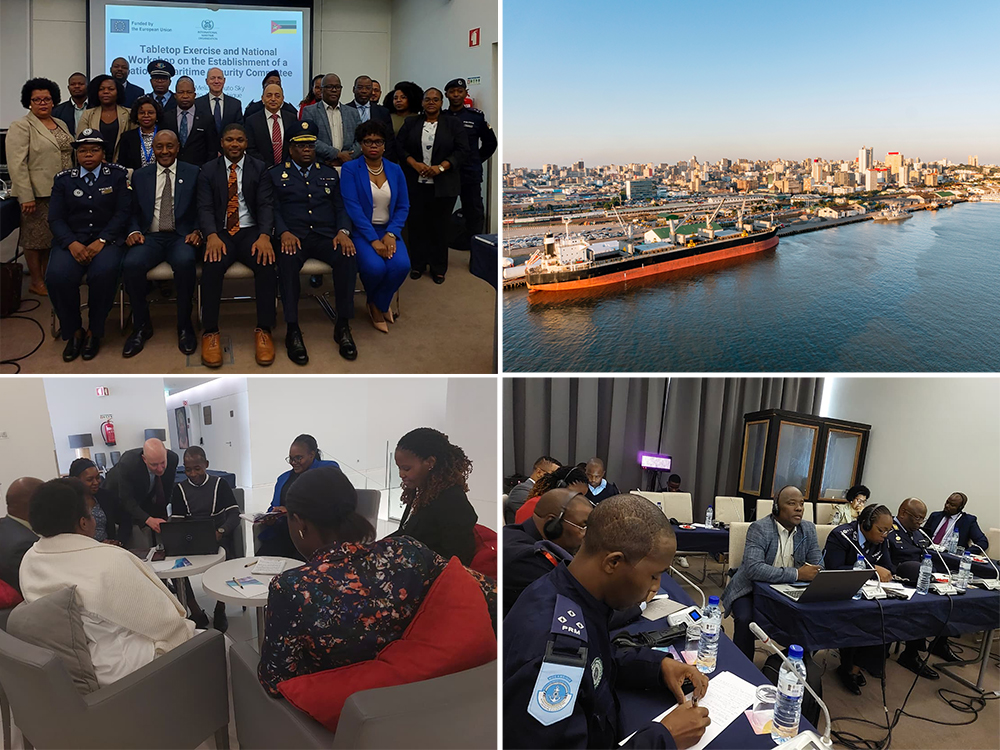
Mozambique has advanced efforts to strengthen maritime security coordination with backing from the International Maritime Organization (IMO). In a brief notice circulated via Maritimafrica, the country is said to have laid the groundwork to establish improved coordination arrangements. While the statement is concise and does not specify the instruments or institutions involved, its emphasis on coordination and IMO support signals an intent to organize responsibilities and communication channels more systematically. No additional details on the scope, timeline, or operational modalities were provided in the available text, and the statement stops short of describing the specific entity or framework that may follow.
Context and implications
Taken at face value, the announcement points to an initial, preparatory phase rather than the launch of a fully fledged body or policy. The reference to laying groundwork suggests foundational steps such as consultations, drafting outlines, or mapping roles among relevant stakeholders. However, the material in circulation does not clarify which agencies are involved, how responsibilities might be apportioned, or what formal instruments could be used to anchor any future arrangements. In this context, the development should be understood as a signal of intent and organization rather than a description of operational change now in effect.
In practical terms, coordination frameworks typically revolve around information-sharing practices, incident notification pathways, joint assessments, and aligned training or procedures — but the notice does not state that these measures are planned here. Instead, it frames the current stage as a preliminary effort to shape how actors might interact more cohesively. This is consistent with early-phase policy work, where principles and interfaces are scoped before any implementation commitments are set. Without a published blueprint, it would be premature to infer the specific design, authority, or mandates that could eventually be proposed under any new coordination arrangement.


The cited involvement of the IMO indicates external backing for these steps. In comparable initiatives elsewhere, such backing may encompass technical guidance, facilitation of dialogue, or alignment with recognized practices; the available material, however, does not specify the modality of support in this case. The notice does not provide a timeline, a list of deliverables, or a schedule for further announcements. As a result, the present understanding rests on the core elements explicitly referenced: a preparatory move toward more organized collaboration and the mention of the IMO as a supporting counterpart.
Several essential elements remain unspecified at this stage. These include the precise form of any body to be established, the lead institution, how participating entities could be represented, and what legal or administrative basis might be envisaged. Also not disclosed are potential funding sources, oversight mechanisms, performance indicators, or interoperability requirements. The absence of these details is not unusual during groundwork phases; such elements are commonly developed through iterative consultation and drafting. Until those particulars are made public, the scope of change remains indicative rather than definitive.
The significance of this development lies in the possibility of greater institutional clarity and predictability. Even modest gains in coordination can reduce duplication, improve the timeliness of decisions, and support more coherent planning. Conversely, if roles are not clearly delineated, coordination platforms can remain underused or become symbolic. For that reason, attention will likely focus on how any emerging framework — should one be proposed — defines participation, decision-making channels, escalation procedures, and data stewardship. Such questions determine whether coordination becomes routine practice or remains a stated aspiration.
Next steps will become clearer only through formal communiqués or regulatory notices from the competent authorities. Observers will be looking for concrete signals such as draft terms of reference, designation of focal points, or the scheduling of consultative sessions. Regional or international linkages could also be addressed later, but the present information does not detail any external interfaces beyond the IMO reference. Until fuller documentation is released, the development is best read as a preliminary organizational step, aligning intent with external support, while leaving the operational architecture and timelines to future disclosure.