

US to Guide Neutral Ships Through Strait of Hormuz
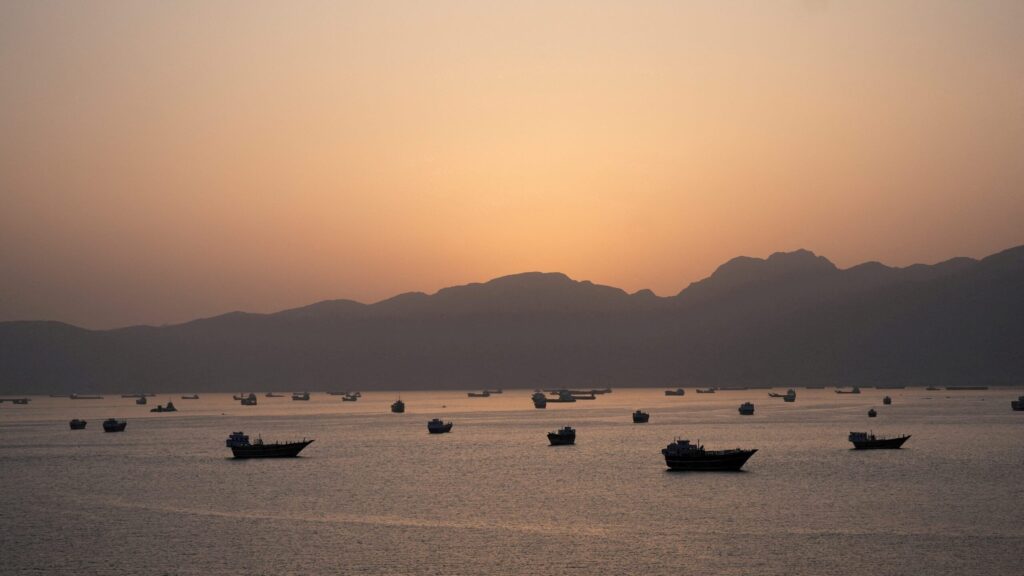
President Donald Trump said the United States will begin guiding some neutral ships trapped in the Persian Gulf out through the Strait of Hormuz, Bloomberg reported on May 3, 2026. The remark, attributed to Trump in that report, signaled an initiative aimed at assisting civilian vessels seeking safe passage from a congested and sensitive waterway. The statement offered no additional operational detail, leaving open how the effort would be organized, when it might commence, and which vessels could qualify for assistance.
As presented, the plan emphasizes “guiding” rather than coercive enforcement, a choice of language that leaves room for a range of practical interpretations. It is not yet clear whether this would involve coordinated convoys, ad hoc escorts, or structured navigational advisories. The report did not outline eligibility thresholds, documentary requirements, or screening protocols for the term neutral ships, nor did it describe how such ships might request passage support or be queued for departure from holding areas.
Strategic chokepoint and maritime risk
The Strait of Hormuz connects the Persian Gulf with the Gulf of Oman and the Arabian Sea, serving as a principal corridor for commercial traffic. Its narrow geometry, concentrated traffic, and layered security sensitivities make it a textbook chokepoint where disciplined navigation and clear communication are essential. Any renewed effort to marshal safe transits would have to accommodate traffic separation schemes, pilotage norms, and deconfliction practices already in use, while avoiding actions that add to congestion or misunderstanding.
In past episodes elsewhere, authorities have organized outbound flows through standardized windows, pre-announced waypoints, and defined liaison channels to reduce uncertainty for masters and operators. Practical measures can range from advisory broadcasts and identification checks to the assembly of escorted transits, depending on risk assessments and resource availability. If applied here, the mechanics—rendezvous points, call-up procedures, documentation checks, and the composition of any accompanying assets—would shape how quickly backlogs can ease and how predictably schedules might be restored.
Commercial stakeholders tend to monitor official notices and industry circulars closely, adjusting routings, laycans, and port calls as conditions evolve. Insurers and charterers typically recalibrate terms when uncertainty rises, prioritizing reliable vessel tracking, crew protection, and verifiable information. Clear, timely advisories have, in previous periods of tension, helped stabilize expectations and reinforce maritime security practices across routes that interface with contested or congested waters, reducing the scope for miscalculation at sea.
Diplomatically and legally, the reference to neutrality indicates an intention to focus on civilian shipping not party to disputes. While the report offered no legal framework, longstanding practice emphasizes continuity of commercial navigation through straits used for international passage, with coastal states, flag states, and operators sharing responsibilities for safety and compliance. The practical application often turns on transparent communication, standardized documentation, and predictable conduct by all vessels operating in or near constrained channels.
Key uncertainties now include which US agencies or commands would coordinate requests, how eligibility would be verified, and what communications protocols would govern interactions with other traffic. Mariners will look for clarity on call-in procedures, scheduling windows, and contingency measures should conditions shift en route. Until formal guidance is issued, operators with exposure to the region are likely to maintain elevated caution, contingency planning, and close liaison with agents, insurers, and coastal authorities as they assess next steps.


Sign up free to ask CAMAL AI for a summary, the key points or anything else about this story.
Related stories
CAMAL AI
 Financial Ports Newsletter
The maritime economy, every morning
Ports, shipping and freight markets in one short email. Free.
Financial Ports Newsletter
The maritime economy, every morning
Ports, shipping and freight markets in one short email. Free.



