
Marsa Maroc invests 80 million to partner with Boluda in the port terminal business

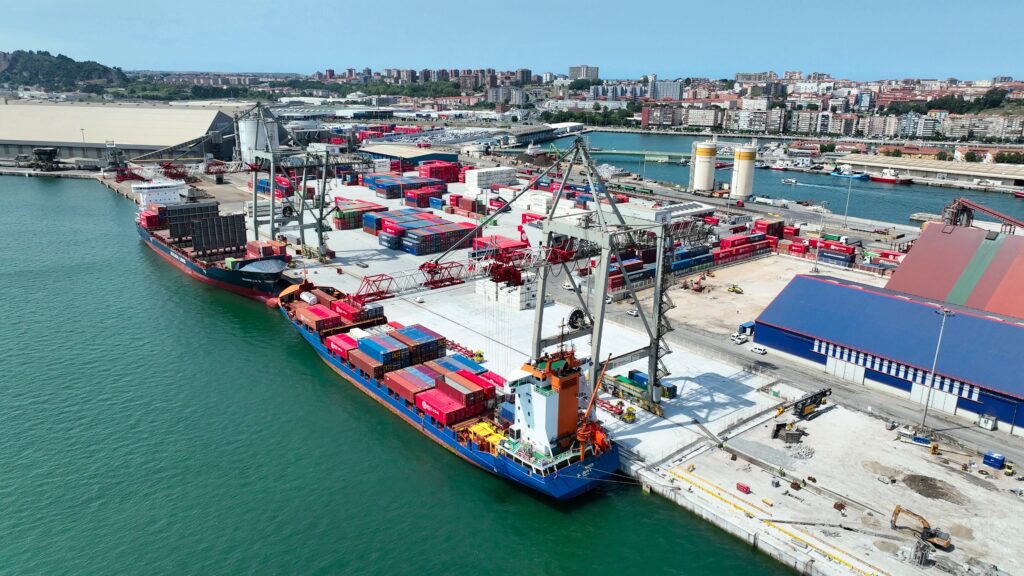
On December 15, 2025 , Marsa Maroc and Boluda Corporación Marítima announced the signing of an agreement whereby the Moroccan operator’s international development subsidiary, Marsa Maroc International Logistics (MMIL), will acquire 45% of the share capital and voting rights of Boluda Maritime Terminals (BMT) , the terminal management division of the Spanish group, for a total of €80 million . This transaction, approved by Marsa Maroc’s board of directors in November, is now pending approval from the relevant authorities.
The Moroccan group’s entry comes four months after Boluda regained 49% of Boluda Maritime Terminals, which had been held by the British investment fund CVC Capital Partners, thus gaining 100% control of the company.
Boluda Maritime Terminals is a well-established player in Spain and the Canary Islands, with a presence in nine key terminals —including ports such as Cádiz, Las Palmas, Santander, Tenerife, Seville, and Vilagarcía—which handled more than 1 million TEUs in 2024. These terminals not only serve the Spanish market but also constitute essential connection hubs with the Balearic Islands, Northern Europe, and routes to West Africa and Cape Verde via eleven shipping lines operated by Boluda Lines .
Following this agreement, Boluda Maritime Terminals will continue to maintain control over its port terminals in Spain.
The agreement between Marsa Maroc and Boluda Corporación Marítima represents a far-reaching strategic move that goes beyond a simple capital transaction. It not only strengthens two leading companies in their respective markets but also enhances transcontinental connectivity, boosts the competitiveness of the port industry, and projects a sustainable and efficiently integrated cooperation model in an increasingly interdependent world. With 34 terminals in 20 ports, Marsa Maroc is taking a significant step in expanding its geographic presence.
Business complementarity and operational synergies
The joint statement from both companies underscores that this strategic partnership will allow them to combine complementary capabilities and strengths in port terminal management. Marsa Maroc contributes its experience in port operations and knowledge of logistics growth in Africa and the Mediterranean, while Boluda offers its expertise in terminal management and international maritime connectivity.

These types of synergies are key to responding to the demands of an increasingly volatile and competitive global trade. The consolidation of infrastructure and know-how between operators like Marsa Maroc and Boluda strengthens the resilience of supply chains, facilitates the transit of goods, and expands opportunities for logistical development between regions.
The agreement with Boluda is part of Marsa Maroc’s broader internationalization strategy within the framework of its Marsa 2030 strategic plan, aimed at making the group a global leader in port and logistics operations . Following this roadmap, the operator has been developing terminal expansion projects in Morocco, participating in key concessions such as the East Container Terminal and West Container Terminal in Nador West Med , which are expected to be operational in the coming years.
In addition, Marsa Maroc has forged complementary alliances, such as the creation of a consortium with Boluda Towage France — in which this specialized subsidiary of Boluda holds 51% and Marsa Maroc 49% — to offer towing and port assistance services in the port of Nador West Med for the next 20 years, with significant investments in a new maritime fleet .
Implications for port competitiveness
Marsa Maroc’s stake in Boluda Maritime Terminals not only expands the African operator’s presence in Europe, but also reshapes the competitive landscape of terminal management on the Atlantic and Mediterranean coasts. The smooth flow of goods between Spanish and Moroccan ports is crucial for meeting the logistical challenges of global trade—from increased containerized volumes to the need to reduce transit times and operating costs.
Furthermore, this initiative opens new doors for the coordination of port policies and international logistics between Morocco and Spain , and by extension between Africa and the European Union, encouraging investment and promoting more efficient operating standards.
These types of initiatives not only transform the operations of the companies involved, but also shape the future of the logistics corridors that underpin global trade. In a context where distances are increasingly measured less in kilometers and more in connectivity and operational efficiency , alliances like this one set the standard for a new era for 21st-century ports.


Regístrate gratis para pedirle a CAMAL AI un resumen, las claves o lo que quieras sobre esta noticia.

Noticias relacionadas
CAMAL AI