

Skip to content
Ports
Wednesday, 9 September 2026 · 16:30 · Morocco ·
World Trade Pulse▼ -5.3%seaborne trade this week · 4,659 port calls a dayIMF PortWatch
SHIPPING CRÓNICA

Maersk Confirms Alliance Fairfax Escorted Through Hormuz
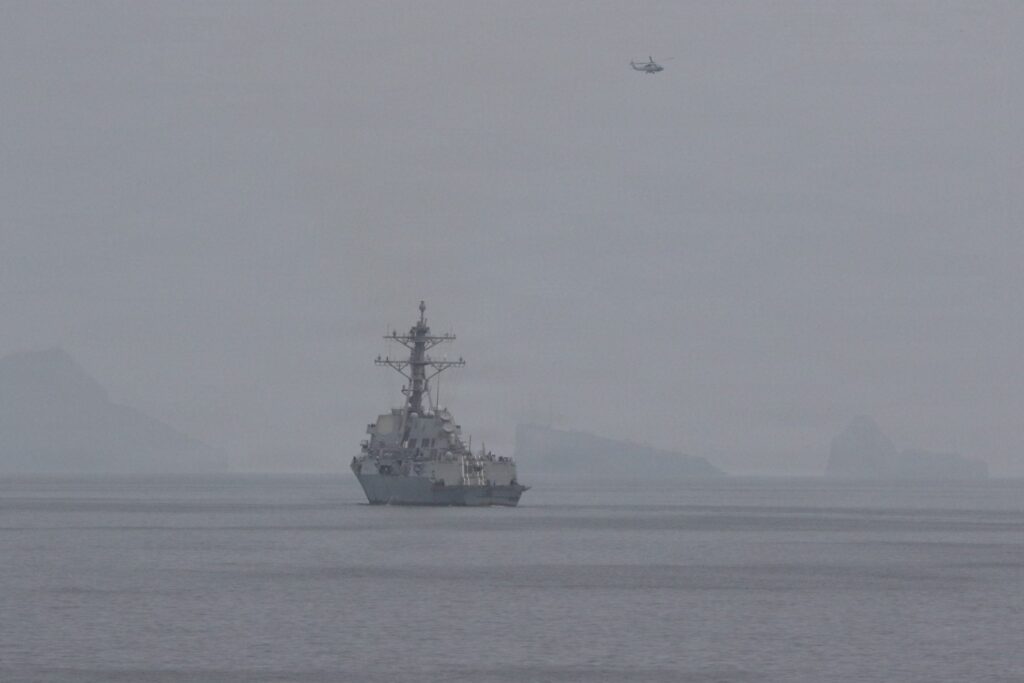
The company identified its U.S.-flagged ro-ro Alliance Fairfax as part of Monday’s U.S.-escorted transits through the Strait of Hormuz, offering rare specificity amid heightened attention to commercial movements.

Fotografía — Weihong Nguyen / InfoPuertos

Maersk has confirmed that one of the vessels involved in Monday’s U.S.-escorted transits of the Strait of Hormuz was its U.S.-flagged roll-on/roll-off ship Alliance Fairfax. The identification, made public by the company, places a specific name and flag on a previously generalized set of movements, underscoring the sensitivity and visibility of any commercial passage through this strategic corridor under external escort.

As a U.S.-flag roll-on/roll-off (ro-ro) vessel, Alliance Fairfax is configured to carry wheeled cargo via built-in ramps and decks. Such ships are mainstays of commercial logistics for vehicles and heavy equipment, and their operational profiles typically emphasize schedule integrity, predictable port calls, and stable charter arrangements—conditions that can be tested by heightened regional security considerations.

Company Confirmation and Strategic Context

The chokepoint connects major energy-exporting terminals with global markets and concentrates maritime traffic in a narrow sea lane. For ship operators and cargo interests, any sign of disruption or escort activity can sharpen risk assessments, inform routing decisions, and shape discussions with insurers and counterparties over exposure, timing, and potential cost implications.

Container Lines▲ +6.22% today

A.P. Møller-Maersk

AMKBY · USD · last 6 months · tap for the full page
Source: CAMAL AI

Monday’s confirmation that Alliance Fairfax participated in the U.S.-escorted transits provides an unusual degree of clarity about a particular voyage and flag state. It also delineates the boundary between general advisories and verified, company-level disclosures, which can materially influence how market participants interpret fragmented signals from vessel tracking data and media reports.

Naming a specific vessel helps carriers, charterers, and financiers calibrate their understanding of operational risk without extrapolating beyond the available record. It narrows speculation, sets a factual baseline for subsequent discussions, and allows operational teams to compare current practices against contingency plans designed for constrained waterways and externally coordinated movements.

At the same time, transparency must be balanced against operational security and routine commercial confidentiality. Real-time disclosures about routes, schedules, or protective measures can introduce hazards or competitive sensitivities, especially when multiple stakeholders share responsibility for safety, cargo integrity, and continuity of service.

Ro-ro tonnage presents distinct handling and stowage characteristics, and the category’s dependence on predictable berthing windows underscores why operators scrutinize any factor that could tighten port turnarounds. While the company’s statement centers on identification rather than detail, the operational focus remains the same: move cargo safely, uphold contractual obligations, and maintain cadence along established lanes.

Market observers routinely triangulate open-source information, including automatic identification system signals, corporate notices, and regulatory advisories, to form a composite view of evolving conditions. Confirmed identifications like this one can either validate those reconstructions or prompt reassessment of assumptions about timing, routing, and the prevalence of accompanied passages.

Attention now turns to how carriers, terminals, and customers adapt planning assumptions to account for any additional escorted movements through Hormuz and other narrow seaways. For the moment, Maersk’s identification of Alliance Fairfax as part of Monday’s activity stands as a concrete data point in a fluid environment, anchoring analysis to a verifiable fact while broader dynamics continue to unfold.


CAMAL AI
Maritime artificial intelligence Go deeper with:

Sign up free to ask CAMAL AI for a summary, the key points or anything else about this story.

Related stories

CAMAL AI CAMAL AI

Financial Ports Newsletter Financial Ports Newsletter The maritime economy, every morning Ports, shipping and freight markets in one short email. Free.

COMPARTIR 0
SHIPPING EXCLUSIVA 05/05/2026

Maersk Confirms Alliance Fairfax Escorted Through Hormuz

The company identified its U.S.-flagged ro-ro Alliance Fairfax as part of Monday’s U.S.-escorted transits through the Strait of Hormuz, offering rare specificity amid heightened attention to commercial movements.

Maersk

Imagen del Teide al amanecer en la jornada del lunes, momento en el que se registró el último pico de actividad sísmica. · Fotografía: Andrés Gutiérrez para InfoPuertos

Maersk has confirmed that one of the vessels involved in Monday’s U.S.-escorted transits of the Strait of Hormuz was its U.S.-flagged roll-on/roll-off ship Alliance Fairfax. The identification, made public by the company, places a specific name and flag on a previously generalized set of movements, underscoring the sensitivity and visibility of any commercial passage through this strategic corridor under external escort.

As a U.S.-flag roll-on/roll-off (ro-ro) vessel, Alliance Fairfax is configured to carry wheeled cargo via built-in ramps and decks. Such ships are mainstays of commercial logistics for vehicles and heavy equipment, and their operational profiles typically emphasize schedule integrity, predictable port calls, and stable charter arrangements—conditions that can be tested by heightened regional security considerations.

Company Confirmation and Strategic Context

The chokepoint connects major energy-exporting terminals with global markets and concentrates maritime traffic in a narrow sea lane. For ship operators and cargo interests, any sign of disruption or escort activity can sharpen risk assessments, inform routing decisions, and shape discussions with insurers and counterparties over exposure, timing, and potential cost implications.

Container Lines▲ +6.22% today

A.P. Møller-Maersk

AMKBY · USD · last 6 months · tap for the full page
Source: CAMAL AI

Monday’s confirmation that Alliance Fairfax participated in the U.S.-escorted transits provides an unusual degree of clarity about a particular voyage and flag state. It also delineates the boundary between general advisories and verified, company-level disclosures, which can materially influence how market participants interpret fragmented signals from vessel tracking data and media reports.

Naming a specific vessel helps carriers, charterers, and financiers calibrate their understanding of operational risk without extrapolating beyond the available record. It narrows speculation, sets a factual baseline for subsequent discussions, and allows operational teams to compare current practices against contingency plans designed for constrained waterways and externally coordinated movements.

At the same time, transparency must be balanced against operational security and routine commercial confidentiality. Real-time disclosures about routes, schedules, or protective measures can introduce hazards or competitive sensitivities, especially when multiple stakeholders share responsibility for safety, cargo integrity, and continuity of service.

Ro-ro tonnage presents distinct handling and stowage characteristics, and the category’s dependence on predictable berthing windows underscores why operators scrutinize any factor that could tighten port turnarounds. While the company’s statement centers on identification rather than detail, the operational focus remains the same: move cargo safely, uphold contractual obligations, and maintain cadence along established lanes.

Market observers routinely triangulate open-source information, including automatic identification system signals, corporate notices, and regulatory advisories, to form a composite view of evolving conditions. Confirmed identifications like this one can either validate those reconstructions or prompt reassessment of assumptions about timing, routing, and the prevalence of accompanied passages.

Attention now turns to how carriers, terminals, and customers adapt planning assumptions to account for any additional escorted movements through Hormuz and other narrow seaways. For the moment, Maersk’s identification of Alliance Fairfax as part of Monday’s activity stands as a concrete data point in a fluid environment, anchoring analysis to a verifiable fact while broader dynamics continue to unfold.

CAMAL AI
Maritime artificial intelligence Go deeper with:

Sign up free to ask CAMAL AI for a summary, the key points or anything else about this story.

Related stories

CAMAL AI CAMAL AI
Financial Ports Newsletter Financial Ports Newsletter The maritime economy, every morning Ports, shipping and freight markets in one short email. Free.

341 comentario de lectores LEER Y PARTICIPAR

Financial Ports newsletters

Pick the ones you want. Free, and you can unsubscribe in one click.

