

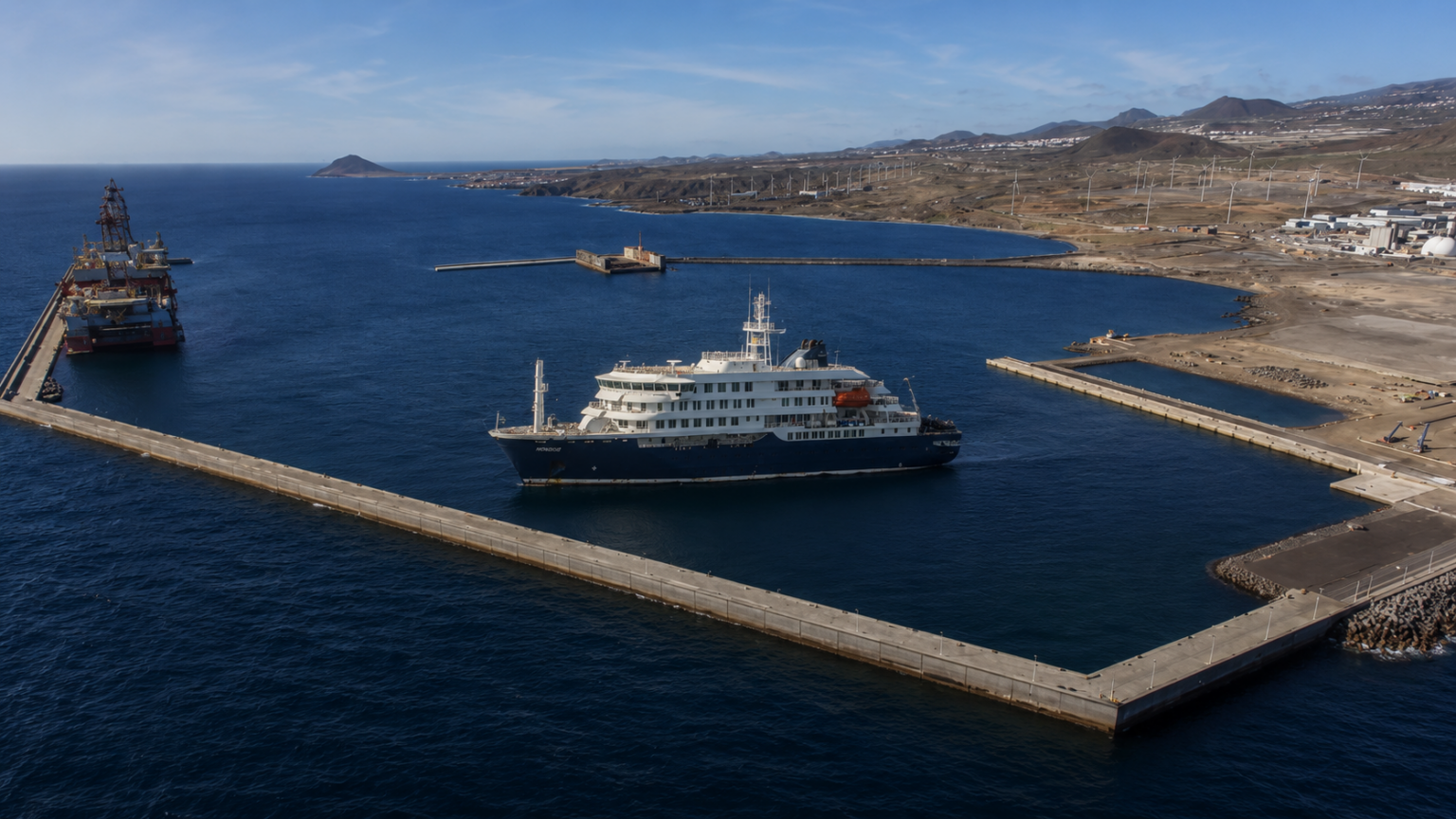
The arrival of the cruise vessel MV Hondius at Granadilla Port next Sunday, carrying both suspected and confirmed cases of hantavirus and linked to at least three deaths, confronts the Canary Islands with a scenario that tests more than paperwork. It measures whether protocols, institutions and decision-making can function together under pressure. Beyond the headline, the core issue is the quality of a coordinated response across port authorities, public health and competent agencies—an exercise in execution, transparency and control rather than a contest of statements.
A real risk that demands rigor
Hantavirus is not a trivial illness. Its potential severity, its transmission linked to specific environments, and the public’s limited familiarity with it can trigger immediate concern. Permitting a controlled call at Granadilla inevitably raises legitimate questions: Is an unnecessary risk being taken? Is the system prepared to prevent contagion? Is operational continuity being placed ahead of safety? These questions warrant answers grounded in evidence and procedure, not speculation. The situation will be judged not by words, but by the clarity of plans and the precision with which they are executed.
Ports are not merely logistics platforms; they are first-line sanitary checkpoints. Experience accumulated through the COVID-19 pandemic reinforced processes that enable faster, more reliable intervention today. In Spain, coordination with Sanidad Exterior (External Health) is a defined pathway that integrates maritime traffic oversight with public health safeguards. In that sense, a port call under reinforced control is a test of the system’s resilience and its capacity to act as effective border health infrastructure, from the quay to the hospital network.


According to the operational approach described in this case, robust management involves immediate isolation of any suspected case, the activation of Sanidad Exterior, close coordination with specialized hospital services, thorough control of passengers and crew, and communication that is transparent but not alarmist. If these steps are implemented properly and consistently, the risk profile can be reduced substantially. The standard is not to avoid complex scenarios at all costs, but to show that they can be managed with discipline, speed and accountability.
The Canary Islands operate as an integrated system. Granadilla does not act in isolation; it is part of a network in which port authorities experienced in international traffic, health services with epidemiological capacity, and public institutions used to managing logistical crises work in tandem. This cohesion underpins the assertion that the archipelago is prepared to operate as a safe frontier between regions. In practice, that means aligning protocols, resources and communication channels so that responsibilities are clearly assigned and time-sensitive decisions can be made without ambiguity.
There is also a human dimension that shapes this response: solidarity. Assisting a ship in a difficult situation is not only a technical obligation; it is an ethical stance that recognizes interdependence in a global maritime system. Choosing to engage—rather than to turn away—signals a commitment to shared solutions. When managed with professionalism, this approach can strengthen the territory’s credibility as a reliable partner that tackles problems rather than displacing them to someone else’s horizon.
If handled with rigor, an incident of this type can yield measured positives. These include reputational reinforcement based on real performance, confidence among maritime and tourism operators who prioritize safe, predictable ports, validation of post-pandemic procedures under real-world stress, and strategic positioning for the islands as a capable hub for complex scenarios. None of these benefits are automatic; they depend entirely on execution and verifiable outcomes.
Between risk and opportunity lies institutional maturity. The scheduled call of MV Hondius in Granadilla should not be read only as a threat, but as a chance to demonstrate that protocols work when they are most needed. In a landscape defined by global connectivity, shutting the door is rarely a sustainable option; opening it with control, knowledge and responsibility often is. Ultimately, reputation is not defined by the incident itself, but by how it is managed.

