

US Coast Guard Sends C-130J to Monitor Five Chinese Research Vessels Off Alaska
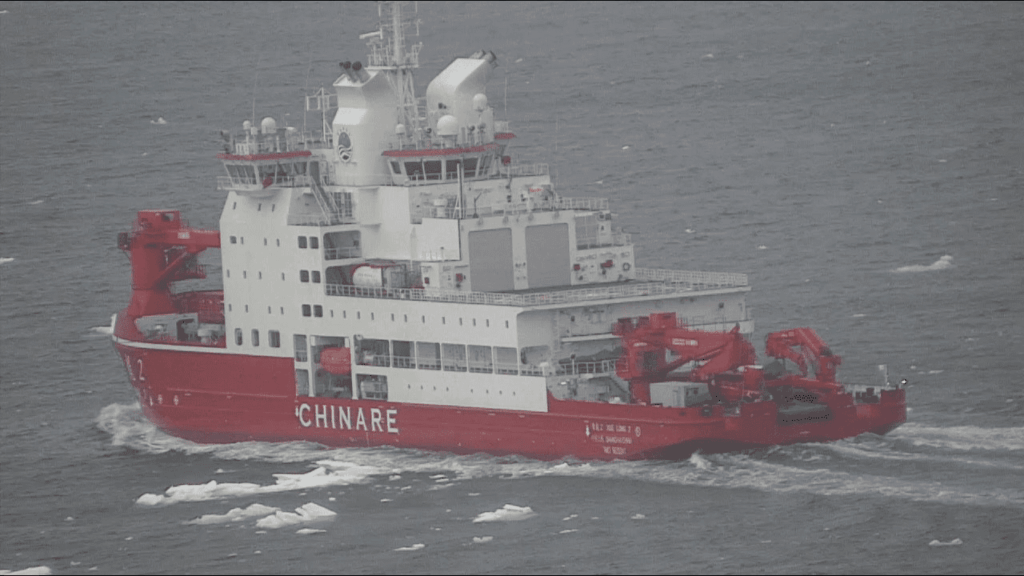
The United States is continuing to monitor extensive Chinese activity in Arctic waters off the coast of Alaska, with attention focused on five research vessels operating just outside the U.S. Exclusive Economic Zone (EEZ). On August 13, the Coast Guard’s Arctic District deployed a C-130J Hercules fixed-wing aircraft from Air Station Kodiak to overfly the group and maintain visibility on their movements. The mission, conducted in international waters, aligns with the U.S. approach of ensuring safety, transparency, and awareness in the region as maritime traffic and scientific operations increase during the Arctic summer.
The C-130J provides long-range, all-weather patrol capability suited to the vast distances and challenging conditions of the high latitudes. By overflying the vessels, the Coast Guard can verify positions, observe operating patterns, and support broader maritime domain awareness efforts across the northern approaches to Alaska. The deployment from Kodiak underscores the logistical reality of Arctic missions, where air assets are often the most practical means to rapidly reach remote areas and maintain a persistent picture of activity across a wide swath of ocean.
While the Chinese vessels were reported just outside the EEZ, that area remains beyond U.S. jurisdiction and is governed by international law. Operating in such waters does not in itself contravene maritime norms, provided vessels comply with applicable safety and environmental rules. The Coast Guard’s overflight reflects routine monitoring of foreign-flagged ships near U.S. waters—an approach intended to support navigation safety, deter unsafe behavior, and ensure that research or other activities are consistent with established legal frameworks.
Arctic overflight underscores heightened vigilance
Seasonal sea-ice retreat, interest in marine science, and evolving shipping patterns have increased activity in the waters north and west of Alaska. As the Arctic becomes more accessible, U.S. authorities have stepped up efforts to understand who is present, what they are doing, and how their activities may intersect with domestic safety, environmental protection, and economic interests. Overflights like the August 13 mission help build a current, corroborated operational picture that can be shared with relevant agencies and mariners as conditions change.
The Coast Guard routinely conducts patrols and surveillance in the region during the summer navigation window, integrating aviation assets with cutters, command centers, and partners across government. These efforts support search and rescue preparedness, fisheries oversight, and the protection of critical infrastructure along Alaska’s coastline. Monitoring foreign research vessels is part of that broader mission set, aiming to promote transparency and preserve stability while respecting the rights of all nations to lawful use of the seas.
As foreign research expeditions and commercial traffic continue to traverse international waters near Alaska, U.S. monitoring is expected to remain active to safeguard maritime safety and environmental stewardship. The August 13 overflight highlights how aviation patrols enable timely observation without interfering with lawful activities. Taken together, these measures signal continued U.S. commitment to a safe, open, and rules-based Arctic, where scientific inquiry and navigation can proceed under clear, internationally recognized norms.


Sign up free to ask CAMAL AI for a summary, the key points or anything else about this story.
Related stories
CAMAL AI
 Financial Ports Newsletter
The maritime economy, every morning
Ports, shipping and freight markets in one short email. Free.
Financial Ports Newsletter
The maritime economy, every morning
Ports, shipping and freight markets in one short email. Free.