

UK Docks Secures Bangladesh Navy Refit for HMS Enterprise
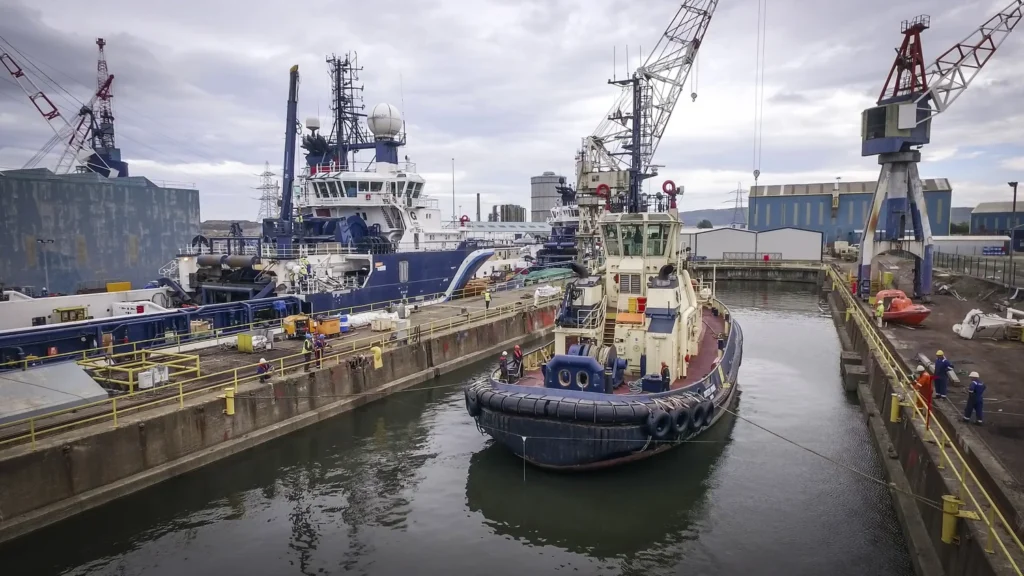
UK Docks has won a refit contract from the Bangladesh Navy for HMS Enterprise, according to a brief post published by Ports Europe. The announcement confirms the award but does not expand on commercial terms, technical scope, schedule, or location. While the headline points to a significant maintenance engagement, the absence of further specification means the parameters of the project remain undisclosed by the source. As a result, stakeholders have clarity only on the existence of the agreement, not on its value, work content, or timeframe, pending further statements from the contracting parties.
With no additional information in the source, key questions remain open: whether the work entails routine upkeep or a deeper life‑extension package, which facilities will be used, the expected duration, and the timeline for redelivery. Likewise, there is no indication of contract value, subcontracting arrangements, or regulatory approvals. Until stakeholders release a fuller statement or contracting notices appear, the scope and scale of the initiative cannot be confirmed, and any characterization beyond the basic award would be speculative.
Context and industry significance
In naval maintenance, refit awards often signal planned reliability work and compliance with class and military standards. Such programs typically involve docking, inspection, coatings, machinery overhauls, and electronics testing, though the exact mix varies by platform and mission. For operators, timely refits help preserve availability and mitigate lifecycle costs; for service providers, they can anchor workforce utilization and supply‑chain demand across multiple trades. Because no details accompanied the present notice, none of those elements can be assumed for this case, and decisions on configuration, sequencing, or resourcing remain unknown.
Cross‑border ship repair and defense support have long formed part of maritime commerce. Navies sometimes source work internationally to match capacity windows, specialized capabilities, or cost profiles. Conversely, providers compete for such work to smooth yard loading and demonstrate competence. The current report indicates a cross‑national arrangement, but it does not specify where execution will occur, what assets are assigned, or which standards govern the activity, beyond the fact of a refit award. Clarity on these questions typically arrives through official releases, procurement records, or subsequent reporting once planning milestones are set.
Refits, in general, may cover hull preservation, propulsion and auxiliary systems servicing, habitability upgrades, and safety equipment checks. Depending on condition and objectives, a project can range from minor works completed alongside to comprehensive dock periods. However, the source post offers no confirmation about tasks, timelines, or milestones in this instance, so any particular configuration should be treated as hypothetical pending formal disclosure. This caveat extends to materials, workforce size, and test‑and‑trial requirements, which vary widely and cannot be inferred from the limited information released.
Project execution, when it proceeds, typically hinges on clear work packages, material availability, and synchronized vendor support. Dry‑dock scheduling, class surveys, and test‑and‑trial windows are among the pacing items that influence duration. External factors—such as supply‑chain lead times or regulatory inspections—can also affect throughput. None of these aspects have been outlined in the cited note, and there is no indication yet of when further communication might follow. As such, timelines for commencement, completion, and handover remain unspecified.
From a governance perspective, transparency around contract terms, quality controls, and safety management systems is central to public accountability when sovereign fleets are involved. Buyers and contractors generally document acceptance criteria, change procedures, and warranty coverage. Whether or how these provisions apply here remains unspecified in the initial report, leaving observers to await formal documentation before drawing conclusions about oversight, risk management, or performance metrics.
Stakeholders and observers will now watch for official confirmation, tender references, or statements from the parties that clarify scope, schedule, location, and cost. Such updates would allow a firmer assessment of industrial impact, workforce requirements, and any collaboration among suppliers. In the meantime, prudent analysis rests on the limited facts publicly available.
At this stage, the only confirmed fact provided by the source is that UK Docks has won a Bangladesh Navy refit contract for HMS Enterprise. Until additional material is released, reporting will appropriately emphasize verification and refrain from extrapolating beyond the published notice.


Sign up free to ask CAMAL AI for a summary, the key points or anything else about this story.
Related stories
CAMAL AI
 Financial Ports Newsletter
The maritime economy, every morning
Ports, shipping and freight markets in one short email. Free.
Financial Ports Newsletter
The maritime economy, every morning
Ports, shipping and freight markets in one short email. Free.



