

Trump’s Maritime Revival Order Exposes America’s Long-Neglected Oceanic Ambitions
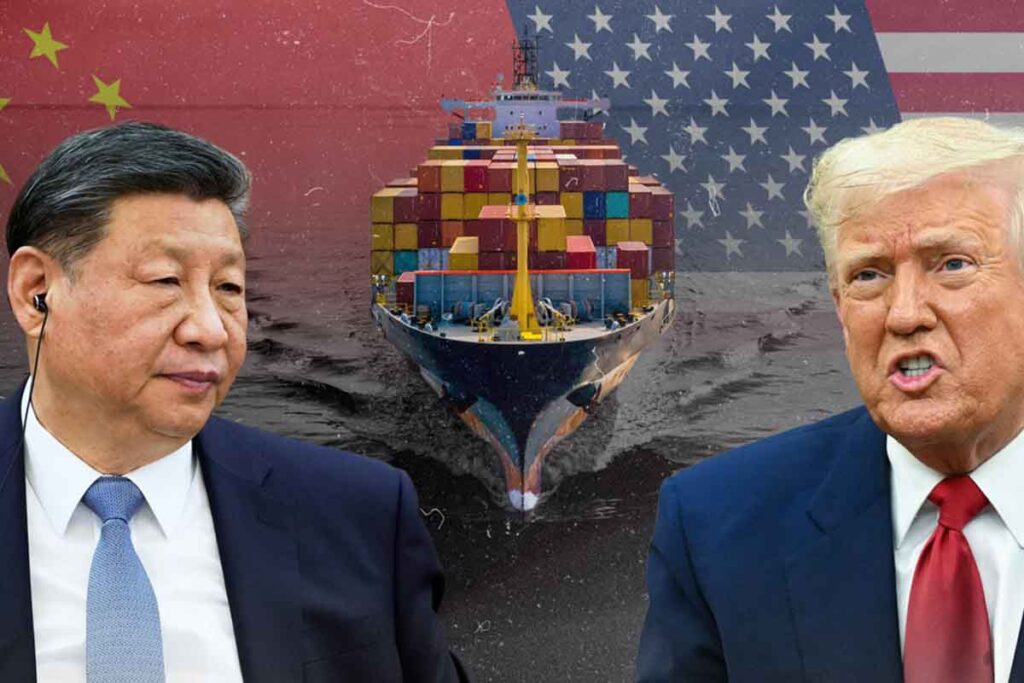
Donald Trump’s decision to issue an executive order aimed at revitalizing the United States’ maritime industry is more than a policy directive—it is a political gesture toward reclaiming a strategic industrial sector that has long atrophied under decades of neglect. While the move has been praised by some as overdue and essential for national security, it also lays bare the consequences of America’s abandonment of its commercial shipbuilding legacy, revealing a structural vulnerability that competitors like China have not only exploited but used to reshape global maritime power.
The new order calls for the creation of a maritime action plan that spans from shipbuilding and ship repair to port infrastructure and mariner training. It includes the establishment of maritime prosperity zones and seeks to counter China’s dumping of commercial ships on the global market—a practice that has tilted the scales against domestic production. Trump’s approach casts back to a time when maritime dominance was integral to American economic identity and global influence, aligning himself with leaders like Theodore Roosevelt and William McKinley, who recognized that commercial trade, mostly oceanic, was the backbone of national wealth and strategic influence.
But while the language of the order invokes a nostalgic return to maritime greatness, the reality it confronts is one of deep systemic failure. Since the early 1980s, US commercial shipbuilding has collapsed, shrinking to a shadow of its former scale. This industrial erosion hasn’t just harmed the economy—it has directly impacted naval preparedness. As efforts during Trump’s first term revealed, no matter how aggressively funding was increased to bolster naval output, the shipyards lacked the workforce, infrastructure, and supply chains necessary to scale production at the pace required. The consequence is that US warships today cost more than double their Cold War equivalents, a staggering inefficiency that undermines strategic readiness even as maritime threats multiply.
The new order’s focus on commercial shipbuilding is framed as an economic multiplier. A single shipyard job, Trump’s administration argues, can ripple across five or more sectors—from mining and steel manufacturing to advanced electronics. Yet the recovery of this ecosystem requires more than rhetoric or executive authority; it demands long-term industrial planning, substantial investment, and a labor force willing and able to take on complex, high-skill manufacturing roles in an era where many such skills have withered from disuse.
Supporters argue that American-flagged commercial vessels, operated by US mariners, offer not just economic benefits but strategic insurance. In a world where supply chains have become geopolitical weapons, reliance on foreign-controlled fleets—particularly China’s—creates an existential risk. If Beijing, amid a diplomatic standoff, decided to withdraw or restrict its shipping lines from routes critical to the American economy, the consequences could be severe. This is not theoretical posturing; during the COVID-19 pandemic, China flexed its influence over supply chains to strategic effect. The notion that such leverage could be exercised again underscores the urgency of rebuilding autonomous capacity on the seas.
The global shipbuilding balance of power underscores the scale of the challenge. China heavily subsidizes its industry, enabling it to produce both commercial and naval vessels at a speed and volume the US cannot currently match. Beijing now boasts the world’s largest navy, as well as the most expansive merchant marine presence. Its shipyards are not merely industrial assets; they are instruments of statecraft. Trump’s executive order may be the first American response to treat the maritime imbalance as both a commercial and national security emergency.
New executive order targets commercial shipbuilding and maritime self-sufficiency amid rising geopolitical tension with China
The political symbolism is unmistakable. Restoring America’s shipbuilding capacity taps directly into the populist ethos of industrial renewal, economic sovereignty, and national pride. Yet the path from symbolic gesture to operational transformation is fraught. Reviving a withered industry in a high-labor-cost country while facing globalized competition will require more than executive mandates. It will test Washington’s appetite for sustained public investment, strategic tariffs, and perhaps most critically, public patience in an era accustomed to instant economic gratification.
Trump’s vision includes reciprocal trade agreements meant to open global markets to American goods. By revitalizing the US shipping sector, his team argues, these goods can be transported on American vessels, further embedding the country in its own supply chains. But here, too, the economic logic intersects uncomfortably with geopolitical friction. Retaliatory tariffs, protectionist policies, and industrial reshoring can provoke allies as much as adversaries, risking trade fragmentation at the very moment maritime cooperation is needed to ensure global economic resilience.
The premise behind the executive order—that a nation as large and strategically situated as the United States must not outsource its oceanic capabilities—is difficult to dispute. Yet the challenge lies in translating a nationalist industrial ideal into a global reality dominated by hyper-efficient, state-backed competitors who do not play by the same economic rules. China’s maritime rise has been deliberate, coordinated, and relentless. For the US to counter it effectively, it must move beyond declarations of intent and confront the long-term economic policies and cultural attitudes that enabled its own maritime decline.
The order places commercial shipbuilding back in the national security conversation, where many believe it should have remained all along. But if it becomes just another isolated policy directive without cross-sectoral alignment, labor force strategy, and fiscal commitment, it risks being absorbed into the same cycle of underperformance that left American shipyards hollow and its merchant fleet shrinking. The executive order may indeed be the beginning of a maritime renaissance—but only if the nation is prepared to treat the seas not just as routes of trade, but as symbols of strategic independence and industrial resilience.


Sign up free to ask CAMAL AI for a summary, the key points or anything else about this story.
Related stories
CAMAL AI
 Financial Ports Newsletter
The maritime economy, every morning
Ports, shipping and freight markets in one short email. Free.
Financial Ports Newsletter
The maritime economy, every morning
Ports, shipping and freight markets in one short email. Free.



