

Switzerland backs Nigeria’s IMO Council Category C bid
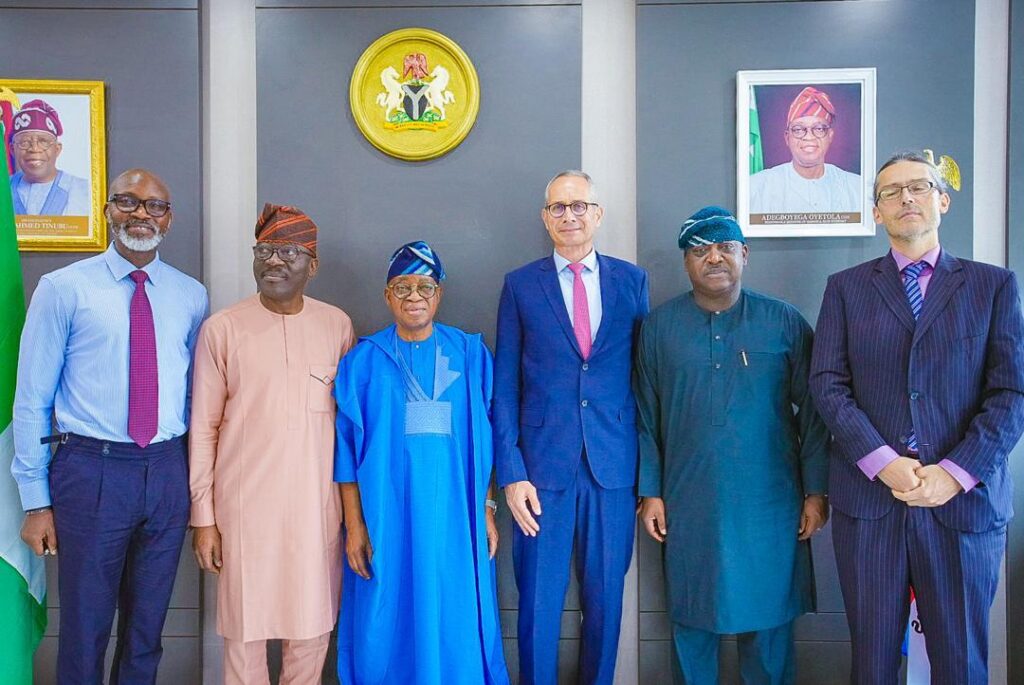
Switzerland has pledged to support Nigeria’s bid for a seat on the IMO Council under Category C, according to a brief item flagged by Maritimafrica. The notice references Nigeria’s Federal Ministry of Marine and Blue Economy but offers no additional particulars beyond the Swiss pledge and the intended candidacy. As published, the communication does not specify timing, format, or any accompanying commitments, leaving the pledge framed in general terms pending further official clarification.
The reported backing underscores ongoing diplomatic engagement around Nigeria’s pursuit of representation within the International Maritime Organization’s decision-making structures. While the item is concise, the signal of alignment from Switzerland points to shared interests in maritime regulation and trade facilitation, and it adds to the broader coalition-building that typically precedes Council voting. Absent further detail, the development is best understood as an early indicator of support rather than a comprehensive policy statement.
Context on IMO Council Category C
The International Maritime Organization is the United Nations agency responsible for setting global standards for the safety, environmental performance, and security of international shipping. Its Council serves as the Organization’s executive forum between sessions of the Assembly, preparing the agenda and coordinating the work of the IMO’s committees. Membership of the Council is determined by election among IMO Member States and is grouped into categories that reflect different dimensions of maritime engagement.
Within this framework, Category C traditionally allows states with significant maritime interests—broadly construed—to participate in the Council in a way that strengthens geographic balance and representation. The category’s role is often described as ensuring that the perspectives of a wide range of regions and maritime stakeholders contribute to the deliberations that shape regulatory priorities, technical cooperation, and the sequencing of policy initiatives across the sector.
In practical terms, an endorsement such as the one reported can be relevant during the period when candidacies are socialized and Member States consider voting alignments. Public or private expressions of support are common features of this diplomatic process, although the substantive impact of any single pledge depends on the breadth of backing ultimately assembled. The brief nature of the notice means it is not possible to infer the scope or conditions of the Swiss position beyond the stated pledge.
The reference to Nigeria’s Federal Ministry of Marine and Blue Economy indicates that the matter is being handled through Abuja’s institutional channel for maritime policy and engagement with international bodies. However, the original line—“The Federal Ministry of Marine and Blue Economy has received …”—remains incomplete in the available excerpt, and therefore it is not clear what, specifically, was received or in what form. Without an official communiqué or fuller disclosure, further characterization would be speculative.
As elections approach, Member States typically circulate formal notes verbales, conduct bilateral outreach, and participate in multilateral briefings to outline priorities and solicit votes. These steps help shape the agenda-setting capacity a Council seat confers, which can include influencing timelines for regulatory updates, technical assistance efforts, and implementation support. Against that backdrop, a single pledge is part of a wider calculus that ultimately rests on transparent, rules-based voting among IMO Members.
For now, the key verifiable facts are limited to the existence of Switzerland’s pledge of support for Nigeria’s Category C bid and the mention of Nigeria’s Marine and Blue Economy Ministry in the published snippet. No additional timing, procedural, or programmatic details were provided in the available material. Observers will look for follow-up statements from both governments or from the IMO itself to clarify the contours of the support and to confirm next steps in line with established governance practices.


Sign up free to ask CAMAL AI for a summary, the key points or anything else about this story.
Related stories
CAMAL AI
 Financial Ports Newsletter
The maritime economy, every morning
Ports, shipping and freight markets in one short email. Free.
Financial Ports Newsletter
The maritime economy, every morning
Ports, shipping and freight markets in one short email. Free.