

Russian Seaports Handle 884.5 Million Tonnes in 2025
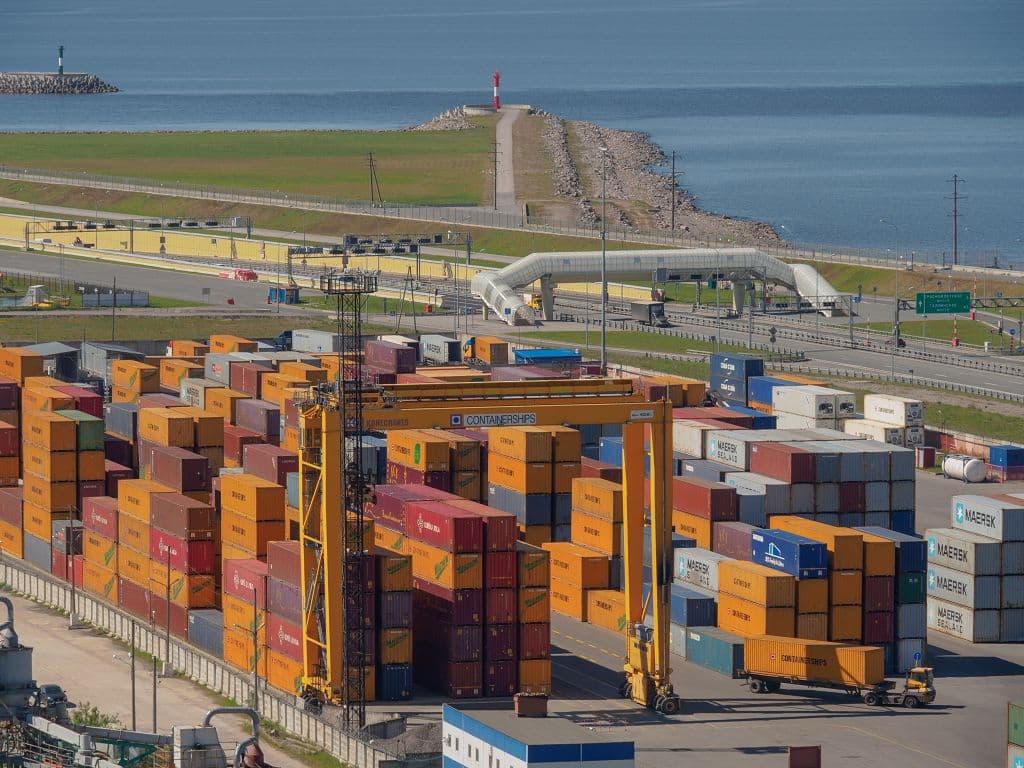
Russian seaports handled 884.5 million tonnes of cargo in 2025, according to a brief item posted by Ports Europe. Beyond the headline figure, the notice provides no additional context, time references, or comparative baselines. As such, the statement stands as a single data point: a national-level throughput total for a calendar year, without supporting details on the periodization of the count, its underlying sources, or how the figure was compiled.
The absence of supplementary material matters. No detailed breakdown was provided by commodity group, specific ports, shipping basins, or modes of handling. There is no disclosure of whether the total reflects gross or net cargo, whether transshipments are included, or how coastal shipments and cabotage are treated. Without these clarifications, the number cannot be parsed for shifts in cargo composition or operational dynamics across the country’s port system.
What the figure shows—and what remains unknown
At face value, the reported throughput suggests continued large-scale maritime activity across the country’s port network. In most national tallies, such a number typically aggregates liquid bulk, dry bulk, containerized cargo, and other categories into a single headline indicator. However, the source note does not confirm category definitions, reporting standards, or whether the figure is provisional or final, making formal comparisons or trend analysis impractical.
Analysts would ordinarily seek context: time-series comparisons, the contribution of key cargo groups, seasonal patterns, and the influence of external variables such as global demand cycles, logistics constraints, or freight market dynamics. In the absence of that context, any inference about growth, contraction, or structural change remains speculative. The number may reflect stability, adjustment, or rebalancing—but the published item does not say which.
Operationally, a throughput total at this scale implies sustained port services across multiple terminals and hinterland connections. Yet the statement does not indicate performance metrics such as berth productivity, dwell times, storage utilization, or rail and road interface capacity. Nor does it reference safety, navigational conditions, or weather-related disruptions. These dimensions are essential to interpret how efficiently volumes were handled and whether capacity constraints emerged.
From a commercial perspective, stakeholders typically examine cargo mix to understand revenue profiles, investment needs, and exposure to market volatility. Liquid bulk and dry bulk movements carry different cost structures and infrastructure requirements than container traffic. Without a commodity split, it is impossible to assess where value was concentrated in 2025, which terminals bore the heaviest operational loads, or how risk was distributed across the supply chain.
Transparency also bears on policy and planning. Detailed, port-by-port disclosures help shippers, carriers, financiers, and regulators gauge infrastructure adequacy and prioritize upgrades. In this instance, the source offers a top-line figure without methodology, leaving unanswered questions about data provenance, quality controls, and whether international reporting standards were followed. A clarified release—covering definitions, inclusions and exclusions, and any revisions policy—would materially improve interpretability and comparability.
The communication’s brevity underscores the need for caution in secondary use. Analysts should avoid attaching unwarranted qualifiers such as “record,” “surge,” or “contraction” without corroboration from additional datasets or official statistical releases. Likewise, attributing the number to specific trade routes, sectors, or regional developments would exceed what the notice supports. The prudent course is to treat the figure as a high-level indicator pending further detail.
In sum, the single verifiable fact presently available is that Russian seaports handled 884.5 million tonnes of cargo in 2025, as reported by Ports Europe. Until granular data are published—covering commodities, geography, time frames, and methods—stakeholders can register the signal but should refrain from drawing firm conclusions about performance trends, structural change, or competitiveness within the broader maritime landscape.


Sign up free to ask CAMAL AI for a summary, the key points or anything else about this story.
Related stories
CAMAL AI
 Financial Ports Newsletter
The maritime economy, every morning
Ports, shipping and freight markets in one short email. Free.
Financial Ports Newsletter
The maritime economy, every morning
Ports, shipping and freight markets in one short email. Free.