

Paraná Up River: Gran Rosario’s Strategic Export Hub
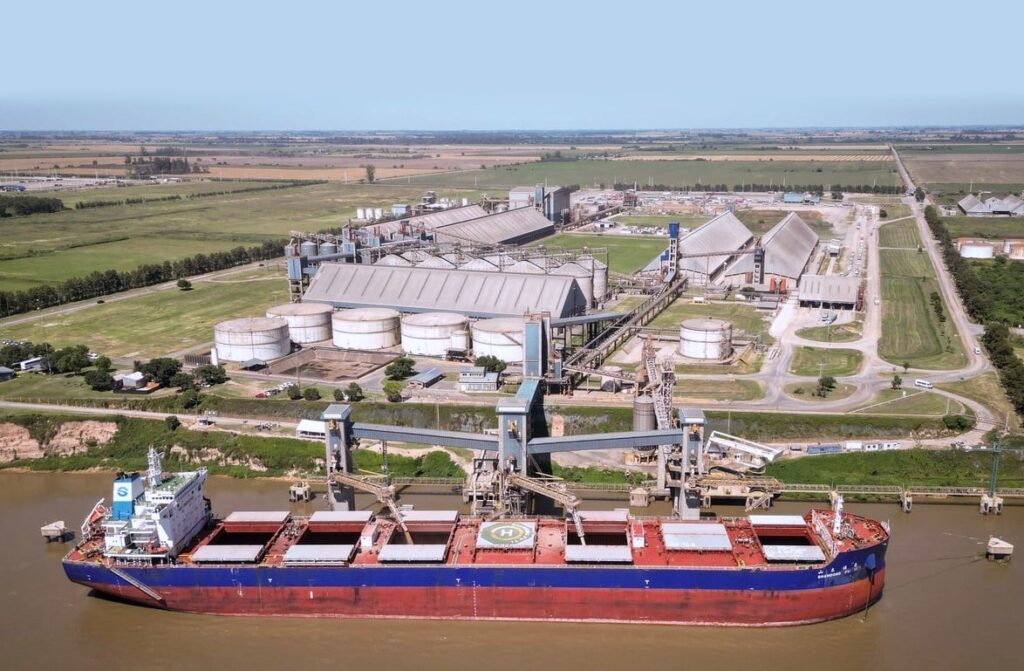
The Up River Paraná —widely referred to as the Gran Rosario node— is recognized as one of the world’s most significant port complexes. In 2024, it registered shipments totaling 66 million tons, a volume that underscores its centrality to Argentina’s export apparatus and the sustained throughput capacity of this strategic corridor.
Located along a key stretch of the Paraná River, the corridor operates as a concentrated cluster of terminals that channel a substantial share of the country’s outward trade. This configuration supports high-frequency vessel calls, continuous loading windows, and coordinated logistics that connect inland production with deep-sea routes, reinforcing the node’s systemic importance to national commerce.
Throughput and strategic significance in 2024
The 2024 shipment figure provides a fresh benchmark for performance and reliability, highlighting the node’s ability to maintain substantial flows under changing market and operational conditions. While detailed breakdowns by cargo type or destination are not presented here, the magnitude alone signals robust demand, effective scheduling, and sustained terminal productivity across the complex’s integrated waterfront.
Several structural factors help explain this resilience. Industry observers frequently point to concentrated terminal capacity, standardized procedures, and synchronized interfaces between river, road, and—where relevant—rail legs as contributors to efficient turnarounds. In practice, these features promote steady vessel lineups and support continuous operations, even as schedules must adapt to seasonal and market-driven variability.
Operationally, riverine systems require close attention to navigational conditions, safety protocols, and the management of channel constraints. The Paraná corridor is no exception: effective planning, maintenance efforts, and coordinated traffic management are all essential to protect service reliability and minimize bottlenecks. These measures help stabilize loading programs and provide predictability to carriers and shippers alike.
At the national level, the node’s performance carries macroeconomic weight. Strong export flows improve visibility for producers and traders, support foreign-exchange inflows, and inform investment decisions across storage, handling, and maritime services. The 2024 throughput thus represents more than a single-year metric; it reflects a complex logistics ecosystem that underpins a wide spectrum of Argentina’s international trade.
Policy continuity and infrastructure stewardship remain pivotal. Stakeholders routinely emphasize the importance of clear governance, transparent tendering for key services, and consistent technical standards to safeguard navigability and terminal efficiency. Such efforts are designed to keep the corridor competitive, sustain safety and environmental compliance, and align operating conditions with the evolving needs of global shipping.
Looking ahead, market participants will watch how the 2024 result influences planning cycles, contractual strategies, and capacity management. The Up River Paraná and the broader Gran Rosario node provide a reference point for throughput expectations, operational discipline, and service levels. Maintaining that benchmark will depend on continued coordination across public and private actors, ensuring that the corridor’s strategic role in Argentina’s export chain remains secure.

Sign up free to ask CAMAL AI for a summary, the key points or anything else about this story.
Related stories
CAMAL AI
 Financial Ports Newsletter
The maritime economy, every morning
Ports, shipping and freight markets in one short email. Free.
Financial Ports Newsletter
The maritime economy, every morning
Ports, shipping and freight markets in one short email. Free.