

Orsted Secures $9.4 Billion Rights Issue Amid U.S. Uncertainty
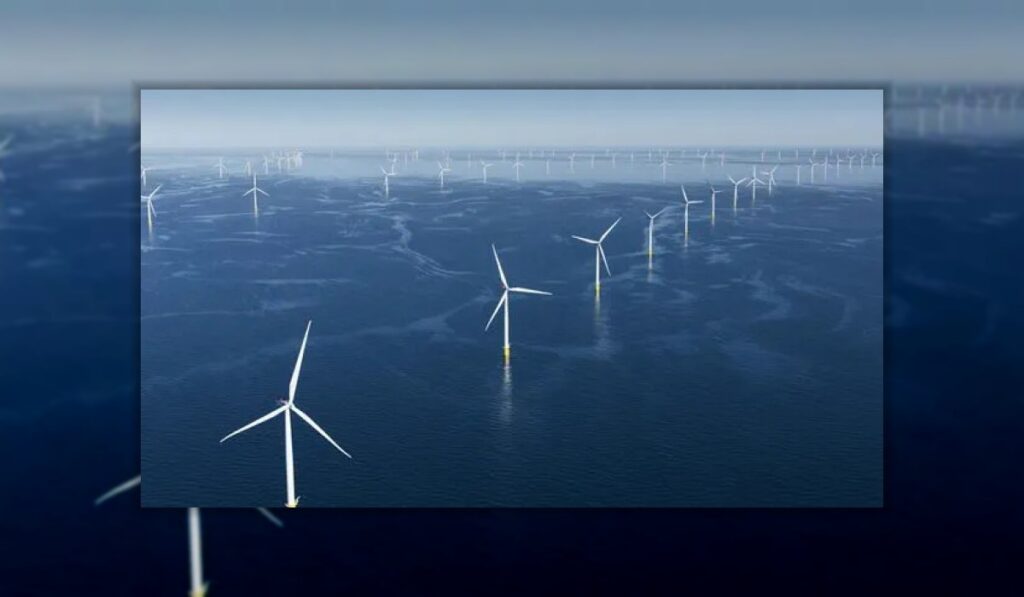
Orsted won shareholder approval on Friday for a $9.4 billion emergency rights issue, a move intended to help fund U.S. projects that have been thrown into uncertainty by President Donald Trump’s opposition to the renewable energy source. The offshore wind developer, which is Danish and state-controlled, secured backing for the capital increase as it confronts a shifting policy landscape in a key growth market. The authorization underscores the urgency of ensuring access to capital while navigating a political environment that has complicated the outlook for U.S. offshore wind ventures.
The approved plan centers on a rights issue, a common capital-raising mechanism in which existing investors are offered new shares, typically at a discount, to inject fresh equity. While the company’s detailed terms were not disclosed in the source text, the stated intent is to bolster funding for U.S. projects. By turning to shareholders, the developer signals an effort to maintain financing momentum and retain optionality at a time when policy signals have become less predictable for large-scale clean energy buildouts
Shareholder Vote Highlights Sector Headwinds
Trump’s opposition to renewable energy has introduced uncertainty into the project pipeline, affecting perceptions of risk around development plans, contracting prospects, and capital deployment in the United States. For a business model that relies on multi‑year commitments and substantial upfront investment, even incremental changes in sentiment or support can weigh on timelines and commercial confidence. The shareholder vote reflects recognition that the operating environment has become more complex and that additional equity can serve as a stabilizing tool.
Offshore wind developments are capital‑intensive and sensitive to offshore wind supply chains, regulatory clarity, and financing conditions. Clear and durable policy frameworks tend to reduce risk premia and support project bankability, while political resistance can reverse that dynamic, elevating funding thresholds and extending decision cycles. Against that backdrop, the approval of a sizable rights issue offers a pathway to preserve strategic progress even as stakeholders reassess timelines and approaches in the U.S. market.
The company’s status as a state-controlled Danish firm adds another dimension to investor perceptions. Public ownership can convey long‑term commitment to the energy transition, yet market expectations still hinge on credible execution and prudent capital allocation. The decision to seek shareholder authorization aligns with a cautious approach to liquidity and signals to counterparties that the firm intends to sustain development capability while adapting to evolving political realities.
For shareholders, a rights issue typically presents both dilution risk and the opportunity to support a company’s longer‑term plan at preferential terms. The size of the approved capital raise points to the scale of the underlying investments and the desire to keep U.S. options viable despite the current headwinds. In volatile policy environments, equity buffers can help companies withstand delays, bridge financing gaps, and maintain critical supplier and partner relationships that underpin complex infrastructure delivery.
Next steps commonly include formalizing the offer structure, setting a timetable, and communicating detailed use of proceeds, though those specifics were not included in the source material. What is clear is that investors endorsed a substantial equity path to support U.S. projects at a time when political stance has heightened execution risk. Market attention will focus on forthcoming disclosures, investor take‑up, and any policy developments that might clarify permitting, support mechanisms, or broader demand signals for renewable energy in the United States.


Sign up free to ask CAMAL AI for a summary, the key points or anything else about this story.
Related stories
CAMAL AI
 Financial Ports Newsletter
The maritime economy, every morning
Ports, shipping and freight markets in one short email. Free.
Financial Ports Newsletter
The maritime economy, every morning
Ports, shipping and freight markets in one short email. Free.