
Manzanillo Port Sets Record for Monthly TEU Throughput
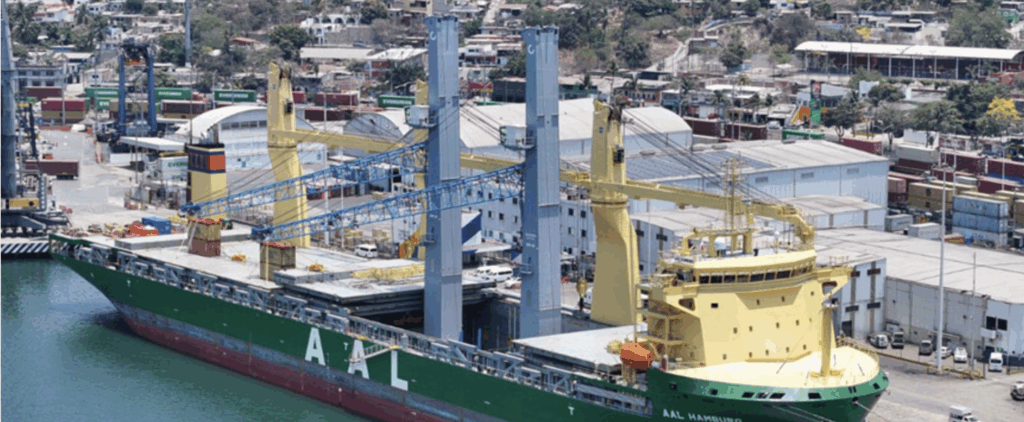
Manzanillo recorded a record monthly movement of TEUs in August, marking the highest container throughput in the port’s history, according to the Administración del Sistema Portuario Nacional in Manzanillo (Asipona). Across the first three quarters of the year, containerized cargo accounted for 73% of total commercial cargo handled at the port, underscoring the centrality of containers in Manzanillo’s operations during the period reported.
The port authority detailed the composition of non-petroleum cargo by segment for the same period. Mineral bulk represented 16% of the total cargo moved and posted an annual increase of 11%. Agricultural bulk contributed 5%, while general cargo accounted for 6%. These shares reflect the relative weight of bulk and general commodities alongside strong container flows.
Cargo mix, traffic flows, and vessel calls
By traffic type—excluding petroleum products—the distribution in tonnage was led by imports, which comprised 66% of total cargo. Exports represented 15%, and the remaining 19% corresponded to transshipment and cabotage activities. This pattern signals import-driven volumes with a meaningful role for coastwise movements and intermediate transfers.
Natural Gas
Gate activity mirrored the broader momentum. In the first nine months of the year, nearly 906,000 trucks entered the port, a 4% increase compared with the same period in 2024. Asipona reported that the two highest truck-entry months ever recorded were achieved in August and July, highlighting sustained operational intensity at the landside interface during the peak of the period.
From January through September, a total of 1,242 vessels arrived at Manzanillo. Of these, 839—equivalent to 68%—carried containerized cargo. General cargo vessels numbered 135, mineral bulk carriers 129, and tankers transporting oil and petroleum products 99. Agricultural bulk arrivals totaled 30, and there was one ship carrying natural gas. The port also received nine cruise ships over the nine-month span, two of which called in September.
The August milestone refers specifically to the port’s container throughput measured in twenty-foot equivalent units, a standard unit used in maritime trade to quantify containerized cargo. The reported peak therefore denotes the highest monthly count of TEUs handled by Manzanillo in its history, aligning with the broader prevalence of containers in the port’s cargo mix this year.
Asipona’s monthly and year-to-date figures, as presented, separate petroleum-related products when describing traffic shares by tonnage. Within that scope, container volumes dominate the commercial cargo profile, while mineral and agricultural bulks, together with general cargo, compose a smaller—though active—portion of movements. The combination of record container processing, historically high truck entries, and a steady cadence of vessel calls frames the operational picture for the first three quarters reported.


Sign up free to ask CAMAL AI for a summary, the key points or anything else about this story.
Related stories
CAMAL AI
 Financial Ports Newsletter
The maritime economy, every morning
Ports, shipping and freight markets in one short email. Free.
Financial Ports Newsletter
The maritime economy, every morning
Ports, shipping and freight markets in one short email. Free.