

India Mulls Third Nuclear Carrier in 15-Year Plan
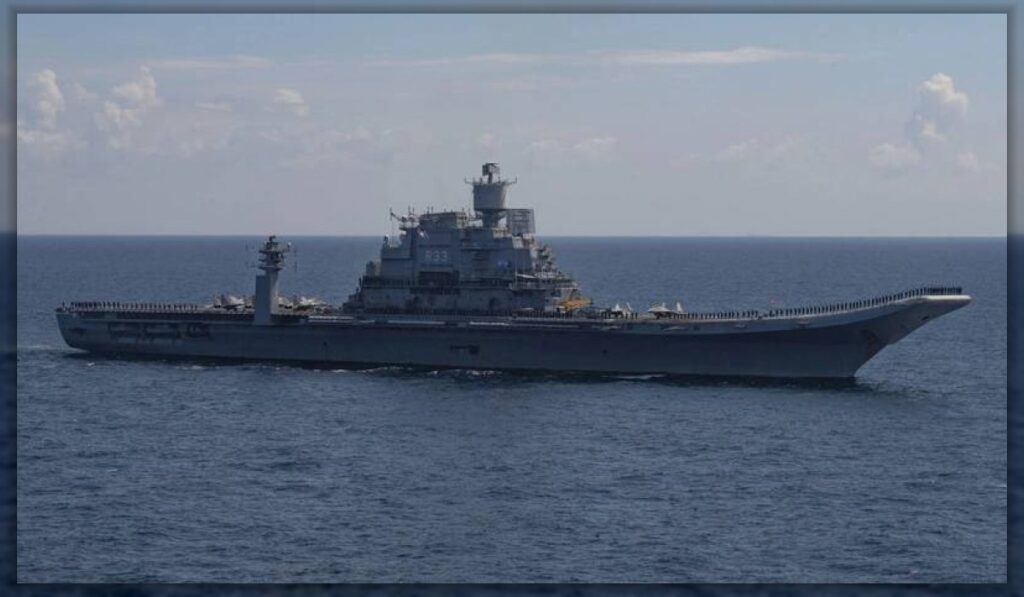
India announced a broad defence roadmap that contemplates building a third nuclear-powered aircraft carrier as part of a 15-year defence modernization plan, alongside a landmark move for the navy to operate domestically built combat aircraft for the first time. The outline underscores the country’s intent to deepen maritime capabilities and reduce external dependence, while placing naval aviation at the center of a long-term strategy aligned with industrial development and operational autonomy.
The prospective carrier, if pursued, would extend India’s investment in large-deck naval aviation and reaffirm ambitions to project power at sea over extended periods. A nuclear-propelled platform would likely shape planning for logistics, maintenance, and integration across the fleet, while setting demanding benchmarks for shipbuilding, testing, and crew training. The announcement framed the carrier as a possibility within an overarching program rather than a finalized procurement decision.
In parallel, the plan confirms that the navy will, for the first time, bring Indian-made fighter jets into service. This step carries strategic and industrial weight: it signals confidence in local aerospace capabilities, embeds naval aviation requirements into the domestic supply chain, and sets a precedent for future upgrades, testing cycles, and lifecycle support anchored within India. It also complements the broader modernization thrust by aligning frontline equipment with national production goals.
Frontline
The timing and tone of the roadmap are shaped by geography and security considerations. India is bordered by rivals China and Pakistan, a fact that places persistent pressure on modernization priorities and readiness levels. Maritime and air power, especially at distance from shore, have become central to deterrence signaling, crisis response options, and the protection of sea lines, amplifying the role of carriers and carrier-borne aviation in national planning.
Strategic and Industrial Implications
Should the carrier move forward, planners will confront demanding choices about construction sequencing, dockyard capacity, nuclear safety regimes, and modular integration of sensors and weapons. Each choice influences cost, time, and risk. The 15-year horizon provides a window to phase decisions, verify milestones, and align workforce training with system maturity, reducing the likelihood of schedule shocks or integration bottlenecks once the hull is under construction.
Operationally, a nuclear-powered carrier would shape doctrine for sustained deployments, high-tempo flight operations, and multi-domain coordination. Carrier aviation demands exacting standards in deck procedures, maintenance rhythms, and sortie generation under variable sea states. Introducing indigenous fighters adds another layer of complexity—but also an opportunity—to tailor maintenance concepts, mission systems integration, and logistics pipelines from the outset around domestic support structures.
Industrial synergies are a central promise of the roadmap. Building advanced warships and integrating naval aircraft can catalyze suppliers across metallurgy, propulsion, electronics, and survivability systems. The domestic focus may encourage long-term contracts and quality controls that stabilize production lines, even as programs evolve. For policymakers, the challenge will be to maintain funding discipline, prioritize critical-path technologies, and ensure transparent oversight to keep delivery aligned with strategy.
Regionally, the carrier prospect and naval fighter initiative serve as a strategic signal. They indicate an intention to preserve decision-making space in contested waters and to respond flexibly to crises without overreliance on partners. At the same time, measured communication and confidence-building remain critical to prevent miscalculation. By casting the program within a long-term modernization plan, authorities appear to emphasize predictability over abrupt posture shifts.
The roadmap’s success will hinge on incremental, verifiable progress: maturing design work, proving subsystems, training crews, and rehearsing the air–sea integration required for safe flight operations. As the plan advances, each milestone—from test regimes to fleet exercises—will help translate ambition into credible capability. For now, the announcement sets a clear direction: sustained investment in maritime aviation, deeper reliance on national industry, and a methodical path toward a potential new carrier at the core of India’s future naval posture.


Sign up free to ask CAMAL AI for a summary, the key points or anything else about this story.
Related stories
CAMAL AI
 Financial Ports Newsletter
The maritime economy, every morning
Ports, shipping and freight markets in one short email. Free.
Financial Ports Newsletter
The maritime economy, every morning
Ports, shipping and freight markets in one short email. Free.