

Global maritime coal transport demand falls 6% in the first half of 2025, driven by lower demand from China and advanced economies
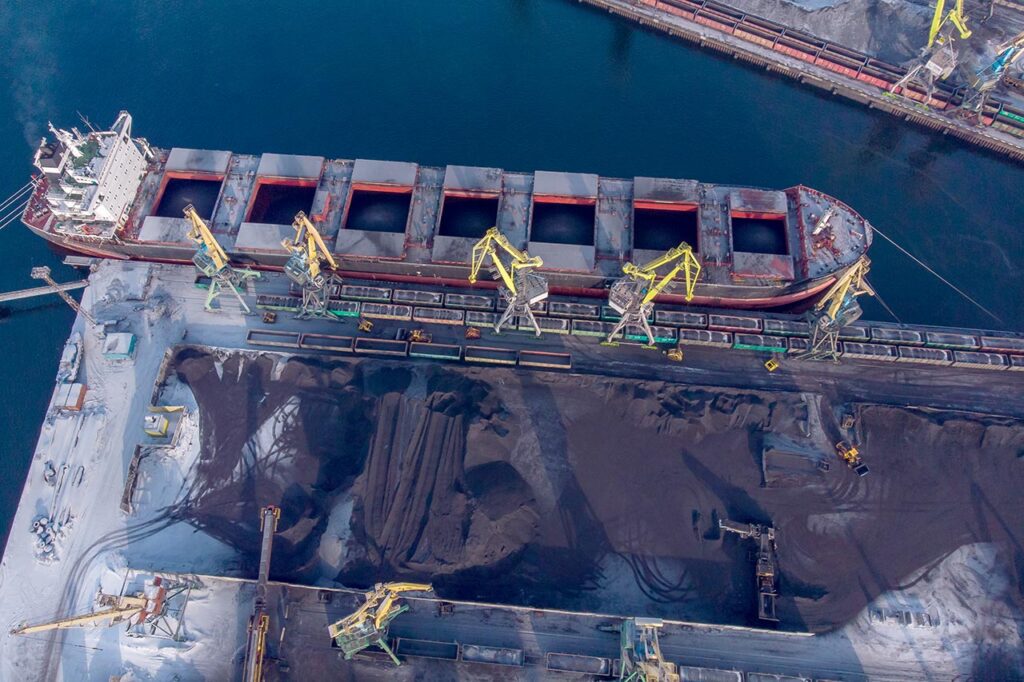
Global maritime coal transport demand fell by 6% in the first half of 2025 compared to the same period last year, due to reduced demand from China and advanced economies. According to BIMCO, this slowdown is partly attributed to the increase in electricity generation from renewable energy sources and the decline in steel production.
In recent years, China has joined several advanced economies in phasing out fossil fuels as an energy source for electricity generation, thereby reducing its dependence on imports. According to the International Energy Agency (IEA), China is currently the world’s largest investor in energy, with spending nearly equal to that of the EU and the United States combined. It is estimated that 71% of this investment is directed towards clean energy.
However, other factors beyond domestic demand also influence the evolution of global coal trade. Both China and India have gradually increased their domestic coal production, which has reduced their imports. Additionally, Chinese land-based imports from Russia and Mongolia have increased, directly competing with maritime imports.
This reduction in coal volume transported by sea has intensified competition in the bulk carrier market. The Panamax segment saw a 4% increase in coal shipments compared to the previous year, raising its market share from 49% to 54%. According to BIMCO, this growth came mainly at the expense of the Capesize segment, which transported 23% less coal than the year before.
In the short term, prospects for maritime coal transport are moderate. Stocks are high in both India and China, discouraging purchases despite a 19% drop in prices. Furthermore, the monsoon season in India started early, filling reservoirs, which will enable higher electricity production through hydropower and reduce coal demand.
However, China is experiencing a heatwave that could increase electricity demand due to greater use of air conditioning.
In the medium term, demand spikes could occur during extreme weather events or periods of low renewable generation. Moreover, maritime coal transport to emerging economies in South and Southeast Asia could continue to grow, although it is unlikely to halt the gradual decline in demand from developed economies, driven by the energy transition and weak global steel demand.


Sign up free to ask CAMAL AI for a summary, the key points or anything else about this story.
Related stories
CAMAL AI
 Financial Ports Newsletter
The maritime economy, every morning
Ports, shipping and freight markets in one short email. Free.
Financial Ports Newsletter
The maritime economy, every morning
Ports, shipping and freight markets in one short email. Free.



