

Explosion Reported Near Tanker Off Saudi Port of Yanbu
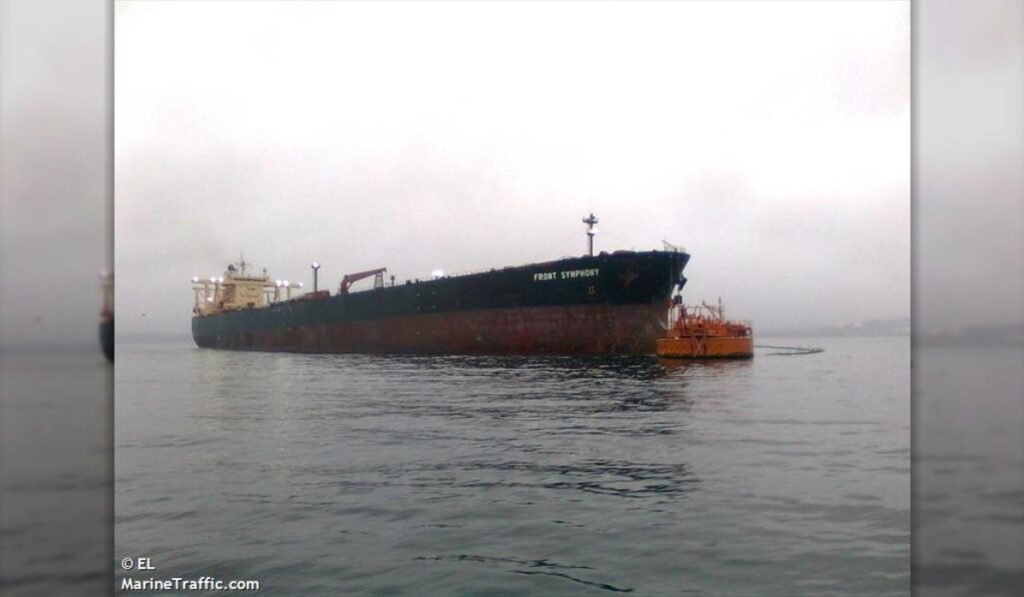
British maritime security firm Ambrey said on Sunday that a Liberia-flagged, Israeli-owned tanker reported an explosion nearby, southwest of the Saudi port city of Yanbu on the Red Sea, according to Reuters. The brief account placed the incident in waters off the kingdom’s western coast, a heavily trafficked route for commercial shipping. The report’s timing and location drew immediate attention among ship operators and risk analysts who closely monitor incident alerts across key maritime corridors.
Ambrey also referenced a vessel reporting “a splash in…” near the tanker, according to the same brief. The fragmentary wording underscored the limited information available at the time and did not clarify proximity, direction, or the origin of the reported disturbance. Without additional details on the sequence of events, it remained unclear whether the noise or movement detected in the water was linked to the reported blast or to unrelated activity within a busy sea lane.
The port city of Yanbu sits on Saudi Arabia’s western shoreline along the Red Sea and serves as an entry and exit point for regional maritime trade. Incidents flagged in the vicinity can prompt heightened vigilance among vessels transiting north–south routes, including those bound for the Suez approaches or the Gulf of Aden. For masters and company security officers, initial alerts offer situational awareness but often arrive before corroborating evidence emerges.
Sparse Details, Heightened Caution at Sea
In the immediate aftermath of such reports, ship crews typically prioritize watchkeeping, verify communications, and log positions while awaiting further guidance. Operators may review routing, speed, and separation from other traffic, balancing schedule commitments with safety. They also coordinate with company security teams to align on risk thresholds and potential adjustments. For a tanker flagged in an alert, routine steps can include checking internal systems for anomalies and ensuring bridge teams are briefed on contingency procedures should additional advisories be issued.
The Red Sea remains a pivotal artery for global trade, connecting the Mediterranean to the Indian Ocean. Traffic density and the strategic value of the corridor amplify the significance of any incident, even when details are sparse. While background security conditions can fluctuate, shipboard decision-making tends to follow established protocols that privilege safety until the nature of a reported event is better understood.
Key facts about Sunday’s report remain unresolved. The brief reference did not address potential damage, casualties, or attribution, nor did it specify the precise distance from the vessel when the disturbance was observed. In the absence of confirmation, assessments focus on plausibility, pattern recognition, and source reliability rather than on definitive conclusions about cause or responsibility. Clearer answers ordinarily follow once authorities, classification societies, or company investigations can verify what occurred.
Until further updates are available, industry stakeholders are likely to keep a conservative posture, maintaining contact with reporting channels and avoiding speculation. Standard practice is to document events comprehensively and to treat initial alerts as provisional. Masters and shoreside teams typically coordinate on risk mitigation while remaining prepared to adjust plans if additional alerts suggest escalation. For now, measured caution and continued monitoring characterize the response to the incident reported southwest of Saudi Arabia’s Yanbu.


Sign up free to ask CAMAL AI for a summary, the key points or anything else about this story.
Related stories
CAMAL AI
 Financial Ports Newsletter
The maritime economy, every morning
Ports, shipping and freight markets in one short email. Free.
Financial Ports Newsletter
The maritime economy, every morning
Ports, shipping and freight markets in one short email. Free.