

Elomatic Installs Elogrid Tunnel Thruster Technology on 10,000 GT Research Vessel METEOR IV
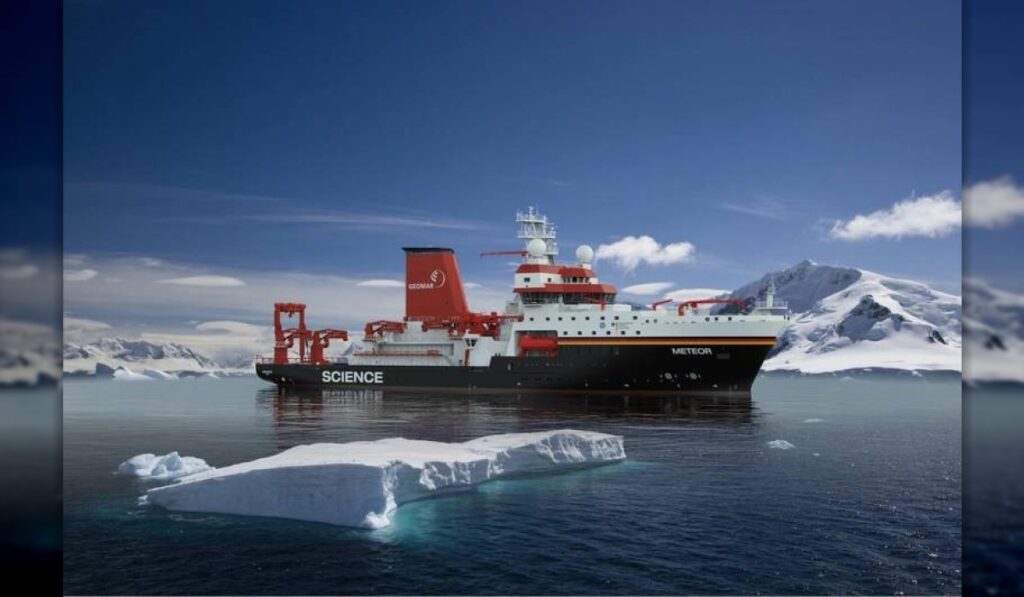
Elomatic, an international consulting and engineering company, has completed the installation of its Elogrid tunnel thruster technology aboard the METEOR IV, a 10,000 GT special purpose research vessel built by MEYER FASSMER. The company said the project marks a significant application of its proprietary solution on a new research platform, with the installation designed to optimize the performance of the vessel’s tunnel thruster arrangement during demanding scientific operations.
As a research ship, METEOR IV will be expected to operate with high precision in coastal and oceanic environments, where maneuverability and reliable station-keeping are essential. Tunnel thrusters play a critical role in these scenarios by enabling fine control during surveys, instrument deployment, and close-quarters maneuvering. Elomatic’s installation is intended to support these capabilities while maintaining operational efficiency and seakeeping performance in a range of conditions.
According to Elomatic, Elogrid is engineered to streamline water flow at the inlets and outlets of tunnel thrusters, aiming to reduce turbulence and improve overall thruster effectiveness. By conditioning the flow, the system is designed to lower noise and vibration levels associated with thruster operation, while potentially contributing to efficiency gains that can translate into reduced fuel consumption and emissions over time.
Why tunnel thruster optimization matters for research ships
For research vessels, thruster upgrades are about more than handling; they also address the acoustic environment around the ship. Scientific missions frequently rely on sensitive sonar and hydroacoustic instruments, which can be affected by cavitation and underwater radiated noise. Elomatic notes that the Elogrid approach is aimed at mitigating these factors, supporting both crew comfort and data quality during extended research campaigns.
The METEOR IV installation was carried out in coordination with the shipyard and project partners to align with the vessel’s outfitting and integration needs. Elomatic reports that the work focused on adapting the Elogrid solution to the vessel’s specific tunnel geometry and operational profile, with attention to minimizing installation impacts on other onboard systems. The company did not disclose performance figures or a detailed project timeline for the installation.
Beyond maneuvering benefits, optimization of tunnel thrusters can help operators balance operational demands with environmental considerations. Any reduction in power required to achieve the same lateral thrust can contribute to lower energy use, while smoother flow can reduce the likelihood of vibration-related wear. These outcomes are particularly relevant to research fleets, which often face stringent expectations for reliability, endurance, and low acoustic signatures in support of multi-week missions.
Elomatic positions Elogrid as a technology that can be integrated on newbuilds and during refits, offering a pathway for operators to enhance existing thruster systems without full replacement. With METEOR IV adding the solution at the shipbuilding stage, the company underscores a broader trend in which research and survey vessels incorporate propulsion and maneuvering refinements earlier in their lifecycle. While results will depend on vessel configuration and duty profile, the installation adds to a growing focus on design measures that support efficiency, control, and noise mitigation at sea.


Sign up free to ask CAMAL AI for a summary, the key points or anything else about this story.
Related stories
CAMAL AI
 Financial Ports Newsletter
The maritime economy, every morning
Ports, shipping and freight markets in one short email. Free.
Financial Ports Newsletter
The maritime economy, every morning
Ports, shipping and freight markets in one short email. Free.