

Egypt launches Red Sea Marassi project, LE 900 billion
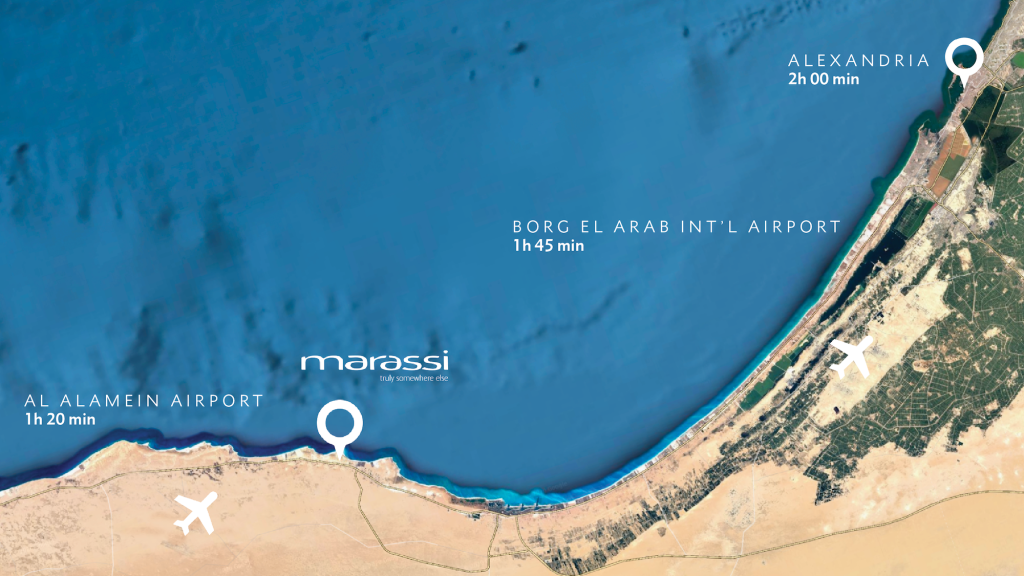
Egypt has launched the Red Sea Marassi project with an announced budget of LE 900 billion, according to the available report headline. The declaration presents a substantial investment signal tied to the Red Sea corridor, suggesting a major undertaking in scope and ambition. However, the text accessible at this stage provides only the project name, the launch claim, and the size of the funding pledge. Without an accompanying release, technical brief, or timeline, the announcement remains a high-level marker rather than a detailed program. Even so, the magnitude of the figure indicates an initiative intended to be significant in the national development context.
Key parameters typically expected in such announcements—such as scope, precise location, execution phases, delivery schedules, and institutional responsibilities—were not included in the summary accessible to this publication. No breakdown of funding sources, contracting framework, or oversight structures was provided. In the absence of official supporting documents, it is not yet possible to assess sectoral priorities, near-term milestones, or sequencing. As a result, analysts and market participants must treat the headline as an initial statement of intent and await clarifications on details and timeline before drawing firm conclusions about impact or feasibility.
What is known and what remains unclear
Given the headline figure, the scale alone invites cautious interpretation. Large, multi-year commitments of this order often involve complex, phased delivery and integration across interconnected components. That can include transport links, utilities, and social infrastructure aligned to broader development objectives. While none of these elements are confirmed for the Red Sea Marassi project, their mention underscores the breadth of planning typically associated with undertakings described at this level. The structure and cadence of implementation will determine whether early works can proceed while longer-term segments are prepared, or whether the effort depends on foundational prerequisites yet to be disclosed.
In general terms, substantial coastal initiatives can reshape local and regional economic patterns. They may catalyze construction activity, influence land use, and alter demand for logistics, services, and workforce skills. If the Red Sea Marassi project advances as signaled, potential implications could include pressure points in materials supply, contracting capacity, and public services provisioning. The distribution of benefits will hinge on procurement design, competition, and the integration of supporting infrastructure. Absent concrete documentation, these remain indicative pathways rather than project-specific forecasts.
Large-scale commitments rely on robust governance. Clarity around the commissioning authority, financing instruments, risk-sharing, and performance benchmarks helps anchor delivery. Transparent procurement, enforceable contracts, and independent oversight usually underpin durable outcomes. Without published terms, observers cannot yet evaluate how the Red Sea Marassi initiative will handle design risk, cost control, or accountability. The credibility of any schedule or budget will depend on the mechanisms chosen to manage scope changes, interface risks, and contractor performance over multiple phases.
Coastal projects also intersect with permitting, land management, and environmental review. Baseline assessments, stakeholder consultation, and mitigation planning are often required for works that could affect sensitive marine and shoreline ecosystems. The available text does not reference environmental processes or regulatory clearances. Such omissions are unsurprising at an announcement stage, but they are material to delivery timing and scope. Future disclosures should clarify the compliance pathway and any conditions tied to approvals or financing.
Execution risks extend beyond engineering. Macroeconomic conditions, input cost volatility, and supply chain reliability influence outcomes for capital-intensive programs. Policy continuity and institutional capacity matter for pacing and coordination. Without information on phasing, counterparties, or funding modalities, it is premature to gauge resilience under stress scenarios. Nonetheless, early visibility into contracting strategies, dispute resolution mechanisms, and contingency planning would help markets assess the project’s risk-adjusted trajectory once those details are issued.
For now, stakeholders can monitor for official releases that provide a program definition, including objectives, site identification, budget allocation by component, and tender announcements. Credible sequencing would specify enabling works, critical-path dependencies, and gateways for subsequent phases. Until such materials are available, the confirmed facts remain limited to the project name, the assertion of a launch, and the headline figure of LE 900 billion. Further guidance from the commissioning authority will be necessary to translate this high-level signal into a verifiable plan, with measurable milestones and transparent reporting.


Sign up free to ask CAMAL AI for a summary, the key points or anything else about this story.
Related stories
CAMAL AI
 Financial Ports Newsletter
The maritime economy, every morning
Ports, shipping and freight markets in one short email. Free.
Financial Ports Newsletter
The maritime economy, every morning
Ports, shipping and freight markets in one short email. Free.



