

Casablanca Port Overhaul Advances Morocco’s Global Maritime Ambition
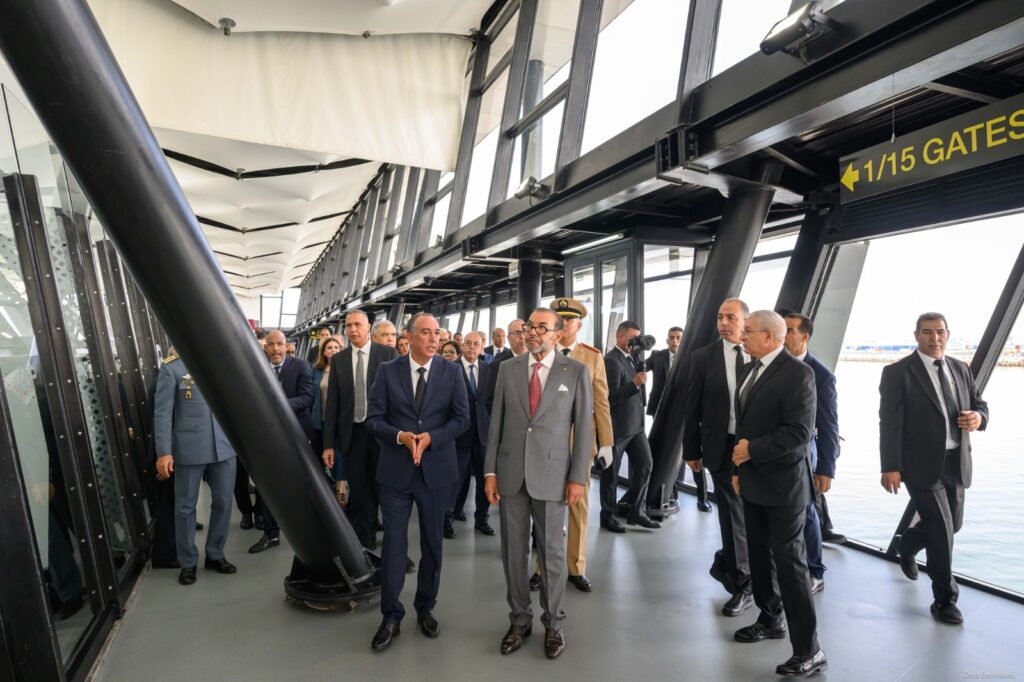
Morocco is accelerating the restructuring and development of the Casablanca Port Complex, officials said, framing the program as central to elevating the country’s international maritime standing. Minister of Equipment Nizar Baraka highlighted that the effort aligns with the vision of King Mohammed VI to reinforce the national fleet and strengthen sovereignty in the maritime domain. The initiative, he noted, is built on several pillars, including a focused push to modernize the industrial base that supports port operations.
During the inauguration, the monarch toured multiple projects within the complex. The ANP is overseeing the program, which aims to bolster the metropolis’s economic and tourism prominence. This is embedded in a broader strategy to position Casablanca as a premier economic and financial hub in Africa, fully connected to global markets and capable of absorbing future growth in traffic and services.
Infrastructure Upgrades and Strategic Priorities
A key priority is the renovation of the cruise terminal, which has an annual capacity of 450,000 passengers. Officials underscored that improved passenger handling and terminal services will complement parallel upgrades on the industrial side, notably the restructuring and development of the country’s shipbuilding and repair capabilities. Baraka said these measures are intended to strengthen the Moroccan fleet and integrate port activities with the wider maritime economy.
Secretary of State for Maritime Fisheries Zakia Driouich echoed this strategic emphasis, calling the program a strategic lever for promoting the fishing sector. She said the plan supports a comprehensive upgrade of the industry by reinforcing infrastructure and acquiring equipment needed to manage fish landings efficiently. According to Driouich, enhancing on‑shore handling capacities is essential to improving value, quality, and traceability across the supply chain.
As part of these improvements, Casablanca’s port now includes a new‑generation fish market designed to meet rigorous quality standards for seafood products. The facility comprises 15 modern units and is integrated into a national network of 64 similar markets, reflecting a standardized approach to handling, hygiene, and distribution. Officials emphasized that this networked model is intended to harmonize processes across Morocco’s coastline and support predictable, high‑quality throughput.
The scale of the redevelopment—financed by an investment of MAD 5 billion (US$557 million)—has drawn international attention. Former UK ambassador to Morocco Thomas Reilly said the project consolidates the Kingdom’s role as a gateway between Europe and Africa. “These are impressive projects,” he told the press, noting that Morocco, a maritime nation with over 3,500 km of coastline, “also serves as a bridge between Europe and Africa. In this context, the Kingdom’s port facilities must be developed accordingly.” He added: “To support this development, it is essential to have solid, reliable, and robust infrastructure,” describing the scope and pace of the country’s economic progress as “extraordinary.”
Officials link the port upgrades to a larger policy architecture designed to reinforce sovereignty at sea, foster sector competitiveness, and expand Morocco’s maritime footprint. In practice, this translates into coordinated improvements across passenger services, industrial capacity, and fisheries logistics, under a governance framework led by the national port authority. The combined effect, they contend, is to enhance Casablanca’s status as a fully connected node in global trade while aligning port operations with national development objectives.
The emphasis on integration—connecting cruise activity, infrastructure for fleet support, and standardized fish markets—reflects a consistent strategy: leverage ports as engines of diversified growth. By tying physical upgrades to institutional oversight and quality controls, the program seeks durable gains in efficiency and reputation. Officials maintain that these measures, taken together, are designed to secure long‑term resilience, deepen linkages with international markets, and anchor Casablanca’s role in Africa’s evolving maritime landscape.


Sign up free to ask CAMAL AI for a summary, the key points or anything else about this story.
Related stories
CAMAL AI
 Financial Ports Newsletter
The maritime economy, every morning
Ports, shipping and freight markets in one short email. Free.
Financial Ports Newsletter
The maritime economy, every morning
Ports, shipping and freight markets in one short email. Free.