Maintenance as a guarantee of operational reliability
The Panama Canal operates as a critical infrastructure for global maritime trade, and its reliability depends on a permanent program of preventive, planned, and strategic maintenance. Rather than simply responding to failures, the Panama Canal Authority (ACP) works proactively to preserve, modernize, inspect, and extend the useful life of thousands of assets that enable the continuous operation of the interoceanic waterway.
Every safe transit depends on a complex network of infrastructure that includes locks, gates, valves, hydraulic systems, floating and land-based equipment, navigation channels, dams, electrical systems, and multiple support facilities. Maintaining these components available allows the Canal to continue providing a safe, efficient, and reliable service to customers around the world.
A strategy aligned with operational efficiency and reliability
Preventive maintenance is one of the pillars supporting the operational efficiency of the Panama Canal. Interventions are planned based on criteria of reliability, continuity, and safety, reducing the risk of disruptions and ensuring that assets operate under the highest standards.


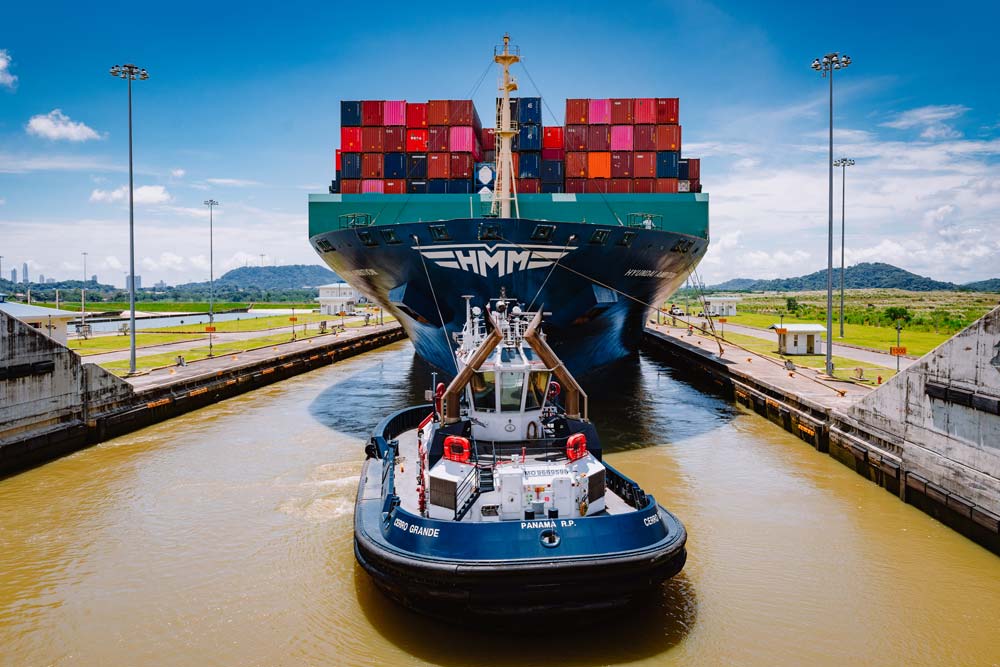
The locks, as the operational core of the Canal, receive special attention through activities such as the well-known “dry chamber” operations, replacement of structural elements and electromechanical components, maintenance of gates, rehabilitation of valves, and corrosion protection works.
All of this is supported by a strict inspection program that allows the ACP to identify, schedule, and monitor any findings. These interventions require months of preparation and highly coordinated execution to minimize the impact on maritime operations.
A recent example was the dry chamber intervention at Pedro Miguel Locks, planned over six months and completed in five days in May, involving around 300 employees while maintaining transit continuity through the operation of the available lane.
Preventive planning protects the Canal’s competitiveness
The reliability of a maritime route depends on its ability to provide predictability to users. Therefore, Canal maintenance is not only a technical task but also a strategic investment that protects Panama’s competitiveness and global trade.
The program also includes the maintenance of the navigation channel through dredging and sediment control, the preservation of t v`he tugboat fleet and other floating and land-based equipment, the inspection of electrical systems, and the protection of water-control infrastructure, including dams and spillways.
Each of these elements contributes to ensuring that vessels can transit safely and efficiently.
Maintenance as a platform for innovation and adaptation to future trade
The maintenance of the Canal is not limited to preserving existing infrastructure. It also aims to identify opportunities to improve capacity and respond to the evolution of the maritime industry.
Through planned interventions and continuous improvements, the ACP evaluates how its assets can adapt to the new characteristics of vessels and the demands of global commerce.
“The Canal has evolved as the maritime industry has changed. Our responsibility is to continue innovating and adapting, ensuring that the infrastructure is prepared to respond to the future needs of our customers, always under safety and operational feasibility criteria.” — Ilya Espino de Marotta, Deputy Administrator of the Panama Canal
An example of this approach is the replacement of floating fenders at the Neopanamax locks, an intervention that will allow the ACP to evaluate, through feasibility tests, the possibility of receiving vessels with a greater beam than currently permitted.
The ACP is studying the feasibility that, once these works are completed, the locks could eventually handle vessels up to 53 meters wide, compared with the current limit of 51.25 meters.
This evolution demonstrates how investment in maintenance and modernization allows the Canal to continue adapting to a changing maritime industry.
Since the inauguration of the expanded Panama Canal, the waterway’s capacity has exceeded initial expectations, moving from projections to serve container ships of approximately 12,000 TEU to handling vessels of more than 17,000 TEU.
Continuous infrastructure improvements allow the Canal to remain competitive and prepared for the future needs of global trade.
The maintenance program is part of the ACP’s long-term vision to strengthen the reliability, sustainability, and leadership of the Panama Canal.
By ensuring the availability of its assets and preparing for new operational, climatic, and commercial challenges, the Canal reaffirms its role as a safe and dependable navigation route for global commerce.