AI rewrites the rules of freight transport
The pandemic exposed two uncomfortable truths: that supply chains are the nervous system of the global economy and that, in too many cases, this system operated with outdated technology. Digital transformation was already inevitable before COVID-19; afterward, it is simply urgent. And Artificial Intelligence has gone from being a headline at technology fairs to becoming the operational engine that is gradually taking the helm—sometimes literally—of maritime, port, rail, and road transport.
The motherboard of modern logistics
Every robust system needs a solid foundation. In electronics, that foundation is the PCB, the motherboard, without which no additional component makes sense. In logistics, that foundation today is digitalization: 5G connectivity, real-time data platforms, and software architectures that allow for scalability. Without it, adding layers of AI isn’t innovation; it’s building on mud.
Spain suffers from historical structural deficits in this area. Family-run logistics, long-standing agreements, and resistance to change clash with an environment where customers demand end-to-end visibility, regulators require traceability, and Asian competitors operate with digital twins of their terminals. Upgrading is not optional; it’s the price of admission to the market.


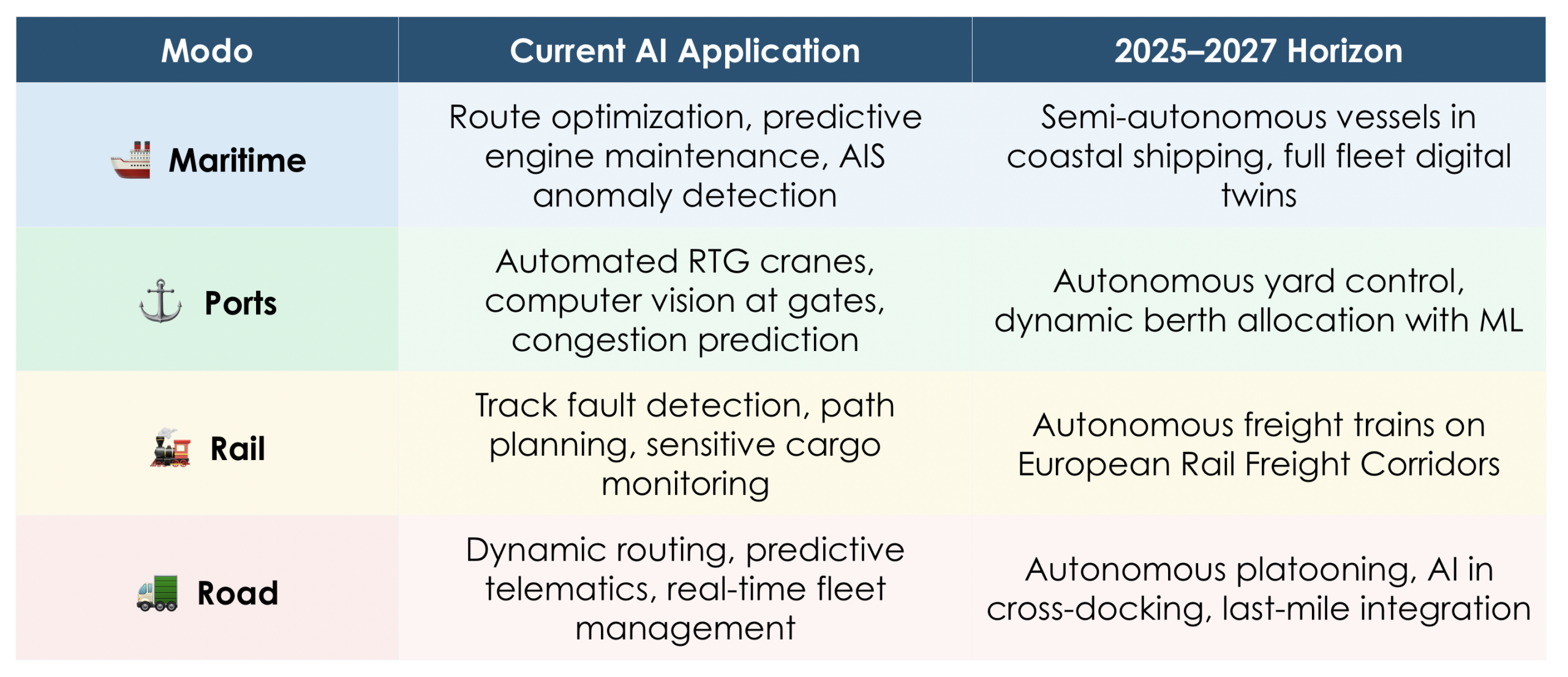
TABLE 1 · AI applications by mode of transport and time horizon
The sea, the first laboratory
The container shipping sector has been the most ambitious testing ground for years. Maersk’s TradeLens initiatives, and its subsequent closure due to a lack of critical adoption, demonstrated both the potential of blockchain and the limitations of a platform controlled by a single entity. GSBN, with shipping companies like COSCO, CMA, and Evergreen, and terminals like PSA and Hutchinson, aims for more distributed governance, although the dream of a single, open, and certified source of logistics data remains pending a supranational arbiter, be it the WTO, the IMO, or the European Union itself. After the TradeLens failure, it became clear that paper withstood that first wave of technology applied to global supply chains. Now, AI is accelerating everything.
Beyond blockchain, AI is already optimizing routes in real time by integrating weather conditions at sea and in the oceans, bunker fuel prices, and port congestion. Predictive maintenance systems analyze vibrations, temperatures, and engine consumption to anticipate breakdowns before they occur. And on the immediate horizon, the first semi-autonomous vessels on coastal routes will set sail around 2027.
Ports: the silent revolution has already happened
While the debate on naval autonomy remains open, on land, port automation is already a reality in major terminals worldwide. Remotely operated RTG cranes, machine vision systems at access gates that read license plates and verify seals in milliseconds, and yard planning algorithms that reduce empty movements by up to 30%. AI doesn’t replace stevedores; it reorganizes human work towards tasks of supervision, maintenance, and decision-making.
The Port of Valencia, a Mediterranean benchmark, has the opportunity to lead this transition in Southern Europe. Rail connectivity, still a work in progress, and integration with inland logistics platforms are the links that would complete the picture.
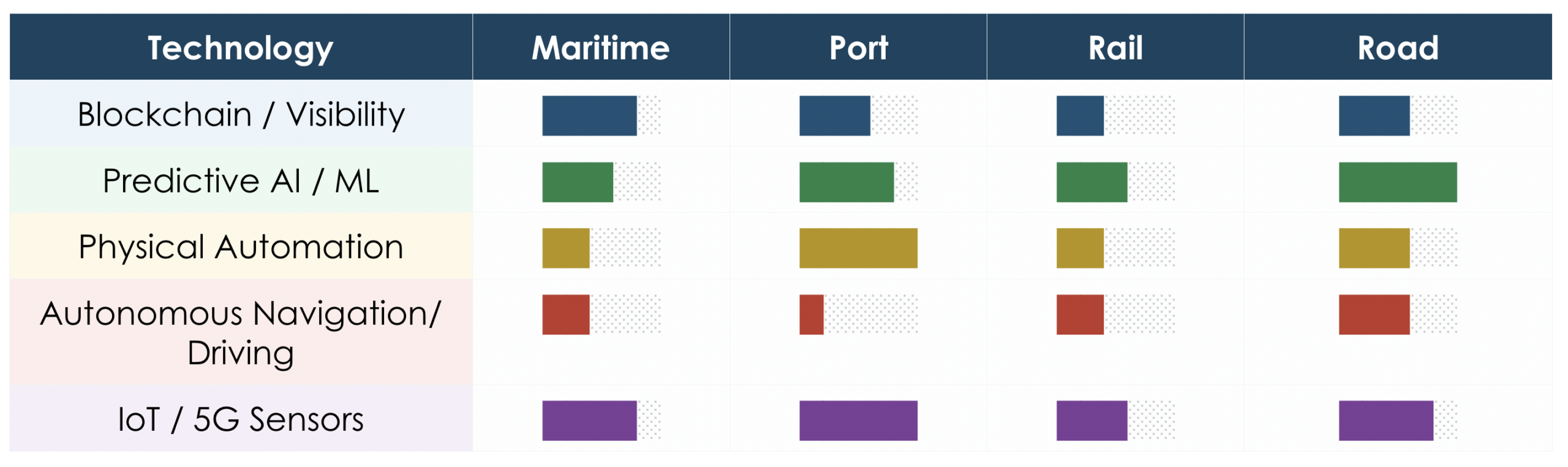
TABLE 2 · Level of technological maturity by mode (█ = greater adoption)
Train and truck: AI enters via the fast track
Rail freight, historically the slowest to adopt technology, is experiencing a turning point. European freight corridors, and the Mediterranean Corridor in particular, are attracting investment in track fault detection systems using ultrasonic sensors and AI, as well as in track planning platforms that integrate real-time demand. The ultimate goal is to manage trains that depart when there is sufficient cargo and arrive where it is needed, not where established schedules and routes dictate.
On the road, dynamic routing with AI has been standard in large fleets for years. What’s coming now is platooning , convoys of trucks with only the driver in the first one, the integration of AI in cross-docking facilities to anticipate traffic flow, and its integration with the urban last mile, where electric and autonomous delivery vehicles are already being tested in several European cities.
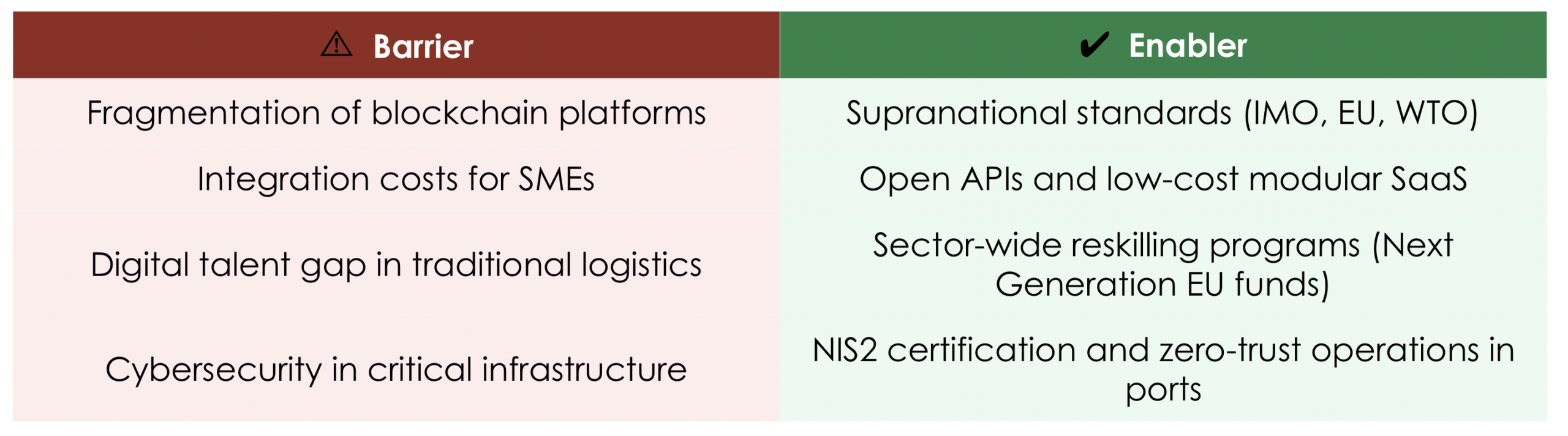
TABLE 3 · Adoption barriers and levers for overcoming them
The foundation is yet to be invented: and that’s the opportunity
Innovation in logistics has never been just about having the latest technology. It has been, and continues to be, about observing, analyzing the environment, understanding your own and others’ capabilities, and having the discipline to execute. AI exponentially amplifies this capacity for observation and analysis. The SMEs in the sector that understand this, that adopt open platforms, that train their teams, and that demand real integrations from their technology providers will be the ones that continue moving goods from point A to point B, but with profit margins and a future.
The foundation of tomorrow’s logistics is yet to be invented. The logistics sector is always in that cycle of reinvention…