

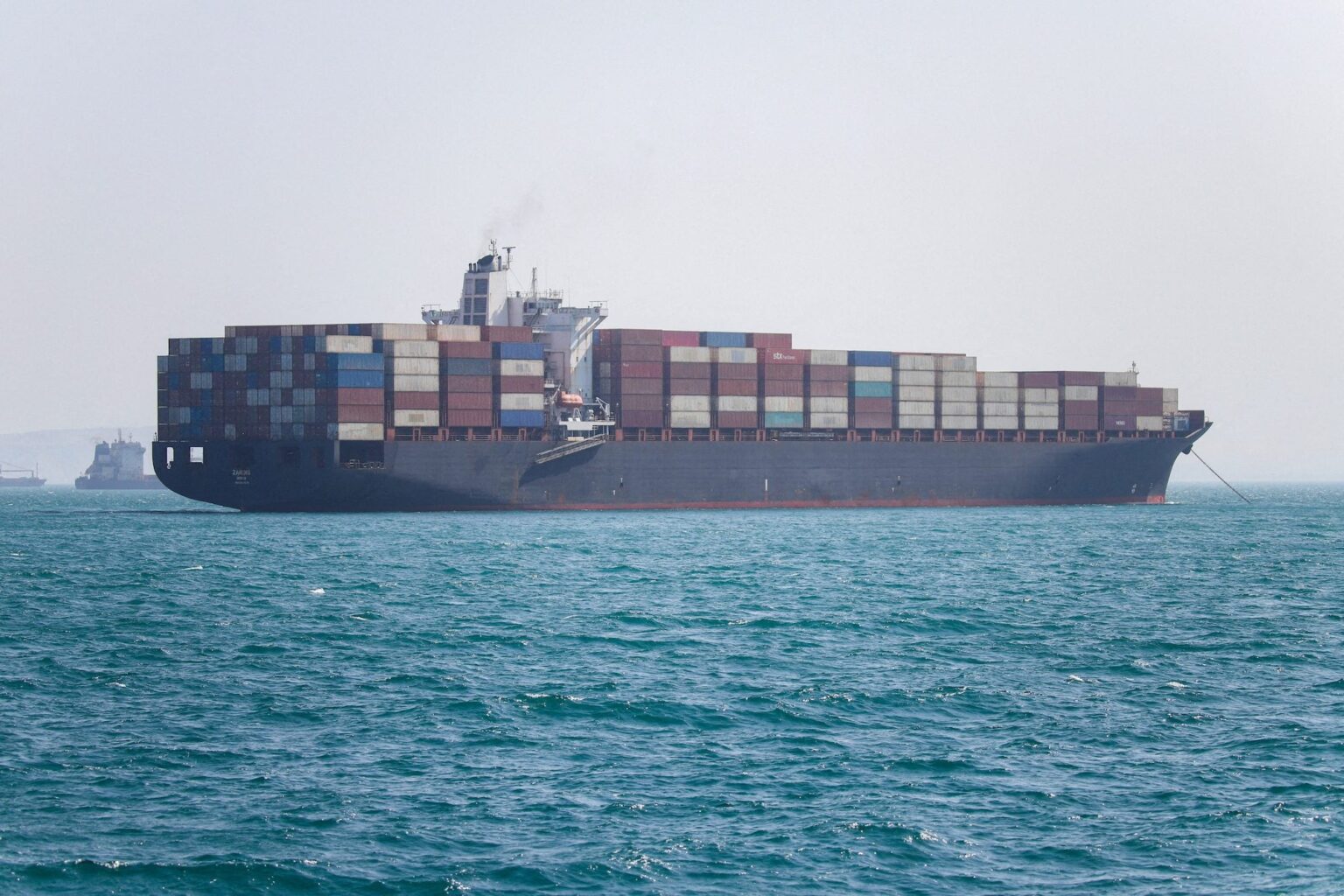
The global shipping industry has issued sweeping new guidance for vessels transiting the Strait of Hormuz, underscoring that formal status alone does not define navigational reality. The advisory warns that, even when the waterway is technically open, circumstances inside the chokepoint may not align with surface appearances. Framed as a sector-wide communication, the message is direct: operators should treat the strait’s nominal openness as only one element in a broader assessment of conditions, and not a guarantee that transit will proceed under ordinary assumptions. The guidance reflects a sharpened focus on real-time conditions and the potential for rapid change.
Although concise in its core warning, the document’s breadth signals industry concern and a determination to bring consistency to decision-making. By highlighting the distinction between official status and practical feasibility, the advisory encourages careful scrutiny of what vessels may encounter once inside the corridor. Its emphasis is not on declarative closure or openness, but on the operational meaning of those terms when measured against the factors that can shape an actual passage. In practical terms, the message is that the binary state of a waterway tells only part of the story; the remainder is written by conditions within it.
Advisory Highlights Conditions Inside the Chokepoint
The guidance places the center of gravity on what happens within the strait itself. That focus matters: a transit decision is not made solely at the point of entry, and a designation such as “open” does not fix the environment vessels may navigate beyond the thresholds. By pointing directly at the interior of the passage, the advisory asks operators to privilege what they can verify about the current state of the route—how it is evolving, how quickly it may shift, and how those shifts could influence the sequence and pace of a crossing—over assumptions derived from the waterway’s formal status.


In tone and structure, the document communicates a form of prudence scaled to present circumstances. It neither dramatizes nor minimizes; rather, it compels a methodical appraisal of the factors that define a safe and orderly passage. That appraisal starts with the acknowledgement that “open” is an administrative or legal description, while conditions are an operational reality that unfolds inside the corridor. This distinction is central to the advisory’s purpose, and it explains why the guidance is “sweeping”: it seeks to shape consistent expectations across fleets that face similar decisions under shared constraints.
The warning also implies that time horizons matter. A waterway can be formally available at one moment and materially more complicated the next. Recognizing this temporal dimension, the advisory’s framing invites operators to prioritize immediacy and verifiability: information that is current, corroborated, and specific to the section of the passage a vessel intends to transit. In effect, the guidance asks decision-makers to treat conditions inside the strait as the leading indicator of feasibility, with official status as a necessary but insufficient backdrop.
Crucially, the communication avoids reducing complex realities into a single directive. Its language allows for a range of vessel types, operational profiles, and risk tolerances. The common denominator is vigilance backed by disciplined assessment. When the advisory cautions that a chokepoint may not behave like an open lane despite its designation, it is acknowledging that navigational difficulty can take forms not captured by binary categories. That acknowledgment is not a prediction; it is a framework for reading what is already present—and for doing so with a margin for sudden change.
The emphasis on measured judgment is consistent with the way the industry translates uncertainty into operational choices. It steers attention to what crews and managers can control: preparation, awareness, and the calibration of movements to match what the passage itself permits at the moment of transit. By standardizing the message across the sector, the advisory aims to reduce uneven interpretations that can arise when conditions evolve faster than formal descriptions. The ultimate intention is clarity—about what “open” means inside a narrow, consequential corridor, and what it may not guarantee.
The guidance arrives against a backdrop in which risks are described as mounting. Its language does not attempt to quantify that change; instead, it focuses on the practical takeaway for vessels: treat the Strait of Hormuz’s formal status as a starting point, not an operational conclusion. In doing so, it provides a common reference for evaluating transits under conditions that may demand more than routine assumptions, and it sets expectations for careful, condition-led navigation through a waterway whose significance compels heightened attention.

