

Valencia Port Reports March 2026 Cargo, TEU Growth
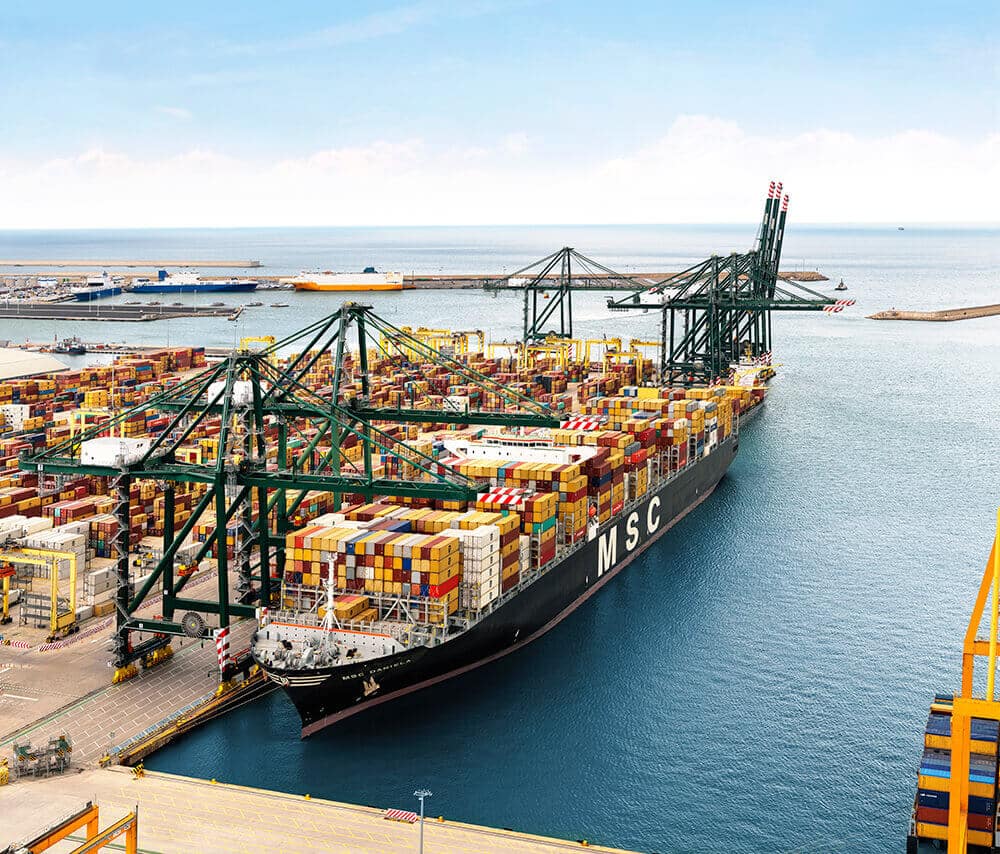
Valencia port reported increases in overall cargo and TEU activity in March 2026, according to a brief notice carried by Ports Europe. The update, presented as a headline item, did not include numerical details such as total volumes, percentage changes, or commodity composition. In the absence of disclosed figures, the announcement functions as an initial signal of movement rather than a complete statistical release, indicating that fuller interpretation will depend on subsequent publication of official data and any methodological notes that accompany it.
The fact communicated is straightforward: the port signaled an upturn in cargo and container traffic for March 2026. Beyond that, no context was furnished in the version reviewed—no comparison with prior months, no year‑on‑year reference point, and no segment differentiation between containerized and non‑containerized flows. As such, the scope of inference is necessarily narrow. Any reading of potential operational or market implications should be treated as provisional pending corroborating datasets from the port or related authorities.
Interpreting a growth signal with limited data
In shipping statistics, TEU—commonly used to denote container counts—is a standardized reference unit. While the headline notes an increase in TEUs, the magnitude, directionality relative to historical baselines, and the balance between loaded and empty units remain unspecified. Without those details, analysts cannot assess whether the reported growth reflects transshipment dynamics, gateway demand, equipment repositioning, or a blend of these factors. The same caveat applies to total cargo, which aggregates distinct streams that can move differently over a monthly horizon.
When fuller information is released, several questions will help frame the picture: How does March compare with February and with March of the prior year? Are increases broad‑based across cargo types, or concentrated in select categories? Do TEU gains align with vessel call patterns and berth utilization? Are dwell times, yard metrics, and gate flows consistent with higher throughput, or do they reflect sequence effects from schedule adjustments? Answers to these questions would sharpen the signal from a directional headline into a measurable trend.
It is also common practice to examine how reported volumes intersect with regional and global liner network developments. For example, changes in service rotations, blank sailings, and transshipment connectivity can shape container counts within a month. Inventory strategies among major cargo owners and seasonal shipment cycles can likewise add noise to single‑month readings. None of these dynamics are confirmed by the brief notice; they are typical avenues of inquiry that contextualize an aggregate uptick once detailed data are available.
For port users, the practical implications of an increase—if substantiated by subsequent releases—span operational and commercial considerations. Shipping lines assess quay performance, berth windows, and schedule adherence under higher activity. Cargo owners evaluate booking availability, transit time reliability, and terminal service levels. Inland logistics providers monitor yard turn times and gate fluidity. Each stakeholders group will look to corroborating statistics and operational advisories to determine whether the reported rise reflects a transient fluctuation or the start of a sustained pattern.
Clarity on reporting methodology will be important. Definitions that distinguish between total cargo and containerized cargo, the treatment of empties versus loads, and the counting of transshipment moves influence interpretation. Consistency with prior disclosures enables comparability, while footnotes on data revisions help avoid misreading early estimates. Enhanced transparency—for example, a monthly statistical bulletin with time series charts and concise commentary—would allow observers to move from headline confirmation to robust analysis.
At this stage, the only confirmed element is the direction of change: Valencia port reported that both cargo and TEU activity increased in March 2026. Until the port or official channels release comprehensive figures, any narrative assigning specific causes or quantifying impact would be speculative. The prudent course is to await detailed publication, seek cross‑checks where possible, and prioritize verification over interpretation. Once fuller numbers are in hand, the market can evaluate durability, scale, and operational consequences with the precision that a headline alone cannot supply.


Sign up free to ask CAMAL AI for a summary, the key points or anything else about this story.
Related stories
CAMAL AI
 Financial Ports Newsletter
The maritime economy, every morning
Ports, shipping and freight markets in one short email. Free.
Financial Ports Newsletter
The maritime economy, every morning
Ports, shipping and freight markets in one short email. Free.



