

UPS’s parcel pivot: Trojan horse or $8bn bet on premium logistics?
UPS shifts focus to premium services, phasing out 50% of Amazon business amid looming Teamsters strike.
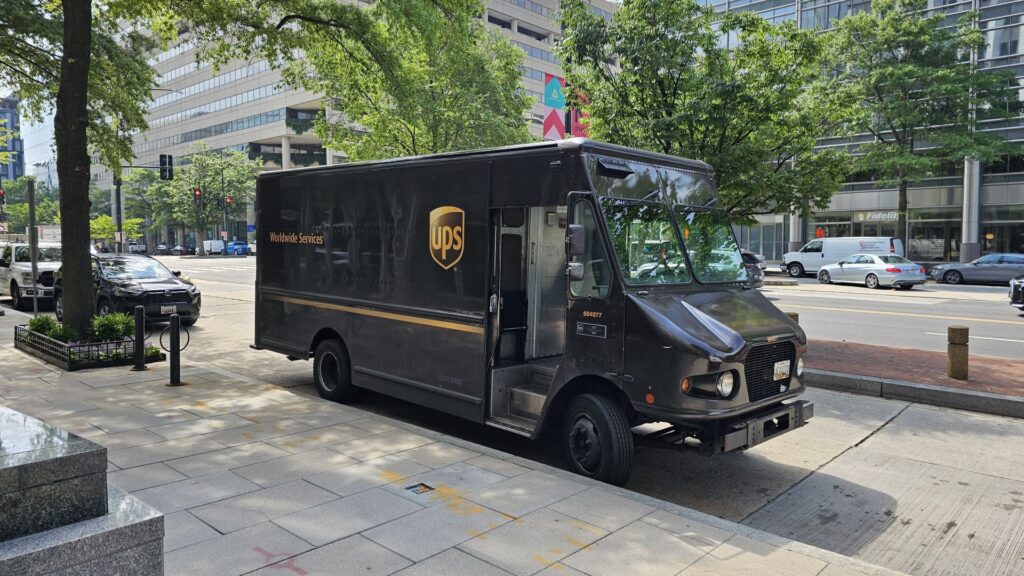
With the Teamsters union contract expiring in 2028, the stakes have never been higher for the shipping giant.
For 18 months, UPS has publicly emphasised its shift toward more complex, higher-margin services in sectors like B2B distribution, healthcare, automotive, and small enterprises. The company has already phased out 50% of its business with Amazon, a decision that underscores its intent to distance itself from the crowded final-mile delivery space dominated by lower-cost competitors. However, industry veterans and consultants are divided over whether this strategy is a genuine transformation or a smokescreen to mislead rivals ahead of a potential labour showdown.
Is UPS abandoning parcel delivery or resetting its cost structure?: ups parcel pivot
The company has downsized its domestic parcel network by eliminating 150 sort centres, 30,000 positions, and 50 million labour hours, aligning its infrastructure with reduced volumes. Tomé has been vocal about overturning the industry’s long-held assumption that scale alone drives profitability, instead focusing on premium segments where revenue per piece is higher.
Yet scepticism persists. Richard Metzler, an industry veteran with executive experience at DHL Express, Greatwide Logistics, XPO, and uShip, argues that UPS’s core identity remains that of a parcel carrier. “I think it’s a very difficult needle to thread,” Metzler said. “They’re a parcel carrier. Plain and simple. Amazon Supply Chain Services a serious logistics business? For sure. But in my opinion, it will be tough to backfill what they exit in parcel with just logistics, small-and-medium businesses, heavyweight, and healthcare.”
Metzler’s concerns are echoed by other analysts who question whether UPS can successfully transition into an integrated logistics provider while shrinking its parcel volume. The company’s labour costs further complicate the equation.
Teamsters contract expiry in 2028: A looming crisis or strategic reset?
The expiration of UPS’s current contract with the Teamsters in 2028 looms large over its strategic pivot. Industry consultant Satish Jindel, founder of ShipMatrix, has warned that negotiations could turn into a “tectonic clash” that reshapes the parcel shipping sector. Jindel goes further, suggesting that UPS may be laying the groundwork for a strike to reset its cost structure. “They are not [exiting parcel delivery],” Jindel asserted. “This is a Trojan horse to misguide competitors and the Teamsters.”
Jindel’s theory hinges on UPS’s messaging around revenue quality over sheer volume. He believes the emphasis on premium services is a strategic ploy to keep competitors like FedEx and Amazon off guard, preventing them from preparing for a potential driver exodus if the Teamsters strike. Such a scenario would allow UPS to hire drivers from rivals and reassert its dominance in the parcel market, much like it did in the 1990s. However, this gamble carries significant risks.
The Teamsters union, led by Sean O’Brien, has already drawn red lines that could trigger a work stoppage in 2028. James Cochrane, CEO of the Package Shippers Association, expressed concern about the long-term sustainability of UPS’s cost structure. “I don’t think there’ll be a strike, but I don’t envy UPS having to negotiate that one,” Cochrane said. “Very rarely do things [contract terms] move backwards. They’re at a high number now, and so I worry about their long-term longevity with that kind of cost.".
To mitigate these risks, UPS has invested heavily in automation, committing more than $8 billion over four years to modernise its facilities. The company has also diversified its delivery options through acquisitions like Roadie, a crowdsourced delivery platform purchased for $548 million in 2021. Roadie, along with other non-union subsidiaries like Happy Returns and The UPS Stores, provides UPS with flexibility to manage labour costs while maintaining service levels. However, these measures may not be enough to offset the financial burden of its Teamsters workforce.
Amazon Supply Chain Services Services, the e-commerce giant now offers third-party freight, distribution, fulfilment, and parcel shipping, directly competing with UPS in premium segments. This intensifying rivalry could further squeeze UPS’s margins, making its shift toward higher-value services even more critical to its survival.
For businesses reliant on UPS’s services, the implications are significant. Shippers may need to diversify their carrier mix to mitigate risks associated with potential labour disruptions or strategic shifts. Companies heavily dependent on UPS for B2B or healthcare logistics should monitor the company’s contract negotiations with the Teamsters closely, as any disruption could have cascading effects on supply chains. Retailers, in particular, may face higher costs if UPS is forced to pass on increased labour expenses, potentially leading to higher shipping fees for consumers.
As UPS prepares for its 2028 contract negotiations, the shipping giant’s ability to balance its strategic pivot with labour stability will be tested. Whether its focus on premium logistics proves to be a visionary move or a costly miscalculation remains to be seen. One thing is clear: the outcome will reshape the parcel shipping industry for years to come.


Sign up free to ask CAMAL AI for a summary, the key points or anything else about this story.
Related stories
CAMAL AI
 Financial Ports Newsletter
The maritime economy, every morning
Ports, shipping and freight markets in one short email. Free.