

United States launches ambitious plan to regain maritime leadership
The United States builds less than 1% of the world’s commercial vessels, while China produces approximately 50%.
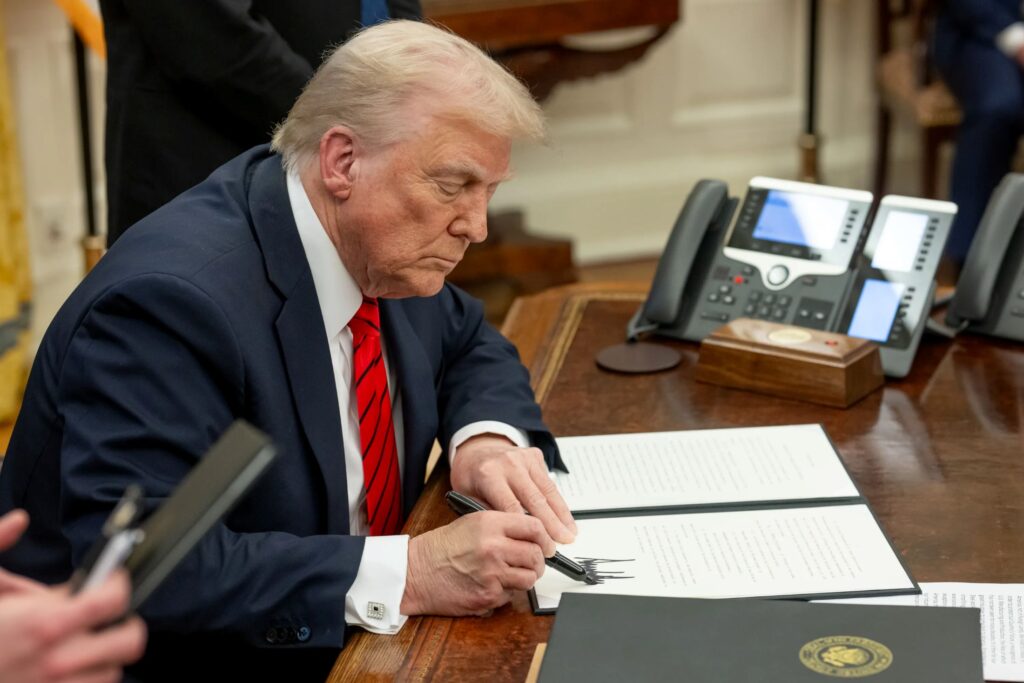
On April 9, former President Donald Trump signed a historic executive order aimed at restoring U.S. maritime supremacy. This initiative, considered the most ambitious since World War II, seeks to revitalize the American shipbuilding industry and counter China’s growing influence in the global maritime sector, according to The White House.
A Comprehensive Plan for Maritime Revitalization
The executive order establishes the creation of a Maritime Action Plan (MAP), which will outline specific strategies to rebuild and strengthen the resilience of the U.S. maritime industry. The plan includes everything from modernizing shipyards to expanding the commercial fleet under the U.S. flag.
Among the key measures is the creation of a Maritime Security Fund, which will provide consistent funding for maritime programs, as well as a financial incentive program to encourage private investment in shipbuilding. Additionally, Maritime Prosperity Zones will be developed—modeled after the previously implemented “Opportunity Zones”—to promote investment in coastal communities.
Response to China’s Dominance in the Sector
President Trump pointed out that decades of government neglect have weakened U.S. maritime capabilities, allowing China to take the lead. Currently, the United States builds less than 1% of global commercial ships, while China accounts for about 50%. Moreover, 96% of containers used in global trade are manufactured in China, and 80% of port cranes in the U.S. are of Chinese origin.
To reverse this trend, the executive order directs the U.S. Trade Representative (USTR) to recommend actions against China’s anti-competitive practices in the shipbuilding industry. It also instructs the Secretary of Homeland Security to strengthen the collection of port fees and other charges on foreign cargo entering the country, preventing evasion through Canada or Mexico.
Strengthening National Security and Arctic Presence
The plan also includes strengthening national security by expanding the fleet of U.S.-flagged commercial vessels operating internationally, as well as those sailing between domestic ports. In addition, a strategy will be developed to ensure U.S. leadership in Arctic waterways, in response to the growing presence of foreign nations in the region.
To support these goals, training and education for mariners will be expanded through investments in the U.S. Merchant Marine Academy and increased training opportunities. The Secretary of Defense will also assess options to invest in and expand the maritime industrial base, including shipbuilding and repair, component supply chains, and port infrastructure.
International Cooperation and Bipartisan Support
The Trump administration has expressed its intent to work with allies and partners to align trade policies that disrupt China’s non-market-based practices in international supply chains and logistics sectors. This approach has received rare bipartisan backing, with lawmakers from both parties supporting initiatives to rebuild America’s maritime industrial base and expand U.S.-flagged commercial shipping.
Implications for the Global Maritime Sector
The implementation of this plan could have significant implications for global maritime trade. The imposition of new tariffs on Chinese-built vessels and cargo equipment, coupled with incentives for domestic shipbuilding, may shift current market dynamics. Additionally, the strategy to enhance U.S. presence in the Arctic could intensify geopolitical competition in the region, where melting ice is opening new navigation routes and economic opportunities.
For international maritime stakeholders, especially in Europe and Asia, it will be crucial to closely monitor the evolution of these policies and assess their potential impacts on supply chains, shipbuilding competition, and trade alliances.


Sign up free to ask CAMAL AI for a summary, the key points or anything else about this story.
Related stories
CAMAL AI
 Financial Ports Newsletter
The maritime economy, every morning
Ports, shipping and freight markets in one short email. Free.
Financial Ports Newsletter
The maritime economy, every morning
Ports, shipping and freight markets in one short email. Free.



