

U.S. LNG Needs Bunkering Now Amid Hormuz Tensions
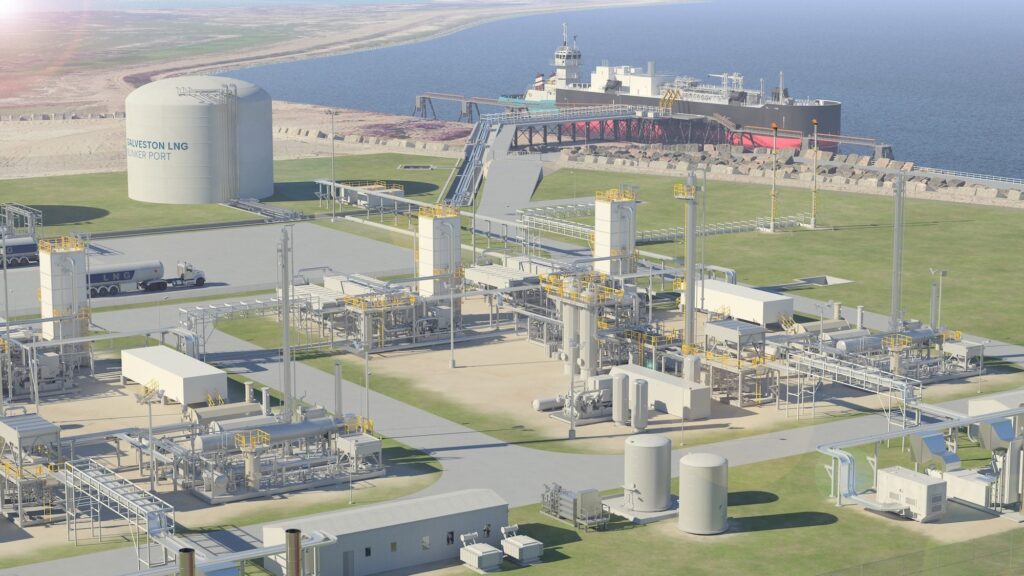
Escalating tensions in the Strait of Hormuz—a corridor carrying a significant share of global energy trade—have thrust a fundamental vulnerability into view. When a single maritime artery bears roughly 20% of worldwide oil and LNG flows, any disruption, real or threatened, reverberates across fleets, freight rates, and national energy strategies. The stakes are not abstract. They translate into shipping schedules, contractual obligations, and contingency planning for vessel operators that rely on assured access to fuel. In this moment, the world’s dependence on uninterrupted passage is colliding with a hard question about readiness.
In an editorial analysis, Lou Sola argues that the United States, despite being the world’s largest LNG producer, is constrained by the shortage of marine fueling infrastructure. The claim is stark: production leadership does not equal availability at the pier. Without a robust network to bunker ships, LNG abundance remains trapped upstream—powerful in theory yet limited in practice—precisely when maritime exposure to shocks is rising. The result is a system that can move molecules but struggles to deliver operational certainty where it matters most: alongside vessels.
From Abundance to Access: The LNG Constraint
The gap between capacity and access defines the present bottleneck. Sola’s warning is less about geology and more about logistics. Shippers and energy planners may count on cargoes crossing oceans, but fueling ships requires proximate, reliable, and repeatable service. Storage, transfer, and safety protocols must be synchronized at ports, not just optimized in export terminals. Absent that last-mile reliability, the system’s weakest link becomes the one that determines performance under stress—particularly when operators face timetable pressures and route uncertainty.
Natural Gas
The concentration of flows through a narrow chokepoint exposes another reality: diversification only helps if alternative routes and fueling options are ready to shoulder the load. A resilient maritime energy architecture cannot depend on a single corridor, nor can it rely on ad hoc workarounds during crises. Building LNG bunkering nodes—scaled to real operational demand, with clear standards and training—would convert domestic production strength into seaborne staying power. It would also replace improvisation with planning, lowering the risk premium when headlines turn volatile.
The strategic case is straightforward. When geopolitical risk rises, fuel assurance becomes strategy, not just logistics. Infrastructure signals intent. Ports that can bunker LNG consistently send a clear message to carriers, charterers, and insurers: schedules can hold, commitments can be met, and exposure can be managed. Conversely, the absence of dependable fueling magnifies uncertainty up and down the chain—from voyage planning to financing—leaving operators to hedge with costly buffers or avoid routes altogether.
Execution demands discipline. Clarity on permitting, safety, and operating standards must meet capital that is patient and focused on throughput reliability, not just ribbon-cutting. The objective is operational redundancy at critical nodes, with procedures that are practical for crews and verifiable for regulators and insurers. Training, incident readiness, and transparent data on capacity and availability are not extras; they are the operating system that makes bunkering a dependable service rather than a sporadic offering.
Sola’s argument lands at a pivotal time. The system’s fragility has been exposed not because supply is scarce, but because delivery to ships is constrained at the point of use. Strengthening the last link—what happens at the quay, at the hose, at the schedule—turns LNG abundance into maritime resilience. The calculus is simple: reliable fueling under pressure keeps fleets moving, contracts intact, and exposure contained. It is the difference between hoping the corridor stays open and preparing for when it does not.


Sign up free to ask CAMAL AI for a summary, the key points or anything else about this story.
Related stories
CAMAL AI
 Financial Ports Newsletter
The maritime economy, every morning
Ports, shipping and freight markets in one short email. Free.
Financial Ports Newsletter
The maritime economy, every morning
Ports, shipping and freight markets in one short email. Free.