
Taiwan’s $930m USV Deal Shakes Up Indo-Pacific Maritime Defence
Taiwan secures landmark co-production deal for MARTAC’s 50-knot Devil Ray T24 unmanned vessels.
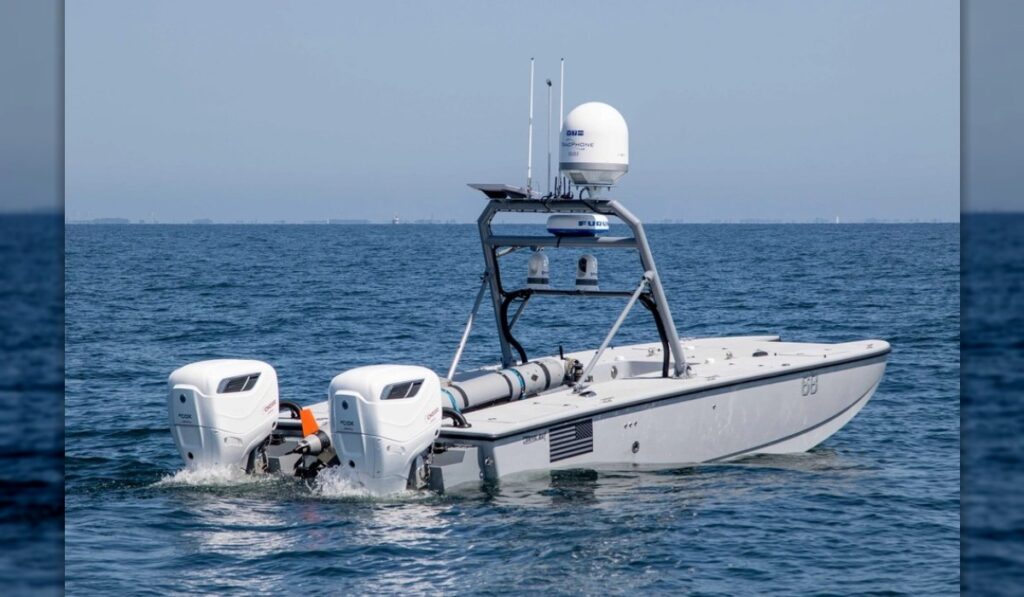
Taiwan has finalized a significant agreement to purchase unmanned surface vessels from U.S. manufacturer Maritime Tactical Systems (MARTAC), marking a key development in the adoption of autonomous maritime technology in the region.
The Taiwan Coast Guard Administration will acquire an undisclosed number of MARTAC’s Devil Ray T24 vessels, a 28-foot unmanned boat capable of reaching speeds up to 50 knots. These vessels, which have been used operationally by U.S. forces, will be produced through a co-production model. Some units will be built at MARTAC’s facility in Florida, while others will be assembled in Taiwan by local partner Confucian Co.
Strategic Implications for Taiwan’s Defense: unmanned surface vessels
The deal reflects Taiwan’s efforts to enhance its maritime capabilities amid regional security challenges. The co-production arrangement allows Taiwan to develop domestic expertise in unmanned surface vessel technology, reducing reliance on foreign suppliers. Confucian Co. highlighted the importance of this approach, noting that the partnership with MARTAC was instrumental in securing government approval for the acquisition.
The agreement also signifies a shift in Taiwan’s defense procurement strategy, which has traditionally prioritized manned platforms. The Devil Ray T24’s autonomous capabilities and high speed make it well-suited for coastal patrols and rapid response missions in Taiwan’s waters.
Technological and Political Context
Seamus Flatley, Chief Growth Officer of MARTAC, described the sale as a landmark moment for the company and the broader adoption of unmanned surface vessels in the Indo-Pacific. The deal was facilitated by a 2025 memorandum of understanding between MARTAC, Taiwan’s state-owned defense research institute, and Confucian Co.
While the acquisition advances Taiwan’s maritime modernization, political challenges persist. The Trump administration has not yet approved a pending $14 billion military sales package for Taiwan, underscoring the complexities of U.S.-Taiwan relations amid broader geopolitical tensions. However, the USV deal appears to have navigated these sensitivities, partly due to its co-production model, which aligns with Taiwan’s industrial and strategic objectives.


Sign up free to ask CAMAL AI for a summary, the key points or anything else about this story.
Related stories
CAMAL AI
 Financial Ports Newsletter
The maritime economy, every morning
Ports, shipping and freight markets in one short email. Free.