
Puerto Quequén receives first cargo for VMOS Punta Colorada
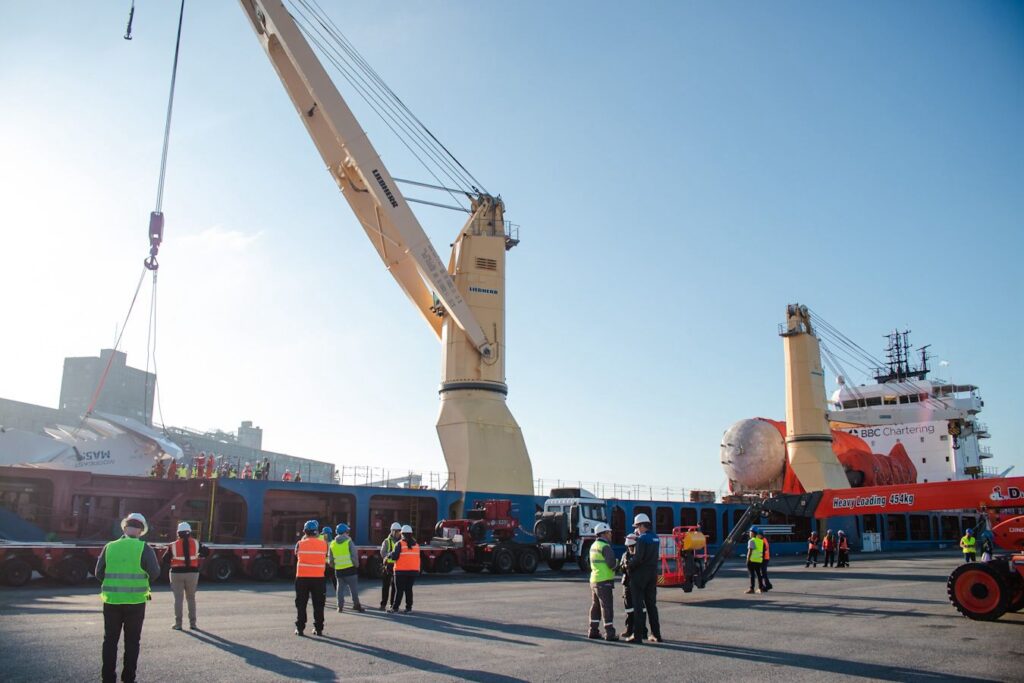
Puerto Quequén has received its first vessel carrying cargo for VMOS Punta Colorada, completing the unloading of anchors and chains intended for an offshore terminal at Punta Colorada. The operation adds the port to a key logistical flow linked to YPF and advances its stated diversification strategy. By formalizing the discharge of specialized equipment for offshore use, the maritime station demonstrated the capability to handle non-traditional cargo beyond its regular portfolio, while aligning with supply requirements connected to a YPF operation. The milestone underscores a meaningful operational step for the terminal and signals the port’s readiness to support offshore-associated logistics with targeted handling and reception processes.
The unloading centered on high-strength mooring components identified as anchors and chains, items typically used to secure floating or fixed assets in offshore settings. Completing this discharge represents a practical expansion of Puerto Quequén’s role into cargo types that require careful staging, inspection, and controlled movements within the terminal. By integrating this activity into its workflow, the maritime station reinforced procedural adaptability, from receiving the vessel to managing the specialized equipment transfer. The achievement is framed as part of a broader effort to diversify services, an objective consistent with the port’s stated intention to widen its logistical scope and link more directly with energy-related supply chains.
Strategic significance for port logistics
The development also situates Puerto Quequén within an operation characterized as “key” for YPF, indicating that the port’s participation responds to defined needs associated with an established offshore project. While detailed schedules or volumes were not disclosed, the completed unloading confirms an operational interface among the port, the cargo purpose, and the downstream terminal requirements at Punta Colorada. Such alignment is significant: incorporating specialized consignments for offshore activity can require tailored berth planning, equipment readiness, and documentation flows that differ from standard breakbulk or containerized traffic. In that context, this first reception and discharge set a functional benchmark for subsequent calls with comparable characteristics.
Strategically, the step supports a diversification path that many maritime nodes pursue to stabilize throughput and broaden revenue sources. Handling offshore-related components can complement traditional cargo cycles by smoothing operational variability and enabling the terminal to capture value from specialized logistics. For Puerto Quequén, demonstrating competence with this category of equipment may strengthen its position when stakeholders evaluate routing options for future consignments. It also showcases an operational narrative in which the port is not solely a conduit for conventional trades but a platform capable of accommodating distinct energy-linked requirements under controlled conditions.
From an operational standpoint, the successful unloading of anchors and chains is notable for what it implies about process management within the terminal environment. Though routine for ports accustomed to offshore supply, such consignments typically demand precise lifting, dedicated storage or laydown areas, and coordination across stevedoring, safety, and gate movements. By completing the task, Puerto Quequén signals that it can integrate these elements into a coherent flow for consignments tied to offshore terminals. This adaptation does not alter the fundamentals of port operations, but it does emphasize the importance of readiness, equipment compatibility, and the disciplined execution of cargo segregation and handling protocols.
Participation in a YPF operation carries additional weight, given the operational standards that large industrial supply chains impose on ports and service providers. Joining a process described as key suggests heightened expectations for consistency, transparency, and responsiveness. For Puerto Quequén, meeting those expectations with its first dedicated discharge for VMOS Punta Colorada provides a reference point for performance. It also offers a proof of concept that can be applied to similar equipment streams, whether subsequent consignments of anchors, chains, or related offshore components. In turn, that experience can inform planning for berth allocation, labor deployment, and equipment scheduling.
Looking ahead, the immediate significance of the completed unloading lies in its demonstration effect: the maritime station has shown that it can receive and handle specialized cargo for an offshore terminal at Punta Colorada while advancing a formal diversification strategy. The port’s integration into this VMOS Punta Colorada flow complements its existing activities and reinforces the case for continued participation in offshore-linked logistics. As stakeholders assess outcomes from this first vessel, the emphasis will likely remain on replicable processes, safe handling, and reliable turnaround, parameters that help consolidate the port’s role in a supply chain characterized by precise requirements and exacting timelines.


Sign up free to ask CAMAL AI for a summary, the key points or anything else about this story.
Related stories
CAMAL AI
 Financial Ports Newsletter
The maritime economy, every morning
Ports, shipping and freight markets in one short email. Free.
Financial Ports Newsletter
The maritime economy, every morning
Ports, shipping and freight markets in one short email. Free.