

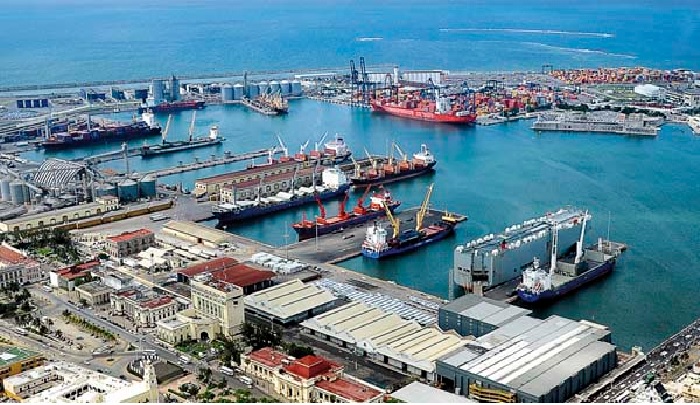
Mexico launched the new North Maritime Customs in Veracruz, marking a major upgrade to one of the country’s most strategic gateways. The project, executed by the National Customs Agency of Mexico (ANAM), required an investment of 2,211 million pesos and was unveiled in a ceremony led by President Claudia Sheinbaum Pardo, Veracruz Governor Rocío Nahle García, and ANAM head Rafael Marín Mollinedo, with the port community in attendance. Authorities framed the opening as a decisive step to enhance logistics efficiency, security, and the international competitiveness of the Port of Veracruz.
The Veracruz Customs Brokers Association (AAA) formally welcomed the start of operations, describing the new facility as a firm move to strengthen the port’s role in global trade flows. At the invitation of Veracruz Customs chief Luis Cuauhtémoc Guerra Chacón, AAA president Marco A. Sansores Ramírez attended the inauguration alongside board members A.A. Alfredo Deschamps Beverido, A.A. Martha de la Garza González, and Lic. Antonio Bañuelos Solís. From CAAAREM’s National Executive Committee, A.A. Ricardo Beristain Saucedo was also present, underscoring sector support for the modernization effort.
Scope and Expected Impact of the Upgrade
The expansion significantly increases the customs footprint and operating muscle. The controlled area grows from 12 to 41 hectares, while built infrastructure rises from 9,203 to 35,303 square meters. Inspection capacity is bolstered through a lift in non-intrusive inspection systems from 22 to 43 units, coupled with a scale-up in canine teams from 6 to 21. These additions are designed to intensify enforcement while maintaining throughput, a critical balance for high-volume port operations.


On the ground, the facility now includes 134 recognition bays to streamline physical checks, supported by 22 automated selection positions and a next-generation monitoring center. Together, these elements concentrate decision-making and real-time oversight, enabling more consistent application of customs controls. A regional laboratory and a mobile laboratory—both in development—are expected to further support verification and compliance processes once operational, complementing the technology stack already in place.
Operational outcomes are central to the upgrade’s rationale. ANAM reports the creation of more than 150 direct jobs and a 50% reduction in clearance times, a shift with immediate implications for carriers and consignees. Daily processing capacity is set to rise from 2,000 to 5,000 operations, aligning expanded infrastructure with digital and automated workflows. According to the agency, the reinforced platform will strengthen customs control, combat smuggling, and ensure safer, more agile, and more transparent operations across the port’s import and export corridors.
For the Port of Veracruz, the new maritime customs represents both a capacity upgrade and a credibility signal to international markets. By combining expanded inspection lanes with risk-based selection and centralized monitoring, the authority aims to reduce bottlenecks, improve predictability for shippers, and mitigate compliance risks without compromising security. The integrated approach also positions Veracruz to absorb traffic fluctuations more effectively, an advantage in periods of global supply chain stress.
The presence of federal and state leadership at the inauguration underscores the project’s strategic weight within Mexico’s broader customs modernization agenda. With ANAM steering the execution and the port community aligned behind the effort, the facility’s rollout consolidates a multi-stakeholder push to raise standards of control, traceability, and service. As the laboratories come online and the expanded inspection and monitoring capacities mature in day-to-day use, the customs platform is set to anchor a more resilient and competitive operating environment for Veracruz.

