

Japan to bankroll oil’s detour as Hormuz risks soar
Tokyo approves three bills to fund alternative routes and tanker insurance as 93% of imports pass the Strait of Hormuz
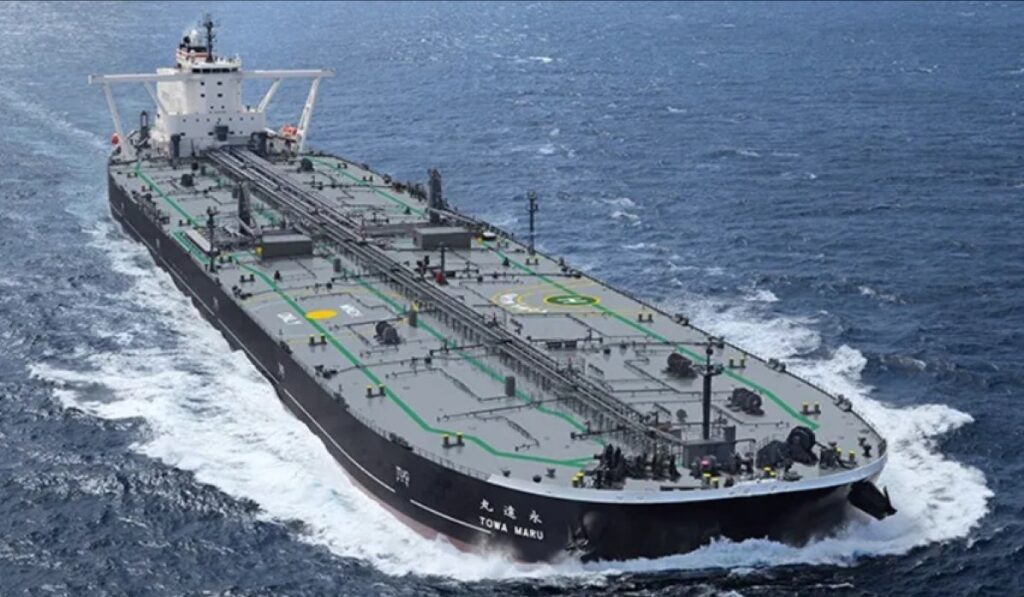
Japan will subsidise the extra cost of importing oil from suppliers outside the Strait of Hormuz, as the government moves to slash dependence on the increasingly volatile waterway.
Under the proposed legislation, refiners, trading houses, and petrochemical companies would receive grants to offset the higher cost of sourcing crude and petroleum products from non-Middle Eastern suppliers. The scheme, administered by state-backed Japan Organization for Metals and Energy Security (JOGMEC), would be funded by contributions from oil importers. Industry minister Ryosei Akazawa said the measures were designed to “fundamentally strengthen Japan’s energy supply security.”
“The legislation was intended to fundamentally strengthen Japan’s energy supply security.”
Ryosei Akazawa·Industry Minister
The urgency stems from Japan’s heavy reliance on Middle Eastern oil, which accounted for 94% of its crude imports last year. Government figures show 93% of those imports are tied to the Strait of Hormuz, though this metric is based on countries of origin rather than actual tanker movements. Diversifying to suppliers like the US would dramatically increase shipping costs: voyages from the US Gulf Coast to Japan via the Cape of Good Hope take 45-60 days, compared with 20-30 days from the Middle East.
Brent Crude
Insurance and pipelines: Tokyo’s dual shield against disruption: strait of hormuz
A second bill targets marine insurance, a growing bottleneck as international reinsurers retreat from geopolitical hotspots. The legislation would partially cover hull and cargo claims when private insurers refuse to provide war-risk protection.
The third bill grants JOGMEC new powers to invest in and guarantee financing for overseas pipelines, creating alternative export routes that bypass Hormuz entirely.
The move follows a sharp escalation in attacks along the Strait of Hormuz, where two commercial vessels, a tanker and a containership, were struck by unidentified projectiles on Tuesday.
Global race to secure energy routes as Hormuz tensions persist
Japan’s strategy contrasts with other major importers. India launched a $1.5bn maritime insurance pool in May, backed by a $1.4bn sovereign guarantee, to maintain war-risk cover for domestic voyages. South Korea earmarked Won1.4bn ($1.05m) to subsidise premiums for smaller shipping firms, initially targeting nine vessels. Both countries have also rolled out credit guarantees and emergency financing to support their fleets.
China, the world’s largest crude importer, has taken a different tack, relying on strategic stockpiles and overland pipelines from Russia and Kazakhstan. China has pressed diplomatically for the restoration of Hormuz shipping, it has not announced a government-backed insurance subsidy, instead leaning on state-owned enterprises to manage risk.
Investment banks are divided on the outlook. HSBC describes a disrupted “new normal” in which the strait remains impaired, while Goldman Sachs assumes Middle Eastern shipping disruption will continue into next year. JPMorgan’s “forever conflict” scenario models Brent crude averaging $87 a barrel in 2027, a level that would strain Japan’s trade balance and inflation targets. Other banks, like ING and Citi, remain more optimistic, citing potential diplomatic breakthroughs around the US midterm elections in November.


Sign up free to ask CAMAL AI for a summary, the key points or anything else about this story.
Related stories
CAMAL AI
 Financial Ports Newsletter
The maritime economy, every morning
Ports, shipping and freight markets in one short email. Free.



