

Iran Seizes Two Ships in Strait of Hormuz After Trump Halts Strikes
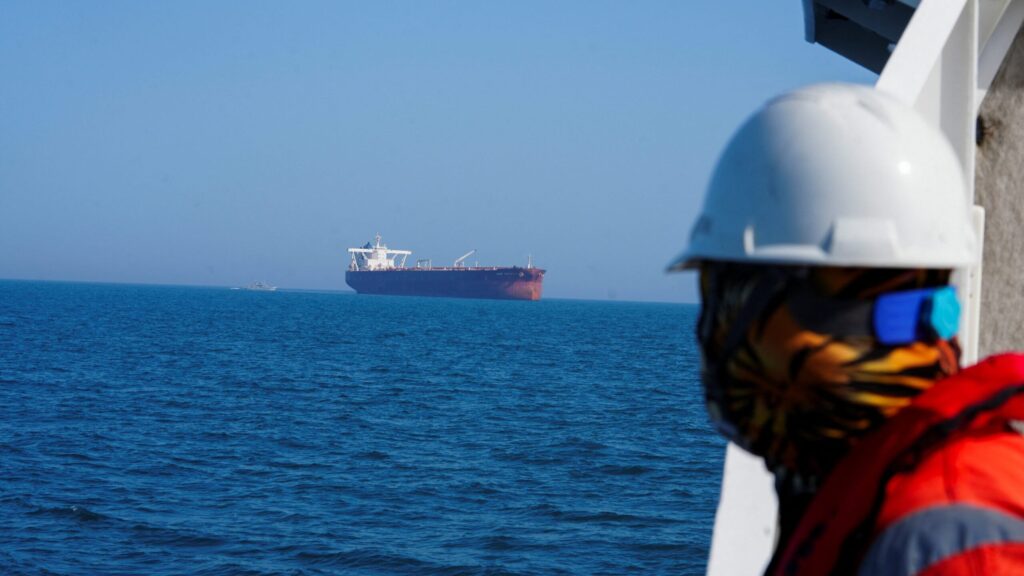
Iran seized two ships in the Strait of Hormuz on Wednesday, tightening its grip on the strategic waterway after U.S. President Donald Trump called off attacks indefinitely, with no sign that peace talks will restart. The development underscores a tense pause: military options have been set aside for now while political channels remain dormant. The result is a vacuum in which detention of vessels proceeds without a parallel de-escalation track, and commercial operators are left to navigate a high-stakes passage under increasing pressure and ambiguity. The timing—immediately following the decision to halt strikes—amplifies the sense that maritime dynamics in this corridor will be shaped by restraint on one side and assertive interdictions on the other, absent a functioning diplomatic bridge.
The decision to suspend planned attacks indefinitely was followed by the seizures, with no indication that negotiations are imminent. In practice, that combination elevates operational risks for ships transiting a strategic waterway while offering no clear pathway to reduce them. The message is stark: one party has opted to step back from kinetic action for now, while the other has acted at sea in a manner that reinforces leverage. Without concrete steps toward talks, the burden shifts to commercial, legal, and security calculations made on the water and in port control rooms, where every voyage plan must now account for a heightened possibility of detention and prolonged uncertainty over release, liability, and insurance exposure.
Maritime Risks and Political Calculus
By detaining vessels after the stand-down order, the actors involved have created a policy environment that is less about immediate force and more about endurance, signaling, and control. In such conditions, the near-term outlook revolves around risk management rather than resolution: routing choices, convoy considerations, and compliance postures harden; insurers reassess exposures; and operators weigh schedule integrity against the prospect of delays. This rebalancing is not a substitute for diplomacy, but a placeholder. It sustains the status quo while raising the cost of misjudgment at sea. In the absence of formal talks, even routine maritime interactions acquire outsized consequence, as authorities test thresholds and shipping firms revisit assumptions that had anchored passage planning only days earlier.
Key facts remain limited in the public account: the identities of the detained vessels, details of the crews, the precise grounds cited for the seizures, and the anticipated process for adjudication or release were not provided. What is clear is the setting and sequence—an action in a corridor repeatedly described as a strategic waterway, following a high-level decision to refrain from immediate military retaliation. That juxtaposition concentrates attention on intent and timing. Was the maritime action designed to consolidate bargaining power? Does the pause in strikes open space for indirect signaling rather than direct negotiations? The lack of overt diplomatic movement suggests that leverage is being sought through controlled, observable steps at sea rather than at a negotiating table.
Absent new initiatives, the most plausible near-term trajectory is sustained unpredictability. Shipping schedules will adapt; legal teams will prepare for contested detentions; and regional watchers will parse each transit for indicators of either moderation or escalation. None of that substitutes for a framework that lowers risk and restores predictability. Yet, until talks resume—or until a new policy directive supersedes the current restraint—the operating reality is defined by a held-back strike option on one side and active vessel detentions on the other. In that space, words like seized, “detained,” and “escorted” take on added weight, and the cost of miscalculation rises with every passage through a narrow channel where uncertainty now travels alongside every shipping manifest.


Sign up free to ask CAMAL AI for a summary, the key points or anything else about this story.
Related stories
CAMAL AI
 Financial Ports Newsletter
The maritime economy, every morning
Ports, shipping and freight markets in one short email. Free.
Financial Ports Newsletter
The maritime economy, every morning
Ports, shipping and freight markets in one short email. Free.