

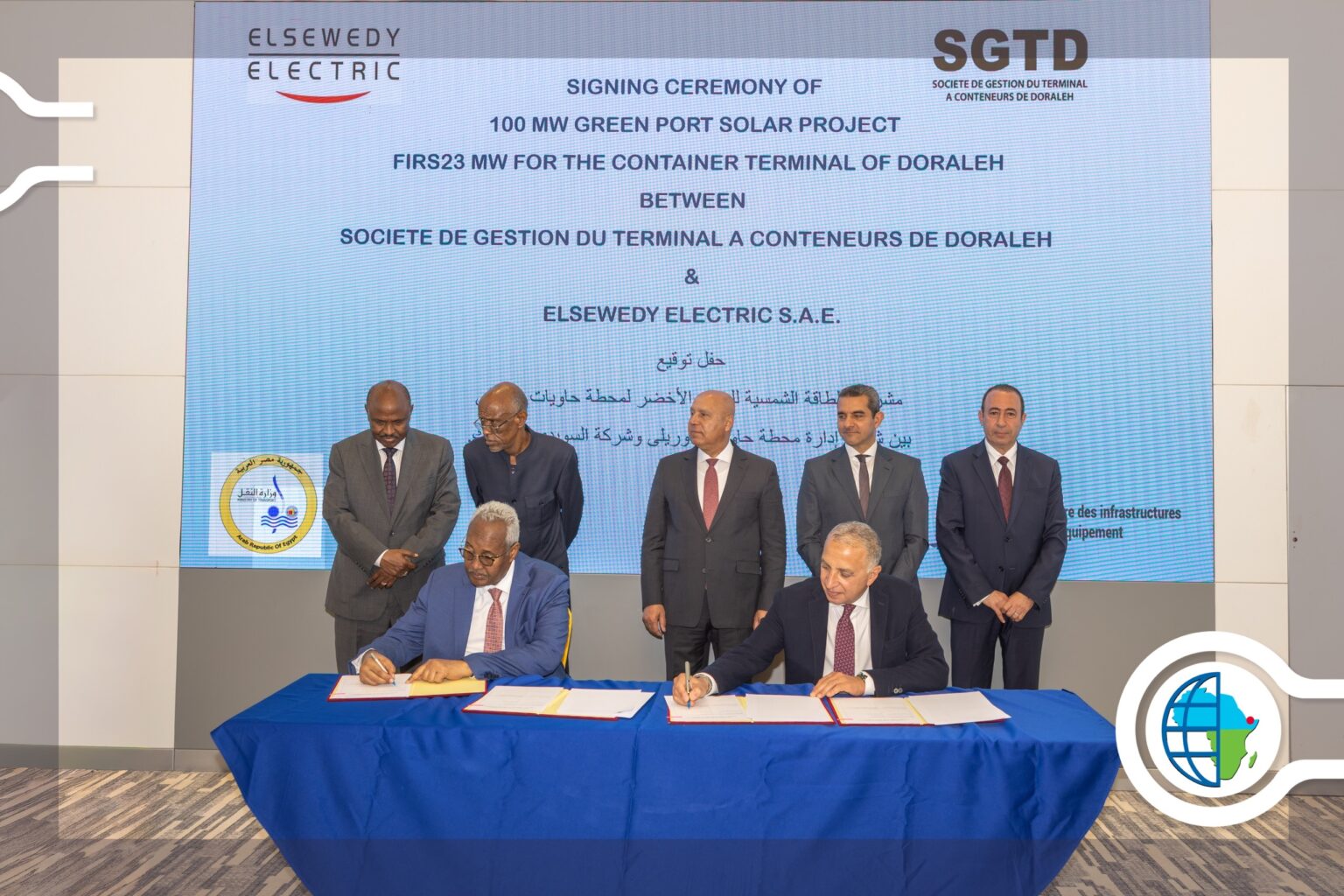
Djibouti and Egypt have reached a new major milestone in their bilateral engagement, announcing three agreements that target maritime transport, logistics, and renewable energy. The development, presented as a step to strengthen economic and trade relations, signals a coordinated push to leverage their positions along a critical maritime corridor. While the brief announcement did not disclose detailed terms, the scope indicates an effort to enhance connectivity, streamline supply chains, and explore cleaner energy pathways. By setting a structured agenda around three agreements in maritime transport, logistics, and renewable energy, both governments are framing a practical platform for cooperation that can be refined as implementation plans, governance mechanisms, and financing arrangements come into focus.
Strategic Context and Potential Impact
As neighbors to some of the world’s most consequential sea lanes, Djibouti and Egypt sit astride the Red Sea, a conduit linking the Mediterranean and the Indian Ocean through the Suez Canal. Aligning policies in shipping services, port access, and trade facilitation can, in principle, reduce friction for cargo moving between Africa, the Middle East, and Europe. The newly announced accords gesture toward deeper operational alignment and resilience in a market that has faced repeated disruptions, from geopolitical tensions to supply-chain bottlenecks. For both countries, closer coordination could translate into clearer standards, more predictable schedules, and improved interoperability across public and private operators.
Without disclosing specifics, the announcement leaves open the exact mix of priorities that the maritime and logistics tracks will cover. In comparable settings, cooperative frameworks often touch on coordinated port operations, vessel calls, capacity planning, data exchange, and customs facilitation, as well as training, safety, and environmental standards. Even absent detailed provisions, clarity that the two governments intend to align around these sectors provides a signal to carriers, freight forwarders, and terminal operators that policy direction is converging. That signal alone can encourage planning decisions that emphasize standardization, transparency, and predictability along the corridor.


The renewable energy component, likewise, indicates an intention to explore options that lower emissions and improve energy resilience. While no programmatic details were shared, potential avenues commonly considered by governments include solar and wind development, grid efficiency, and energy management in port ecosystems. Another frequently discussed pathway in maritime contexts involves cleaner propulsion and the infrastructure needed to support alternative marine fuels, alongside measures that raise energy performance standards in logistics facilities and industrial zones connected to port platforms.
Positioning the agreements within a broader economic and trade framework highlights the dual ambition to deepen bilateral ties and to lift operational performance across the wider supply chain. Increased clarity, even at the level of high-level accords, can reduce uncertainty for market participants weighing fleet deployment, routing choices, and long-term asset allocation. Over time, such policy alignment may help open channels for technical assistance, public–private dialogue, and structured investment planning that can translate strategic intent into workable projects.
Implementation remains the decisive test. The initial announcement did not outline governance structures, timelines, investment volumes, or performance indicators. Establishing clear accountability, sequencing, and monitoring will determine whether the three tracks advance at a comparable pace and whether early wins can be secured. In practice, success often hinges on how swiftly working groups are formed, how regulatory coordination is handled, and how private-sector input is incorporated into practical deliverables.
Regional dynamics will also shape outcomes. Better-aligned procedures between Djibouti and Egypt can complement wider efforts to improve connectivity and resilience across the Red Sea corridor. Coordinated port and logistics policies can help reduce duplication, streamline documentation, and support multimodal links, while progress on energy cooperation can inform sustainability frameworks relevant to maritime operations. These elements, taken together, can incrementally strengthen the reliability of trade flows that pass through their waters and terminals.
For now, the message is one of direction and intent. The parties have framed this step as strengthening their economic and trade relations through a trio of sectoral agreements, without releasing granular commitments. As subsequent phases clarify governance, financing, and technical parameters, stakeholders across shipping, logistics, and energy will be watching for milestones that translate the announcement into operational change. Further details will be crucial to assess scale, sequencing, and the durability of the cooperation envisioned by both governments.

