


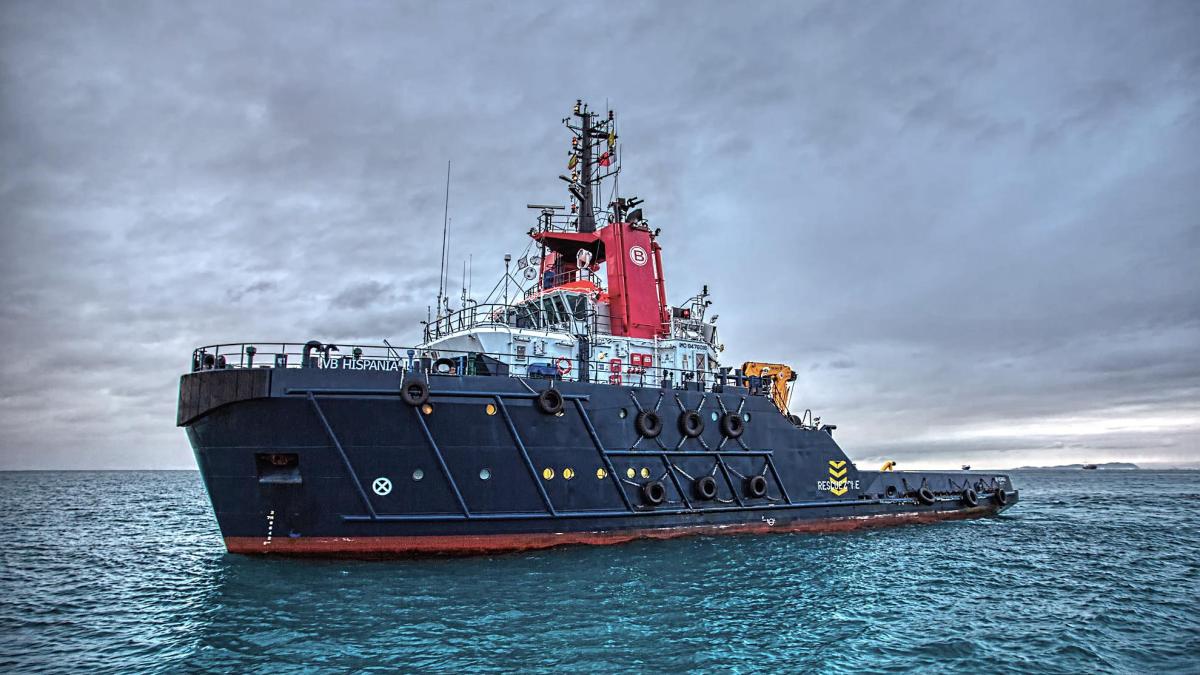
The integration between Boluda Towage and MSC Mediterranean Shipping Company is now a corporate reality. After months of discreet but strategic moves, both companies have finalized the creation of a new joint venture, valued at over €2 billion and headquartered in Luxembourg. The new company is called Boluda Towage Holding , a Luxembourg-based holding company created to consolidate the port towage businesses of Boluda and MSC following the integration of their operations and fleets.
This is not a simple corporate adjustment. It is a declaration of intent on the international maritime stage.
The deal strengthens the alliance between the group chaired by Vicente Boluda Fos and the world’s largest shipping company in terms of container capacity. It comes at a time when the sector is undergoing profound restructuring: vertical integration, control of strategic port services, and a search for efficiency in an uncertain geopolitical environment.
Boluda Towage had already brought MSC into its capital in 2022. Now, the culmination of the corporate integration means definitively organizing the structure under a holding company based in Luxembourg, a common location for large international groups for tax, regulatory and governance reasons.
The new joint venture consolidates a fleet of over 700 tugboats and a presence in more than 50 countries.
In terms of operational scale, we are talking about one of the world’s largest port and offshore towing operators.
This is no small matter: towing is a critical, strategic, and high-value-added service. Controlling it means gaining influence over the logistics chain, especially in key ports.

Vertical integration: MSC’s logic
MSC is not just about maritime transport. In recent years it has accelerated its vertical integration strategy: port terminals (through TIL), land logistics, rail transport and now greater involvement in essential port services.
With this acquisition, the Swiss shipping company strengthens its position in a sector traditionally controlled by local or family-owned operators. Boluda, for its part, secures financial strength and global backing to continue its growth.
The question is not whether this integration was foreseeable. It was. The question is what it implies for the competitive balance in European ports and, particularly, in Spanish ports.
What does it mean for Spain?
Boluda is a long-standing player in the Spanish port system. Its international expansion has not diluted its identity, but has transformed it into a global player.
The new Luxembourg structure may spark debates about taxation, governance, and decision-making centers. However, from a port perspective, the relevant point is something else entirely: Spain remains a key operational base, but maritime capital now operates on an international level.
In a context where large shipping groups concentrate power —alliances, acquisitions, consolidation of terminals—, the fact that a Spanish operator participates in a company worth more than 2 billion euros alongside the world leader in maritime transport is not insignificant.
A sign of the new maritime order
The maritime sector is no longer a collection of isolated companies operating in segments. It is an integrated network where large shipping companies seek to control every link in the chain.
We’ve seen it with terminal acquisitions, entry into land-based logistics, investments in alternative energy, and now with the strengthening of essential port services. The integration between Boluda and MSC is not a financial anecdote. It’s part of the new global maritime order.

