

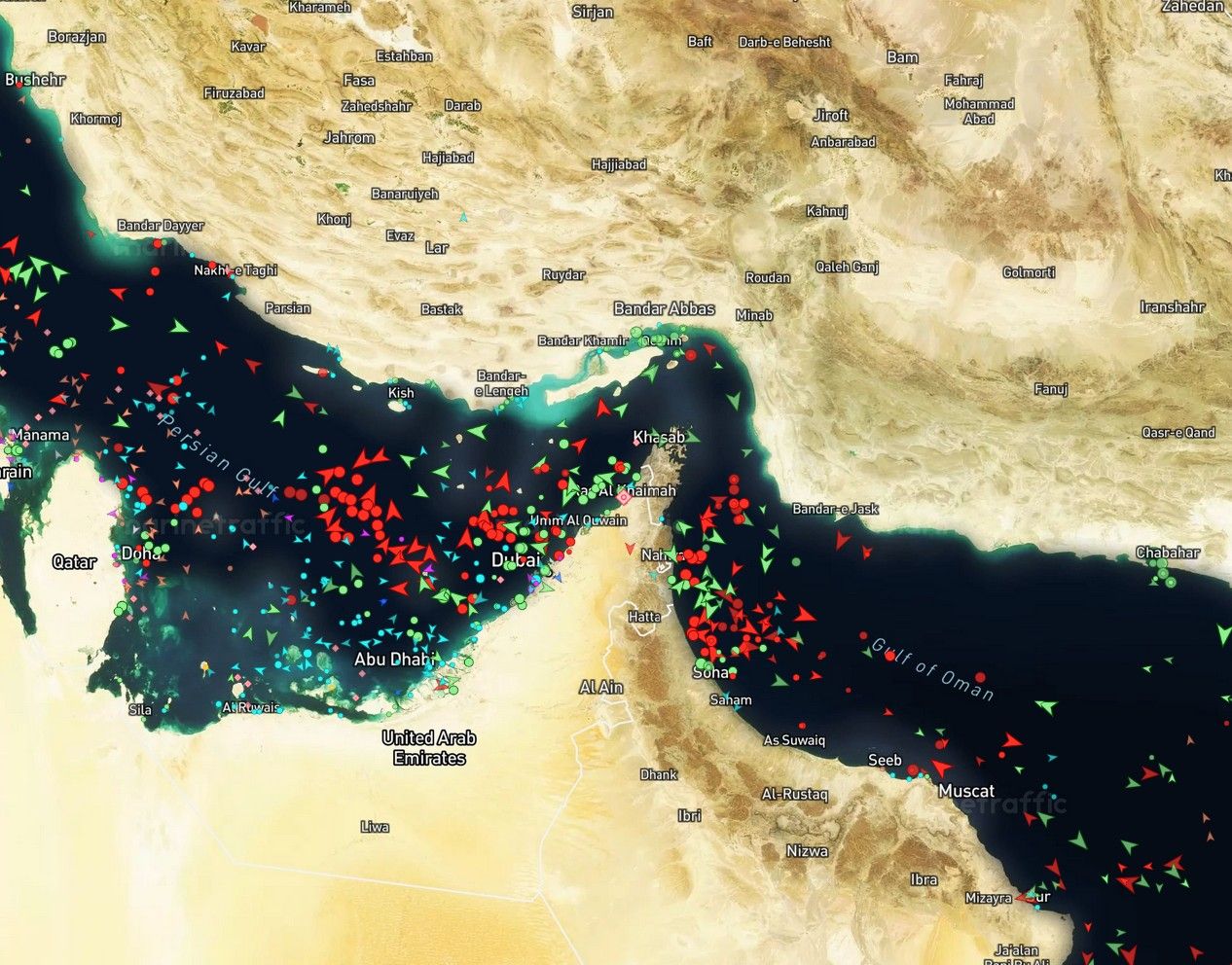
China’s Foreign Ministry said that three Chinese ships recently navigated the Strait of Hormuz after coordinating with the relevant parties, pairing the announcement with a call for peace and stability in the area. The statement presented the development as an ordered passage anchored in coordination, and placed emphasis on stabilizing language. The notice did not broaden the scope beyond these points, keeping the focus on the act of navigation itself and the ministry’s stated preference for calm conditions during movements in and around the waterway.
Official statement underscores coordination and stability
The wording highlights the priority placed on coordination, signaling that prior communication occurred before the transit. The ministry’s framing aligns the passage with a rules‑respecting approach, outlining that the move followed discussions with involved counterparts. By foregrounding coordination, the statement suggests that the procedural context—not only the passage—matters for how the event should be read, and that engagement with others was a central feature of the operation.
The reference to “recently” positions the development in the near past without specifying an exact time. Maintaining that temporal vagueness can serve practical ends, keeping attention on the tenor of the message rather than on operational particulars. In this instance, the official communication supports a restrained, factual account: ships moved, engagement took place with pertinent actors, and the ministry connected the update to a broader appeal for predictability.


By coupling the transit with a public call for stability, the ministry linked operational movement to an overarching diplomatic posture. The emphasis on calm conditions and orderly processes signals attentiveness to how maritime activities are perceived. It also aligns the description of the passage with messages that center risk reduction, clarity, and the avoidance of miscalculation among those who track developments in the area.
The expression “relevant parties” is intentionally elastic, capturing the notion that multiple counterparts may be engaged around movements in contested or sensitive waters. While the statement does not enumerate them, the formulation implies communication channels that are active enough to permit a coordinated outcome. This choice of phrasing conserves flexibility while underscoring that the navigation did not occur in isolation from others’ awareness.
Linking the report to safe navigation themes also carries signaling value. It highlights the conditions under which movements should take place—predictability, deconfliction, and mutual understanding. By centering those elements, the ministry’s message points less to the specifics of hulls and schedules and more to the processes that surround movements, including planning, notification, and disciplined execution within agreed frameworks.
The broader communication effect is one of diplomatic signaling: the operational note is presented as a demonstration of orderly procedure and a preference for quiet professionalism in a sensitive maritime corridor. Framing the passage in this way channels attention to norms of conduct rather than to spectacle, and makes clear that the desired baseline is methodical, predictable activity supported by practical coordination.
In sum, the ministry’s report combines a concise operational fact with a normative message. The reference to coordination points to deliberate engagement; the appeal to peace and stability defines the desired environment; and the neutral description of the movement supports a restrained tone. Read together, these elements encourage observers to interpret the development primarily through the lens of orderly process and risk‑aware communication.

