

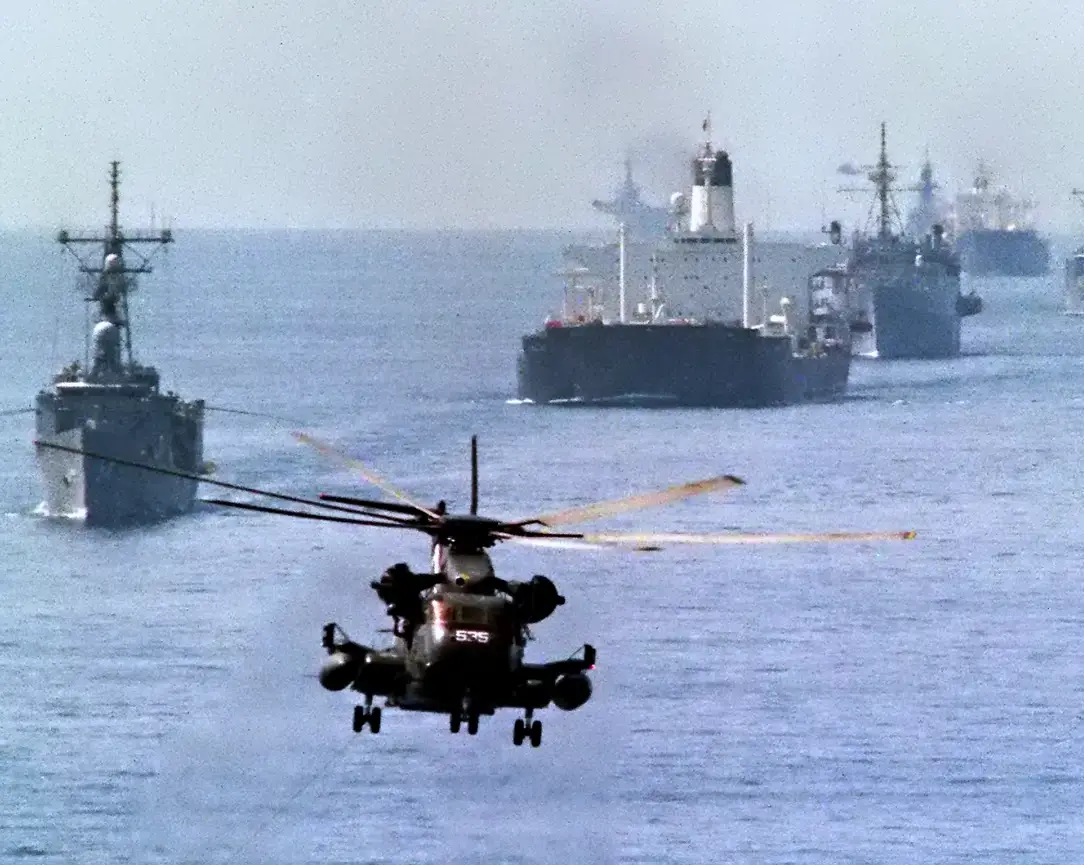
The United States has launched a massive naval escort to reopen the oil route through the Strait of Hormuz after attacks by Iran on merchant ships and oil terminals. Washington has deployed destroyers and 15,000 personnel to force a passage, concentrating power along one of the world’s most sensitive sea lanes. The operation aims to reestablish predictable transits and deter further strikes while commercial operators confront heightened risk across a narrow corridor where miscalculation carries global consequences.
Commercial traffic in this maritime chokepoint—described as the most strategic in the world—stands on the brink. The scale and urgency of the escort underscore the stakes: any prolonged disruption here can ripple through energy markets and supply chains far beyond the Gulf. Shipping interests are watching closely as security conditions evolve by the hour, with insurers, charterers, and terminal operators reassessing exposure amid intensified patrols and mounting uncertainty.
A High-Stakes Push to Secure a Vital Artery
At sea, the priority is to accompany vulnerable vessels through the strait under the protection of warships, restore confidence in scheduled sailings, and reduce the window of exposure to further attacks. The deployment of destroyers and thousands of personnel signals a determination to keep sea lanes open. The U.S. Navy presence is designed to provide layered defense, reassure crews, and set clear red lines against interference with commercial shipping.


The reported strikes on civilian maritime traffic and energy infrastructure have sharply raised the risk calculus for shipowners and port operators. Damage to oil-related facilities and the targeting of non-military vessels blur red lines that, in calmer waters, help segregate combatants from commercial actors. In this environment, escorts serve as both shield and message, pairing protection with a visible reminder that attacks on shipping invite a swift and organized response.
Strategically, the Strait of Hormuz is a slender hinge on which global energy security turns. The corridor concentrates tanker movements, narrows maneuvering room, and compresses decision-making into minutes, not hours. That geometry magnifies the impact of even limited attacks: a hit on a single vessel can snarl schedules, slow port operations, and force delays that cascade through refineries, storage hubs, and bunkering networks around the world.
Operationally, escorting traffic through a confined channel demands precision. Coordinating routes, deconflicting approaches, and maintaining clear communications amid elevated alert levels are essential to avoid accidents and prevent escalation. While warships can harden defenses and deter harassment, they must also manage proximity risks near shorelines and busy lanes, where the presence of civilian craft, fishing fleets, and service boats can complicate identification and response.
Diplomatically and legally, the stakes are equally high. Ensuring freedom of navigation while avoiding inadvertent escalation requires discipline and clarity of purpose. The sheer size of the deployment reflects the gravity of the moment, yet success will be measured not by the number of ships at sea, but by the safe, routine passage of commercial vessels and the de-escalation of threats against them.
For markets and logistics networks, predictability is paramount. Even brief delays in outbound and inbound flows can force rescheduling at terminals, strain storage capacity, and unsettle downstream planning for refiners and traders. As escorts get underway, shippers will gauge effectiveness by whether schedules stabilize, berthing windows hold, and crews can operate without constant interruption or fear of renewed attacks.
The immediate objective is clear: secure the corridor, protect crews and cargoes, and restore confidence in a waterway whose reliability underpins global commerce. With attacks fresh in mind and the escort now in motion, the coming days will test the balance between deterrence and restraint. The measure of progress will be safe transits achieved without widening the confrontation—and the gradual return of routine in a strait where routine has abruptly given way to risk.

