

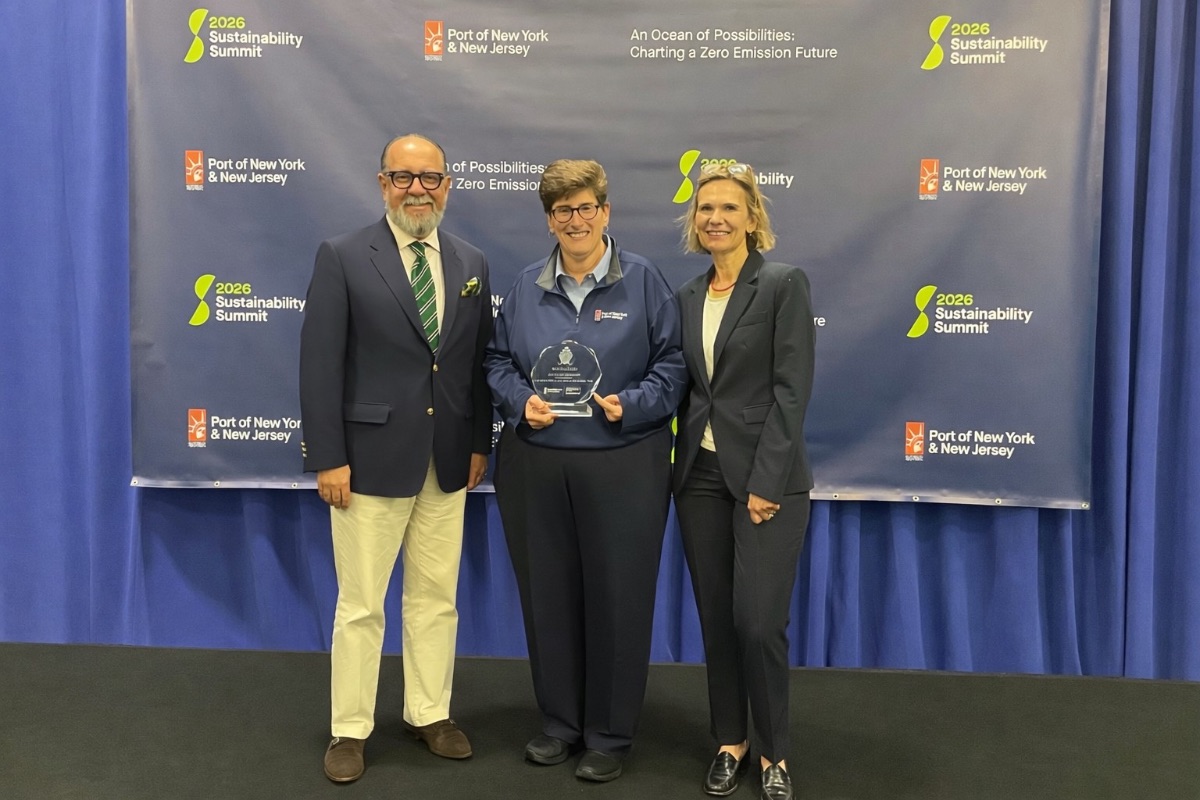
Prior to attending Seatrade, Patrick visited New York and Washington, D.C., to connect with port community partners on behalf of IAPH. The itinerary combined stakeholder meetings and participation in a regional sustainability event. In New York, he met the local maritime industry’s representative association and joined a bi-annual summit hosted by the port authority. In Washington, he renewed institutional ties within the inter-American port system and also checked in with multilateral teams focused on transport and trade. The sequence of engagements reflected a cohesive schedule built around collaboration with established counterparts in both cities.
Engagements in New York and Washington, D.C.
In New York, Patrick held discussions with the Maritime Association of the Port of New York and New Jersey, identified by the organization as the primary advocate for the commercial maritime industry in the port. The association also functions as a trade body representing its members, consolidating viewpoints across the harbor’s private stakeholders. The conversation underscored the role the association plays as a channel for port users, carriers, and service providers. By meeting the association’s leadership, Patrick engaged directly with the constituency that speaks for commercial interests across the port complex.
Patrick also participated in the Port Authority of New York and New Jersey’s bi-annual Sustainability Summit. At the event, the Port Authority presented awards to shipping companies enrolled in its Clean Vessel Incentive program. That program uses ESI, the Environmental Ship Index developed under IAPH, as its basis. By aligning the recognition with the index, the authority linked its local incentive framework to the methodology associated with the IAPH system. The summit participation, paired with the awards segment, connected operational sustainability efforts at the port with the indexing approach referenced by the program.


The awards highlighted participation by carriers in the port authority’s incentive, which is explicitly based on IAPH’s Environmental Ship Index. The use of the index as the program’s foundation was emphasized in the event’s proceedings. Patrick’s presence at the summit therefore coincided with formal recognition of companies that have aligned with the incentive structure. Taken together, the New York meetings and the summit appearance placed institutional cooperation and sustainability acknowledgment on the same agenda, framed within an approach that references the IAPH index as a core criterion.
In Washington, Patrick renewed ties with OAS-CIP, the Inter-American Committee on Ports of the Organization of American States. OAS-CIP and IAPH maintain a long-standing memorandum of understanding. This understanding is receiving new impetus this year, supported by a regional forum intended for IAPH members from Central and South America. The forum is organized in Montevideo, Uruguay, and scheduled for 11–12 May. The Washington visit positioned the renewal of ties within this timeline, connecting the memorandum’s reinforcement to the forthcoming regional engagement.
The scheduled regional forum in Montevideo forms part of the cooperation highlighted during the Washington meetings. By convening IAPH members from Central and South America on 11–12 May, the initiative advances the memorandum that OAS-CIP and IAPH have maintained over time. The plan to gather members in Uruguay adds a concrete date and location to the year’s collaborative calendar, signaling that the renewed ties referenced in Washington are intended to translate into direct regional interaction less than a month after the capital’s discussions.
Patrick also caught up with the transport and trade teams of the World Bank. The institution is an associate member and a long-standing partner of IAPH. Re-engaging with these teams placed multilateral transport and trade perspectives alongside the bilateral and regional meetings held in New York and Washington. The World Bank’s associate membership and durable partnership with IAPH provided the context for that exchange, reinforcing the established connection while keeping it linked to the broader sequence of engagements described during the visit.

