

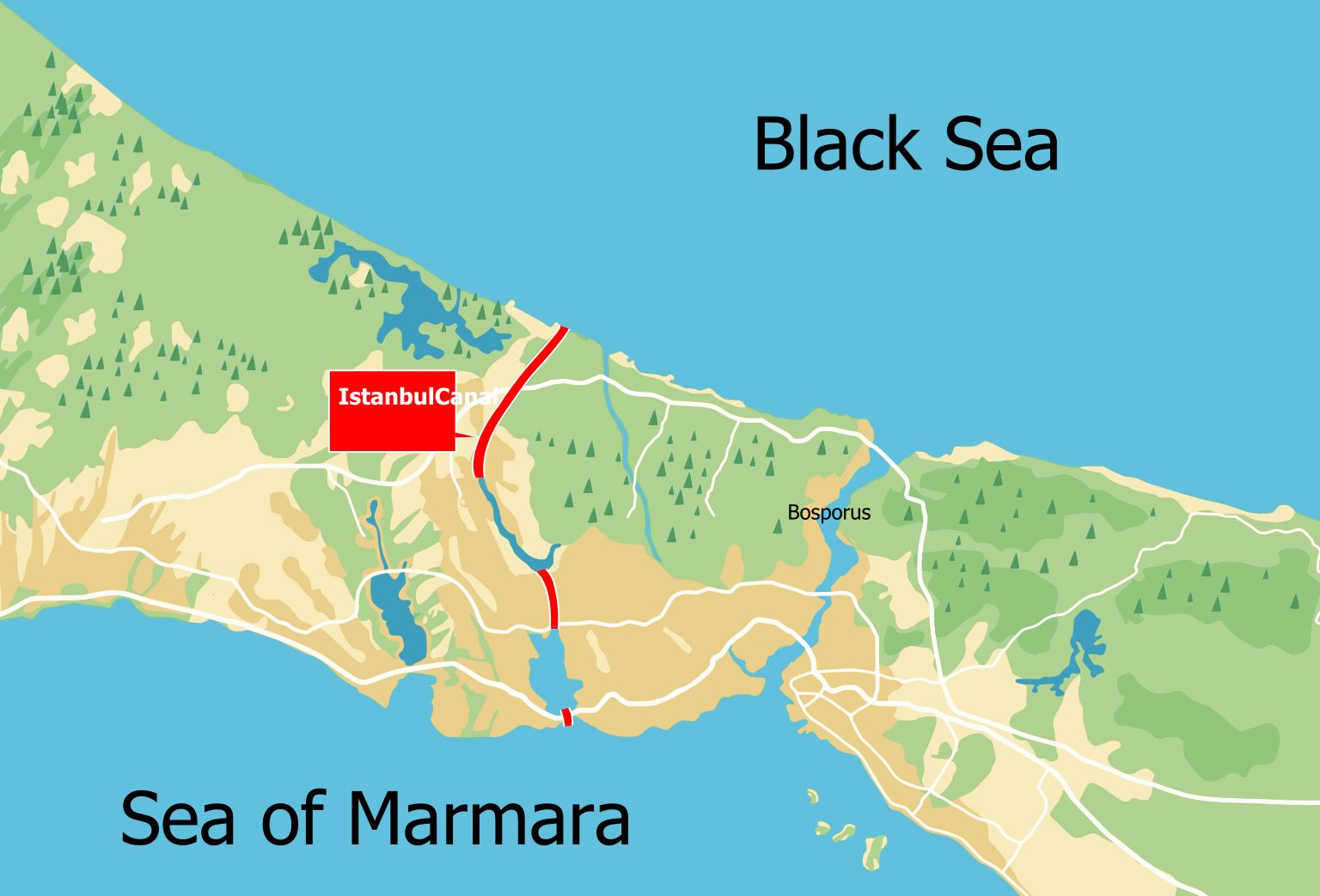
The renewed disruption at a strategic maritime chokepoint has pushed the idea of an alternative pathway in Turkey back into the foreground. Industry attention has turned once again to the proposed Istanbul Canal, an ambitious national project that, while not a substitute for the Strait of Hormuz, is seen as a potential mechanism to rebalance routing decisions under stress. The trigger, described as a de facto closure of a key passage, has underscored the fragility of heavily trafficked corridors and the importance of contingency planning. Against this backdrop, the canal concept is resurfacing in discussions about how carriers and cargo owners might broaden their options when pivotal routes face uncertainty, even if the Turkish project does not directly resolve bottlenecks in the Gulf.
At the center of this recalibration is the recognition that certain maritime arteries, when strained, ripple through schedules, charters, and port calls far beyond their immediate geography. The Istanbul Canal is framed in this debate as an added corridor inside Turkey’s network architecture—one that, if realized, would expand choices without displacing the strategic relevance of existing passages. The current round of instability has therefore revived not only interest in the canal as a concept but also a broader conversation about risk diversification and the distribution of traffic loads across multiple, partially overlapping routes.
A contingency lens on routing and risk
When a chokepoint becomes unstable, operators typically weigh a trio of variables: time, cost, and exposure. Detours shift voyage durations and bunker needs; insurance conditions adjust to reflect altered risk profiles; and congestion migrates as fleets re-optimize. In such moments, infrastructure proposals that promise even incremental flexibility attract fresh scrutiny, not because they erase the constraints at the source, but because they could make the wider system more resilient at the margins. Under this logic, the Istanbul Canal is being revisited as a prospective tool in the resilience toolkit—contingent on its realization and on the evolving balance between commercial imperatives and security concerns.


For carriers and charterers, the attraction of additional routing options lies less in headline speed than in predictability. A network with one more controllable segment can, in theory, help stabilize schedules, offer alternative sequencing for port calls, and create room to reposition tonnage when shocks ripple across regions. None of this alters the basic geography of energy flows or the primacy of established Gulf routes, but it can reduce the system’s brittleness by diluting single-point dependencies. Any such benefits, however, depend on the project’s eventual configuration and the operating rules that would govern transit.
Ports and logistics platforms in the region would likely map their exposure and opportunities accordingly. Terminal operators routinely adjust berth allocations, yard strategies, and feeder connections when mainline schedules shift. If the canal progresses from proposal to execution, the surrounding ecosystem—from trucking and rail links to warehousing and value-added services—would reassess volumes and service designs to align with revised network geometries. The discussion today, renewed by instability elsewhere, is therefore as much about preparedness as it is about blueprints.
Crucially, advocates and skeptics converge on one premise: this Turkish initiative does not supplant the crucial role of the Hormuz route. The immediate question is not replacement but complementarity. Whether such complementarity would translate into material changes in trade lanes depends on multiple contingencies, including market sentiment, fleet deployment strategies, and the persistence or dissipation of the current shock. In the interim, the canal serves as a focal point for evaluating how infrastructure optionality can cushion volatility without promising a cure-all.
The debate also extends to governance, financing, and the regulatory environment. Large infrastructure projects hinge on clear frameworks for safety, oversight, and access. Stakeholders will parse how any eventual operating regime balances throughput with navigational risk management, and how it interfaces with established conventions across neighboring waterways. These are not academic concerns: the credibility of proposed alternatives often rests less on engineering ambition than on the predictability of rules and costs once commercial operations begin.
For now, the resurgence of interest in the Istanbul Canal is best read as a barometer of the moment: a period in which shipping’s exposure to chokepoints is again front and center. The present disruption has reminded the market that redundancy—wherever it can be responsibly created—has value. While the canal would not resolve tensions at the source of today’s instability, its reconsideration reflects a broader search for buffers in a complex, interdependent network. Whether that search culminates in a reshaped map of preferred routes will depend on the trajectory of risk at sea and the practicalities of turning proposals into reliable passageways.

