The International Association of Classification Societies (IACS) has released its Annual Review 2025, outlining the organisation’s principal workstreams across maritime safety, decarbonization, digitalization, and international regulatory cooperation during the last year. The document emphasises how IACS initiatives are designed to reinforce safety while supporting environmental ambition, reflecting its engagement with rulemaking at the International Maritime Organization (IMO). Framed as a practical account rather than a roadmap, the review collates technical outputs and guidance intended to assist regulators, classification societies, and industry stakeholders as they navigate emerging risks and opportunities across the global fleet.
On the energy transition, the review highlights IACS’s contribution to sector decarbonization and the IMO’s parallel effort to balance environmental goals with safety. Through its Safe Decarbonisation Panel, IACS supports development of regulatory and technical frameworks applicable to a range of alternative fuels while maintaining technology neutrality. The work includes drafting resolutions on the safe use of those fuels to underpin both IMO regulation and the classification rules of IACS member societies. The emphasis is on safety-by-design, with guidance intended to be actionable for shipyards, owners, and flag administrations as new fuel options progress from trials to broader deployment.
Methodical progress across regulation, technology, and safety
Digital transformation is another central theme. The Safe Digital Transformation Panel has focused activity on data quality, cybersecurity, and predictive maintenance, aiming to systematise risk controls around increasingly connected ship systems. IACS has developed Unified Requirements on cyber resilience for newbuildings and complementary Recommendations for existing ships. Together, they establish a minimum baseline of cybersecurity controls within safety management systems, clarifying expectations for owners, yards, equipment suppliers, and auditors. This approach seeks to make cyber risk management repeatable and verifiable without prescribing proprietary solutions.


The review also notes IACS contributions to applying digital tools across classification tasks. These include the use of three-dimensional models to support technical review of hull designs, structural strength assessments, and verification of overall ship integrity. In practical terms, such tools can improve consistency in assessments and help capture design intent from early-stage calculations through to construction, inspection, and maintenance. By anchoring digital practices in existing class processes, IACS aims to align innovation with established safety objectives rather than running parallel, unverified workflows.
Cooperation features prominently. IACS documents collaboration with intergovernmental bodies, industry associations, international standardization entities, flag States, and port authorities, with a particular focus on close work with the IMO Secretariat and Member States. In 2025, IACS and its members submitted 37 independent proposals to IMO and co‑sponsored 20 additional documents. The volume and spread of submissions underscore an intent to offer technically grounded input across multiple committees and subcommittees, providing regulators with implementation-focused evidence and harmonized interpretations that can be adopted consistently by administrations and industry.
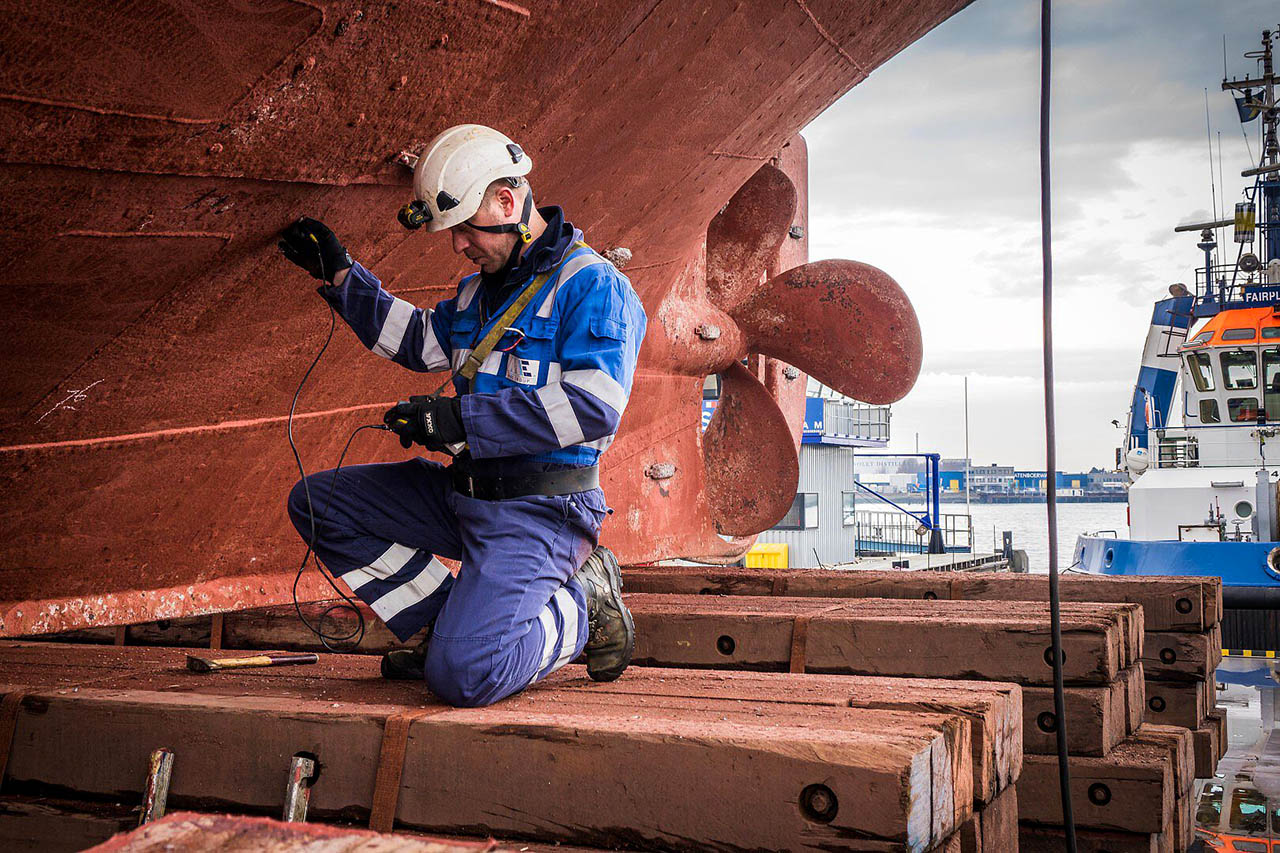
Progress on the safety of surveyors and inspectors is also recorded. IACS advanced recommendations on workplace safety standards and safe practices in confined spaces, aligning with ISO 45001, relevant IMO instruments, and sector best practices. The measures seek to reduce exposure to known hazards during onboard surveys and dockyard activities by clarifying procedural expectations and minimum protective measures. Improved guidance for risk assessment, entry permits, communications, and contingency planning is intended to translate directly into safer frontline operations and more uniform audit outcomes across fleets and geographies.
The Annual Review catalogues technical outputs in detail. It includes a comprehensive list of 78 new or revised Unified Requirements, Procedural Requirements, Unified Interpretations, and Recommendations for application by IACS members, along with notice of withdrawn texts. The publication also incorporates the Classification Report 2025, providing data on the world fleet classified by the association’s 12 member societies. By consolidating rule changes, interpretations, and statistics, IACS offers stakeholders a single reference point that links evolving technical criteria with the state of the classified fleet, facilitating planning for compliance and verification activities.
IACS frames these developments as part of a sustained, collective effort by its members to support maritime safety and environmental protection amid rapid technological change. According to Secretary General Robert Ashdown, the organisation’s recent work demonstrates how classification can uniquely contribute to both objectives while addressing the challenges and opportunities created by emerging technologies and fuels. The 2025 review positions that contribution within ongoing regulatory processes, highlighting practical deliverables intended to be immediately usable by the IMO, administrations, shipyards, owners, and operators.